

Start Here: Define the Reference Before You Compare
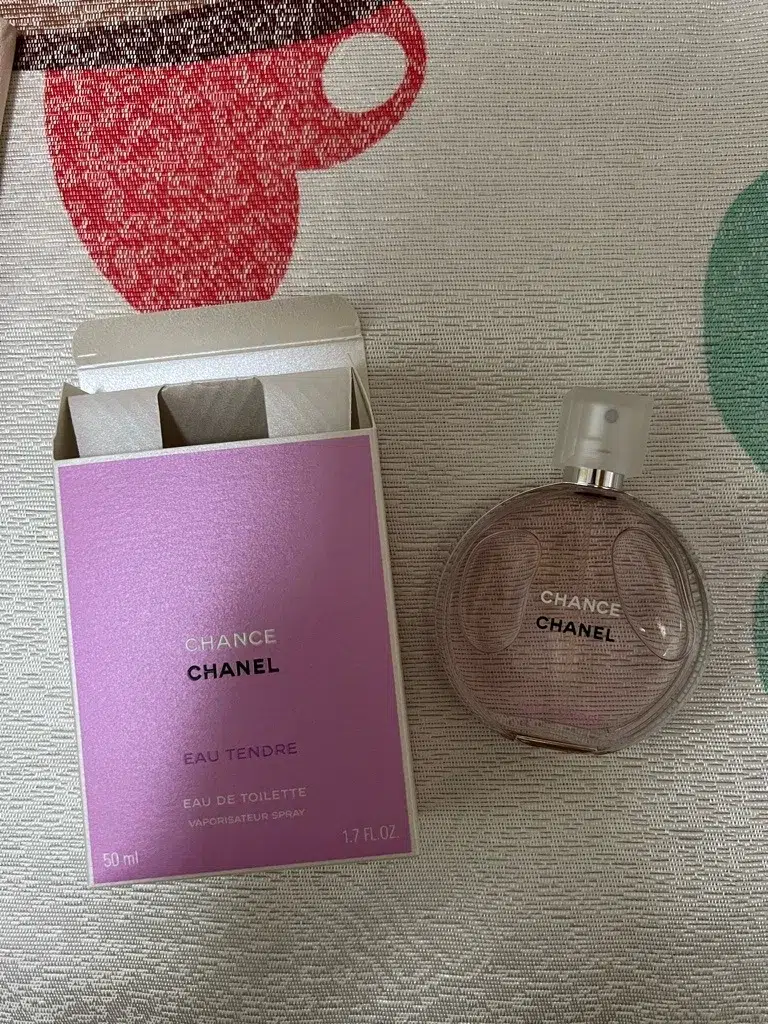
A dupe for Chanel Chance can mean very different things depending on which fragrance in the Chance family a shopper has in mind. That distinction matters more than any “best dupe” label. The original Chance profile and Chance Eau Tendre do not create the same olfactory impression, and even Eau Tendre exists in Eau de Toilette and Eau de Parfum forms. Before comparing price, longevity, or similarity, identify the exact reference bottle you are trying to approximate.
The right dupe for Chanel Chance should therefore be judged against a defined scent target, not against a vague memory of “a pink Chanel perfume.” For Eau Tendre shoppers, the useful questions are more specific: Does the opening stay bright and transparent? Does the floral heart remain airy rather than dense? Does the dry-down preserve a clean musky character? And does the product make sense for your budget, climate, skin, and wearing habits?
For readers researching a dupe for Chanel Chance, this guide uses IMIXX No.28 as one commercial example because it is the IMIXX product directly relevant to this search intent. The goal is not to declare it objectively “best.” The goal is to show how to evaluate any Eau Tendre-style fragrance with a repeatable framework and to separate brand-published product information from independent evidence.
First Decide Whether You Mean Chance or Chance Eau Tendre
Search behavior often compresses several different products into phrases such as “Chanel Chance dupe,” “Chanel Chance alternative,” “perfume similar to Chanel Chance,” and “perfume that smells like Chanel Chance.” That can produce poor recommendations because a fragrance may be similar to one member of the family while missing the character of another.
For this article, the main reference is Chance Eau Tendre Eau de Parfum. Chanel describes that EDP as an enhanced floral-fruity interpretation with jasmine absolute and rose essence emphasized. The Eau de Toilette is described around a green fruity grapefruit-quince accord, jasmine, and white musk. Those official descriptions make one point especially clear: Eau Tendre is not simply “the original Chance, but lighter.” It has its own fresh, fruity-floral, musky identity. You can review the house’s current description on the official CHANCE EAU TENDRE Eau de Parfum page.
What an Eau Tendre-Style Scent Should Feel Like, Not Just List on Paper
A useful Chanel Chance Eau Tendre dupe analysis starts with shape rather than marketing adjectives. Eau Tendre is commonly understood as a bright, polished floral-fruity scent with a soft musky finish. The important quality is balance: the fruit should feel luminous rather than syrupy, the floral heart should feel present without becoming heavy, and the base should support a clean finish rather than turning into a generic sweet cloud.
The opening: grapefruit-quince brightness
In the Eau Tendre vocabulary, grapefruit supplies a sparkling citrus impression while quince adds a crisp, slightly tart fruit character. A shopper looking for a perfume similar to Chanel Chance Eau Tendre should pay attention to whether that freshness survives beyond the first alcohol flash. An alternative can share “citrus” on a note list yet still feel very different if the opening is candy-sweet, bitter, aggressively soapy, or dominated by another fruit effect.
The heart: transparent floral structure
Jasmine and rose are useful reference points for the EDP, but “contains jasmine” is not enough to establish similarity. Floral materials can feel creamy, green, indolic, powdery, watery, soapy, or radiant depending on the formula. For an Eau Tendre-style result, the floral heart should support the fresh opening rather than overwhelm it. This is why the transition from 20 minutes to roughly an hour is often more informative than the first spray.
The base: clean musk and controlled warmth
The dry-down is where many “smells similar at first” recommendations stop being useful. Once the most volatile materials recede, ask whether the fragrance still feels connected to the fresh floral-fruity opening. A Chance Eau Tendre alternative can drift warmer, sweeter, woodier, or more powdery than the reference and still be pleasant, but the buyer should know that this is a change in direction rather than assume it is an exact match.
A Four-Stage Comparison Method You Can Actually Repeat
This guide does not present independent wear-test data. Instead, the most useful practical value is a method that a reader can reproduce at home, at a fragrance counter, or with samples. I recommend comparing the same two fragrances under the same conditions and writing down observations instead of relying on memory.
Stage 1: Compare the first 10 to 15 minutes
Apply equal spray counts to separate blotters or separate areas of skin. Keep the application points far enough apart that the scent clouds do not mix. At this stage, compare brightness, sweetness, sharpness, fruit character, and whether either fragrance has a distracting alcohol-heavy opening. Do not decide which is “closest” yet; top notes are designed to move quickly.
Stage 2: Revisit the floral heart after 30 to 60 minutes
This is where a Chanel Chance Eau Tendre-inspired perfume should reveal whether it can maintain a light floral character instead of collapsing into simple sweetness. Ask whether jasmine and rose-like facets remain transparent, whether the fruit still connects naturally to the florals, and whether one scent becomes much soapier, creamier, sharper, or denser than the other.
Stage 3: Check the dry-down later in the wear
Do not force a precise hour if you cannot test it consistently. The practical goal is to revisit both scents after the opening and heart have clearly receded. Look for what remains: soft musk, woods, sweetness, powder, residual floral lift, or a skin-like clean effect. The dry-down is particularly important for anyone searching for a long-lasting Chanel Chance dupe, because “still detectable” and “still smells structurally similar” are not the same claim.
Stage 4: Separate longevity, projection, and sillage
These terms answer different questions. Longevity is how long you can still detect the fragrance. Projection is how far it radiates from the body at a given time. Sillage is the trail it leaves as you move. A fragrance can last close to the skin for a long time while projecting modestly, or project strongly at first and then become quiet. Treating those behaviors as one “performance score” hides information that matters in real life.
How to Read Notes, Ingredients, and Marketing Claims Without Confusing Them
Fragrance pages often mix three different kinds of information: a creative note pyramid, an ingredient declaration, and promotional copy. They serve different purposes. A note pyramid explains the intended olfactory story. An ingredient list identifies materials required or chosen for disclosure. Marketing copy interprets the product for shoppers. None of those, by itself, proves sensory equivalence to another perfume.
The IMIXX product page contains several descriptive sections, so this article uses the dedicated Notes and Details areas as the clearest reference for product-specific facts. Those sections list quince and grapefruit as top notes, rose and jasmine as middle notes, white musk as the base note, and a concentration of 18%. The product page also lists fragrance materials including Hedione, Iso E Super, Timbersilk, Helvetolide, Muscenone, Habanolide, linalool, linalyl acetate, citronellol, Cashmeran, and others.
That ingredient information can help a knowledgeable reader understand texture, but it should not be turned into claims the page cannot prove. For example, the presence of a modern musk material can support a clean musky effect, but it does not prove a specific number of hours on every wearer. A woody-amber material can add diffusion or smoothness, but it does not make a perfume automatically “premium.” Ingredient names are evidence of composition choices, not a quality score.
Why “99% Similar” Is Not a Useful Claim Without a Published Method
Similarity percentages look objective because they contain a number. The problem is methodological: What exactly was measured? Was the number based on a chemical profile, a trained sensory panel, consumer voting, note overlap, or one editor’s opinion? Were samples blinded? How many people participated? Were the same concentrations and application amounts used? Was the evaluation made at the opening only or through the full dry-down?
Without those answers, “99% similar” is not more informative than “very close.” That is why this guide uses descriptive comparison language such as shared scent direction, overlapping note families, similar overall mood, and comparable opening or dry-down characteristics. Those phrases still require judgment, but they do not pretend that subjective fragrance perception has been reduced to an audited laboratory score.
Analytical chemistry can be valuable in fragrance development and quality control, but a chemical chromatogram and a consumer’s perception are not interchangeable. If a brand cites GC-MS or another analytical method, I would look for the actual method, sample information, reference conditions, and interpretation before treating the claim as evidence of sensory equivalence.
EDP vs EDT: Why the Label Helps but Does Not Settle Longevity
Searches for Chanel Chance EDT vs EDP and Chance Eau Tendre EDT vs EDP often assume the difference is simply strength. In practice, concentration labels are useful conventions, but there is no universal rule that every Eau de Parfum uses the same percentage or that every EDP must outlast every EDT. Formula design matters.
Chanel’s own descriptions also show that Eau Tendre EDT and EDP are positioned with different emphasis, not merely as identical formulas at different strength. The EDT highlights a grapefruit-quince accord, jasmine, and white musk, while the EDP emphasizes a fuller floral interpretation with jasmine absolute and rose essence. For a shopper, that means “Which one lasts longer?” is only one question. “Which version’s balance do I prefer?” may be more important.
| Comparison factor | What it can tell you | What it cannot prove | Better buying question |
|---|---|---|---|
| EDP or EDT | General format and intended wearing style | Exact concentration, exact formula, or guaranteed wear time | Do I prefer the scent balance and projection of this version? |
| Listed concentration | A brand-published specification when clearly stated | That a higher percentage automatically smells better or closer | Does the formula perform the way I want in my environment? |
| Note overlap | Whether two perfumes share a broad scent vocabulary | That they smell identical | Do the opening, heart, and base develop in a comparable direction? |
| Longevity claim | The seller’s stated expectation | Your individual result | Can I test or sample it under my normal wearing conditions? |
Why the Same Perfume Can Smell or Last Different on Different People
Fragrance performance is not produced by the bottle alone. Application amount, ambient temperature, humidity, skin condition, clothing, air movement, and individual perception can all change what a wearer notices. This is one reason online statements such as “it always lasts eight hours” should be treated cautiously.
A peer-reviewed study indexed by PubMed examined fragrance-material evaporation from human skin and explored how molecular properties and skin characteristics can influence release behavior. That does not let us predict an exact wear time for a particular perfume, but it supports a practical conclusion: skin and material behavior can matter, so a single universal longevity number is not a reliable promise for every user.
When comparing an affordable Chanel Chance alternative, keep the test conditions as similar as possible. Use the same number of sprays. Apply at the same time. Avoid testing one fragrance on clothing and the other only on skin. If temperature or activity level changes dramatically, note it. A simple comparison log is more trustworthy than trying to remember how strong something felt several days later.
How to Think About IMIXX No.28 Without Turning This Guide Into an Ad
Because this is a brand-owned article, the right standard is not to hide the commercial relationship. It is to make the recommendation narrower and more transparent. IMIXX No.28 is relevant here because its dedicated Notes section lists quince and grapefruit, rose and jasmine, and white musk, which overlaps with the fruity-floral-musky direction a shopper researching Eau Tendre is likely to be seeking.
The Details section lists an 18% concentration. The product page also publishes performance claims, but this article does not convert those seller claims into independent facts. If longevity is your primary concern, treat the published figure as a starting expectation and compare it with your own wear under normal conditions.
As of September 15, 2026, the required product page lists the 50 ml / 1.7 oz bottle at $29. Price is time-sensitive, so shoppers should check the live page before calculating value. Price alone should not decide the purchase: a less expensive fragrance is only good value if you enjoy the scent direction, can tolerate the projection, and are comfortable with how often you need to reapply.
Original Eau Tendre EDP
Best for: Shoppers who want the original house composition, presentation, authorship, and exact product identity.
Scent direction: Floral-fruity, radiant, soft, with jasmine absolute and rose essence emphasized in the official description.
When to wear: Flexible enough for daytime, office, social settings, and warmer weather if you enjoy polished fruity florals.
Potential downside: Higher retail cost may matter to frequent sprayers or budget-focused shoppers.
Buying consideration: Check current official price and choose the original when brand, bottle, and exact formula are part of what you value.
IMIXX No.28
Best for: Shoppers prioritizing an affordable Eau Tendre-inspired scent direction for everyday use.
Scent direction: Brand-published notes list quince/grapefruit, rose/jasmine, and white musk.
When to wear: The listed profile suggests daytime, office, casual, spring, and summer-friendly use.
Potential downside: It is an inspired product, not the original formula; exact similarity and wear time are not independently established here.
Buying consideration: Check the current product page for price, stock, ingredients, returns, and shipping before purchasing.
Any Other Inspired Alternative
Best for: Shoppers who want to compare multiple scent interpretations before committing.
Scent direction: Look for explicit grapefruit/quince, transparent florals, and clean musk if Eau Tendre is your target.
When to wear: Depends on sweetness, projection, base materials, and concentration.
Potential downside: “Inspired by” labels do not guarantee note accuracy, similar dry-down, or comparable performance.
Buying consideration: Prefer sample access, clear ingredient information, transparent policies, and realistic claims.
Price Test: How to Decide Whether an Affordable Alternative Is Actually Good Value
A common search is “Chanel Chance dupe under $30”, but a low sticker price is only one part of value. Start with price per milliliter, then consider how often you would realistically wear the scent and whether you need frequent reapplication. A 50 ml bottle used two sprays at a time has a different practical cost from a fragrance you overspray because it feels too faint.
A simple value framework is:
- Check the current bottle size and live price. Do not rely on an old listicle.
- Calculate price per milliliter. Retail price divided by bottle volume gives a basic comparison.
- Consider usable value. If you dislike the dry-down, even a cheap bottle is poor value.
- Consider application habits. Frequent reapplication can erase some apparent price advantage.
- Check shipping and return terms. A low product price can be less attractive after shipping or if returns are restrictive.
This is also where supply-chain language should stay honest. A direct-to-consumer fragrance company may reduce some wholesale, retail, packaging, and distribution layers, but that does not prove a luxury perfume is “mostly marketing,” nor does it reveal another company’s confidential cost structure. Raw materials, compounding, alcohol, testing, packaging, labor, warehousing, logistics, samples, returns, retail operations, creative development, and brand overhead can all contribute to final price. Without audited company data, exact percentages are speculation.
Maceration, Maturation, and Resting: Useful Process Terms, Not Magic Proof
Fragrance content often uses “maceration” as a shortcut for quality. The reality is more nuanced. A fragrance blend may be allowed to rest or mature during production before filtration or filling, depending on the formula and manufacturing process. That can be part of consistency and process control, but there is no universal number of weeks that proves a perfume is superior.
For consumers, the better questions are operational: Does the brand publish clear product information? Is the bottle stored and shipped appropriately? Are safety and labeling responsibilities taken seriously? Are performance statements framed as expectations rather than guarantees? Does the company explain what it means by technical terms instead of using them as scientific-sounding decoration?
If a product page claims a special maturation period but provides no documentation, treat it as a brand statement. It may be true, but the statement should not be upgraded into independent proof just because it sounds technical.
What to Check Before Buying a Chanel Chance Eau Tendre Alternative Online
The most useful shopping checklist is short enough to use before checkout but detailed enough to catch common problems.
| Check | Why it matters | Green flag | Reason to pause |
|---|---|---|---|
| Exact reference scent | Prevents confusing original Chance with Eau Tendre EDT or EDP | Clear version naming | “Smells like Chanel” with no version |
| Note structure | Shows whether the intended direction fits grapefruit/quince, floral heart, and musk | Specific top, heart, and base description | Only “luxury” or “premium” adjectives |
| Performance wording | Longevity varies substantially by wearer and conditions | Qualified expectations and test guidance | Guaranteed exact hours for everyone |
| Similarity wording | Fragrance similarity is partly perceptual | Explains shared direction and differences | Precise percentage with no methodology |
| Price and bottle size | Lets you compare value consistently | Live price, size, shipping terms | Old comparison price with no date |
| Commercial disclosure | Helps readers interpret recommendations | Seller clearly identifies its relationship to the product | Brand-owned guide presents self-promotion as independent review |
Who Is Most Likely to Enjoy This Scent Direction?
An Eau Tendre-style perfume is a strong candidate for people who like fresh floral-fruity scents that feel polished rather than gourmand, smoky, leathery, or heavily resinous. The grapefruit-quince idea gives the opening lift; rose and jasmine create a recognizable floral center; white-musk styling keeps the base relatively clean. That combination usually makes more sense for someone who wants versatility than for someone seeking a dramatic, dense evening perfume.
Good fit for daytime and office wear
For many shoppers, the appeal of this scent family is that it can feel put-together without dominating a room. If your workplace is fragrance-sensitive, however, even a soft profile can be too much. Start with a low spray count and pay attention to policies and the comfort of people around you.
Good fit for spring and warm-weather routines
Bright fruit and transparent florals often feel intuitive in mild or warm weather. Heat can increase perceived projection at first, so summer is not a reason to overspray. A smaller application can be more comfortable, especially in public transit, offices, restaurants, or close social settings.
Potential mismatch for people who want dark or gourmand scents
If your favorites are dominated by vanilla dessert effects, smoke, leather, oud-style darkness, dense amber, or strong spices, the Eau Tendre direction may feel too clean or restrained. “Easy to wear” is not the same as “universally appealing.” Buying by scent family preference is more reliable than buying because a product is trending.
How to Make a Light Floral-Fruity Perfume Perform More Consistently
There is no hack that guarantees a specific number of hours, but you can make your own comparisons more consistent. Apply fragrance to clean skin and avoid changing several variables at once. If you use moisturizer, use the same routine when comparing products. Let the spray dry instead of aggressively rubbing the application point. If you test on clothing, choose fabric that will not stain and use the same type of fabric for both scents.
Storage matters for product stability over time. Keep perfume away from prolonged heat, direct sunlight, and large temperature swings. A cool, dark cabinet is generally more sensible than a sunny windowsill or a hot car. Refrigeration is usually unnecessary for normal home use and can introduce its own temperature cycling if the bottle is constantly moved in and out.
Safety and Labeling: What U.S. Shoppers Should Know
Perfume sold for application to the body is generally regulated as a cosmetic in the United States. The U.S. Food and Drug Administration’s fragrance guidance explains that cosmetic fragrance products are not generally subject to FDA premarket approval in the way a drug is, while companies remain responsible for product safety and proper labeling under applicable law.
That distinction is important when reading marketing claims. “FDA approved perfume” can be misleading if it implies the agency individually pre-approved a standard cosmetic fragrance. Likewise, a safety-related industry claim should not be converted into a medical guarantee. If you know you react to fragrance or develop persistent irritation, discontinue use and seek appropriate medical advice rather than relying on a product-comparison article.
How to Make the Final Choice: Original, Inspired Alternative, or Keep Looking
I would choose the original Eau Tendre EDP when the exact house formula, bottle, brand experience, gifting value, or collecting value is part of the purchase. Those benefits are real even though they are not reducible to raw-material cost.
I would consider IMIXX No.28 when the priority is an affordable, Eau Tendre-inspired scent direction and the shopper is comfortable evaluating a brand-owned alternative on its own merits. The published notes and 18% concentration give useful information, but they do not replace sampling or establish an objective similarity ranking.
I would keep looking when the shopper dislikes clean musk, wants a dense evening fragrance, needs independently verified wear data, or is uncomfortable buying without sampling. A good buying guide should make “do not buy yet” a legitimate outcome.
Frequently Asked Questions About Chanel Chance Eau Tendre Alternatives
What does Chanel Chance Eau Tendre smell like?
It is a polished floral-fruity scent direction. Chanel’s official descriptions emphasize a grapefruit-quince idea, jasmine, white musk, and, in the EDP, greater emphasis on jasmine absolute and rose essence. The overall impression is fresher and airier than a dark, resinous, or gourmand perfume.
Who is an Eau Tendre-style fragrance best for?
It is most likely to suit shoppers who enjoy bright fruit, transparent florals, clean musk, and versatile daytime scents. It can work well for office, casual, spring, and warm-weather use when applied appropriately. People who prefer very sweet gourmand, smoky, leathery, or dense amber styles may find it too light or clean.
Is an Eau de Parfum automatically longer-lasting than an Eau de Toilette?
No. EDP and EDT are useful format conventions, but longevity also depends on formula design, materials, dose, skin, temperature, clothing, and perception. An EDP label alone does not guarantee that one fragrance will outlast every EDT.
How should I compare a Chanel Chance alternative before buying?
Compare the same reference version, use equal spray counts, and smell in stages: opening, floral heart, later dry-down, and overall projection. Record differences in sweetness, fruit character, floral transparency, musk, and how often you feel the need to reapply. Avoid deciding from the first five minutes alone.
Why does the same perfume last differently on different people?
Wear can vary with application amount, skin characteristics, temperature, humidity, clothing, activity, and olfactory adaptation. That is why a seller’s longevity statement should be treated as an expectation rather than a guarantee for every wearer.
Is IMIXX No.28 an exact copy of Chanel Chance Eau Tendre?
This article does not claim that. The IMIXX product page lists overlapping Eau Tendre-style notes such as quince, grapefruit, rose, jasmine, and white musk, but note overlap does not prove an identical formula or a precise similarity percentage. Treat it as an inspired alternative and judge it on the full wear experience.
How should I store an Eau Tendre-style perfume?
Keep the bottle away from prolonged heat, direct sunlight, and large temperature swings. A cool, dark cabinet is a practical home-storage choice. Avoid leaving perfume in a hot car or in direct sun for extended periods.
What should I check before buying a dupe for Chanel Chance online?
Confirm the exact reference version, bottle size, live price, note structure, ingredient information where provided, shipping and return terms, and how the seller describes similarity and longevity. Be cautious with guaranteed wear times or precise similarity percentages that are presented without a published method.
A Practical Recommendation for the Buyer Who Wants Value Without Hype
The strongest buying decision is the one that matches your actual priorities. If you love Eau Tendre because of its bright grapefruit-quince effect, transparent floral center, and soft musk, use those features as your checklist. If you mainly want the prestige, exact composition, bottle, and house identity, the original is the straightforward choice. If you mainly want a lower-cost scent direction for frequent daily wear, an inspired alternative is the category to investigate.
For IMIXX No.28 specifically, the public product information gives shoppers several concrete things to evaluate: a 50 ml / 1.7 oz format, a listed price of $29 as of September 15, 2026, an 18% listed concentration, and a note structure of quince/grapefruit, rose/jasmine, and white musk. Those details are more useful than an unsupported “perfect match” slogan because they let you decide whether the product fits the scent family and budget you are actually shopping for.
Before checkout, verify the live product page, decide whether you can sample or are comfortable blind-buying, and be realistic about performance variability. The most trustworthy Chanel Chance Eau Tendre dupe guide is not the one that promises certainty; it is the one that gives you enough information to recognize where certainty ends and personal preference begins.
