

How to Find the Best Burberry Goddess Dupe in the USA: A First-Person Fragrance-Formulation Guide to Vanilla, Lavender, Longevity & Value
Quick summary: When I evaluate a burberry goddess dupe, I do not start with a claimed “95% match,” a star rating, or a list of notes copied from a product page. I start with structure: how the lavender lifts the opening, how the vanilla changes in texture from bright to creamy to darker and warmer, how ginger and cacao-like dryness keep the sweetness from becoming syrupy, and whether that balance survives into the drydown. That is the standard I use throughout this guide.
If you want to compare options immediately, you can browse the burberry goddess dupe direction and the wider IMIXX collection here. I have placed this link early because this is an IMIXX-owned page and I want the commercial relationship to be obvious, not hidden behind a supposedly neutral ranking. I am not claiming that an inspired fragrance is the original Burberry formula, and I am not assigning a laboratory-sounding similarity percentage that I cannot independently validate.
Commercial disclosure & expertise boundary
I am writing this guide from the IMIXX side of the fragrance market, so I have a commercial interest in helping shoppers understand inspired fragrances. I also want to be precise about the boundary of my authority: I am not presenting myself as the perfumer who created Burberry Goddess, and I am not substituting brand opinion for primary evidence. When I describe the original formula’s creative story, perfumer attribution, or current Burberry pricing, I point to the relevant primary source. When I discuss evaluation, I explain the sensory method so you can reproduce it yourself.
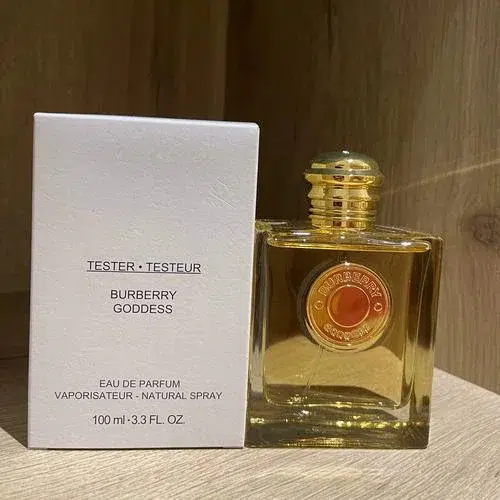
What Burberry Goddess Smells Like When I Evaluate the Structure Rather Than the Hype
Burberry Goddess is easy to summarize as “vanilla and lavender,” but that shorthand misses the feature I care about most: contrast. Vanilla can become dense, sugary, frosting-like, or monotonous. Lavender can become sharp, medicinal, or too clean. Goddess works because those two ideas are held in tension. The vanilla provides warmth, creaminess, and gourmand comfort; the lavender creates air, definition, and an aromatic edge. Drier accents around ginger and cacao keep the vanilla from reading as a simple dessert accord.
Burberry’s official US product page currently describes Goddess Eau de Parfum as a gourmand fragrance led by a trio of vanillas and enriched with luminous lavender. It also identifies the bottle as refillable. I treat that description as the most reliable starting point for the branded product itself, including current US pricing and official positioning. You can verify it on the official Burberry Goddess Eau de Parfum page.
The formulation story becomes more useful when I move beyond the note list. dsm-firmenich’s published case study attributes the fragrance to Principal Perfumer Amandine Clerc-Marie and explains that the concept was developed through three distinct vanilla expressions, including a bright Madagascar vanilla infusion, Firgood® Vanilla, and a darker vanilla absolute. The same account describes lavender, ginger, cocoa, and other supporting materials as contrasts around the vanilla core. That is important because it shows why “vanilla + lavender” is not enough information to recreate the experience. The source also says the development involved months of work and roughly 400 formula combinations, which gives useful context for how much iteration can sit behind a deceptively simple note list. I recommend reading the dsm-firmenich Burberry Goddess development case study if you want the creator-side account.
Knowledge point: a note list is not a formula
When I see two fragrances that both list vanilla, lavender, cacao, and ginger, I do not assume they will smell alike. Odor profile depends on the materials chosen, their proportions, supporting ingredients, volatility, diffusion, solvent system, and how the formula changes as it evaporates. The recognizable “fingerprint” is the relationship among these parts over time, not the presence of four nouns on a page.
| Wear stage | What I listen for | Why it matters | Common failure mode |
|---|---|---|---|
| Opening | Lavender lift, bright vanilla, a touch of spicy or dry contrast | The opening should feel aromatic and dimensional rather than like straight vanilla syrup. | A sugary blast with no aromatic definition after the alcohol flashes off. |
| Heart | Creamier vanilla texture with the lavender still shaping the accord | This is where the fragrance should gain body without becoming flat. | The scent smells essentially identical from minute five onward. |
| Drydown | Warmer, darker vanilla; soft woods or musks; retained identity | A good interpretation should still remind me what I smelled in the opening. | It collapses into a generic amber-vanilla or anonymous sweet musk. |
Why I Think a Convincing Goddess-Inspired Fragrance Is Harder to Build Than a Basic Vanilla Perfume
The challenge is not simply “make it sweet, add lavender, and increase concentration.” In my evaluation, there are at least four separate formulation problems. First, lavender needs enough presence to create identity, but not so much that the result feels like shaving foam, detergent, or aromatherapy oil. Second, vanilla must feel dimensional rather than flavor-like. Third, the dry accents need to restrain sweetness without becoming literal chocolate or hot spice. Fourth, the transition between stages must remain smooth.
The fourth problem is the one I think shoppers underestimate. An inspired fragrance can make a very strong first impression because top notes are immediate and easy to compare in a store. But the more revealing question is what happens at one hour and four hours. If the composition loses the lavender, the vanilla stops changing, and the base becomes generic, the opening similarity does not matter as much to me. I would rather wear a composition that preserves the architecture through the drydown than one that performs a five-minute imitation.
My four formulation checkpoints
1. Lavender persistence
I check whether the aromatic lift is still perceptible after 30–60 minutes. It can soften, but it should continue to shape the vanilla.
2. Vanilla dimensionality
I want the vanilla to evolve from brighter and airier to creamier and then warmer or darker, rather than staying like a single sweet flavoring.
3. Dry contrast
I look for ginger-, cacao-, woody-, or aromatic-type tension that keeps the gourmand effect polished instead of sticky.
4. Transition quality
I smell at several checkpoints. Smooth evolution matters more to me than explosive projection in the first ten minutes.
How I Compare the Original and an IMIXX Goddess-Inspired Option Without Pretending They Are the Same Product
Because this page belongs to IMIXX, I do not want to hide the recommendation inside a faux-independent “top 10” list. My commercial position is straightforward: if your priority is the Goddess scent direction at a lower daily-wear cost, I think an IMIXX interpretation is worth evaluating. If your priority is the exact Burberry composition, Burberry presentation, refill system, or ownership experience, I think you should buy the original.
I also avoid calling an inspired fragrance “identical.” That word creates a standard that is both unnecessary and difficult to substantiate in a way that applies to every nose, every batch, every skin type, and every stage of wear. Instead, I use a narrower and more testable goal: structural fidelity. Does the fragrance keep the vanilla-lavender relationship recognizable? Does it maintain dry contrast? Does the base still belong to the same olfactory idea? Can a shopper wear it frequently without feeling that the price makes every spray precious?
Burberry Goddess Eau de Parfum
Best for: shoppers who want the original formula, official bottle, refillable designer presentation, and the exact creative work associated with Burberry and Amandine Clerc-Marie.
Current US list price checked September 10, 2026: $115/30 ml, $154/50 ml, $185/100 ml.
My view: this is the reference product. An inspired fragrance should be compared with it, not described as if it were literally the same item.
IMIXX Goddess-Inspired Direction
Best for: shoppers who mainly want the warm vanilla-lavender scent direction and a lower everyday-wear cost.
How I judge it: lavender persistence, layered vanilla, dry contrast, smooth drydown, and value per wear.
My view: it should earn a place in your rotation by how it wears, not by an unsupported numerical match claim.
My Home Wear-Test Method: A Reproducible Way to Evaluate Similarity and Performance
One of the strongest ways I can improve trust is to show the method rather than ask you to accept a verdict. You do not need laboratory equipment to make a better comparison. You need repeatable conditions, multiple checkpoints, and the discipline to separate projection from longevity.
Step 1: learn each fragrance independently
I test the original and the inspired fragrance on separate days first. That reduces the chance that I spend the entire session hunting for differences instead of understanding each scent on its own. I keep the application consistent: same number of sprays, similar distance from skin, comparable pulse-point location, and no scented lotion or competing perfume.
Step 2: run a side-by-side session
On the comparison day, I place one fragrance on one forearm and the other on the opposite forearm. I avoid spraying too close to my nose because strong exposure increases olfactory fatigue. I record impressions at the same time points instead of repeatedly sniffing every few minutes.
| Checkpoint | What I record | Question I ask |
|---|---|---|
| 0–5 minutes | Alcohol flash, lavender clarity, sweetness level, immediate spice/dryness | Is the opening aromatic and bright, or mostly sweet? |
| 15 minutes | Transition into vanilla, balance, harsh edges | Is the composition settling smoothly? |
| 1 hour | Lavender persistence, vanilla texture, projection | Does the core still resemble the original scent architecture? |
| 4 hours | Drydown identity, warmth, generic amber/musk drift | Has the scent kept its personality? |
| Final detectable stage | Skin scent vs. projection, residual vanilla character | How long is it detectable, and how long is it meaningfully projecting? |
Step 3: repeat before I conclude
I repeat the test on another day because perfume performance is noisy. Skin condition, temperature, humidity, recent showering, the amount of moisturizer, and even how much I have been smelling other fragrances can change the result. One wear is an anecdote; repeated wears are more useful. If another person is available, I also like a simple blind drydown check: I let them smell both arms without telling them which is which and ask for descriptive differences rather than “which one is better?”
Key point: projection is not longevity
I treat these as separate variables. A fragrance can remain detectable on skin for many hours while projecting only a short distance. Conversely, a volatile opening can feel powerful at first and then fade quickly. When I see a review promise a universal number of hours, I want to know whether the writer means detectable skin scent, noticeable personal aura, or room-filling projection.
How I Think About Longevity, Concentration, Skin, and Climate
I do not rank fragrances by concentration label alone. Eau de Parfum, Eau de Toilette, and Parfum can suggest broad stylistic expectations, but the finished formula matters more than the letters. A higher proportion of aromatic concentrate can change density and persistence, yet performance also depends on the actual materials used. Some ingredients are extremely diffusive but relatively short-lived; others remain close to skin for a long time.
That distinction matters for a vanilla-lavender fragrance. If the formula is made denser, the heavier vanilla and base materials can become more prominent while the lavender feels less expansive. A lower or differently balanced concentration can produce a brighter opening even if it does not wear as densely. So when I compare a Goddess-style scent, I compare the finished fragrances, not abstract concentration categories.
Why USA climate changes the experience
I also account for environment. In hot, humid weather, sweet materials can feel more expansive and richer. In very dry conditions, a fragrance can seem to disappear from skin sooner, especially when skin is dry. In heavily air-conditioned offices, diffusion can feel different again. That is why I resist saying “this lasts exactly X hours” for everyone in the United States. Phoenix, Miami, Seattle, Chicago, and New York do not give perfume the same wearing conditions.
My practical approach is simple: compare under the conditions in which you actually plan to wear the fragrance. If you want it for work, test it during a normal workday. If you want it for fall evenings, do not decide solely from a midsummer outdoor test. If you live in a dry climate, test once over unscented moisturizer and once without it. Those observations are more actionable than a generic performance score.
What I Mean by “Maceration,” Resting, and Batch Consistency
Fragrance discussions often use “maceration” as a catch-all explanation for anything that changes after purchase. I prefer more careful language. In manufacturing, a blended hydroalcoholic fragrance may be given time to rest or mature before filtration and filling, depending on the formula and the process. After a consumer receives a bottle, temperature changes, transport, repeated air exchange in the headspace, and normal aging can also affect perception over time.
I do not believe a simple claim such as “more weeks equals better perfume” is useful without context. The number itself does not prove formulation quality. What matters more to me is whether production is controlled and repeatable: raw-material specifications, batch records, appropriate storage, filling controls, and a finished odor profile that stays within the intended standard. If a brand makes a precise claim about maturation time or analytical testing, I think it should be prepared to show supporting documentation rather than expecting the number to function as a quality badge.
How I Evaluate Safety and Transparency for Fragrance Sold in the USA
Trust is not only about scent similarity. It also includes how a brand communicates product identity, ingredients, claims, and responsible use. In the United States, perfume applied to the body for attractiveness is generally regulated as a cosmetic. The FDA explains that cosmetic manufacturers and marketers are legally responsible for ensuring their products are safe under labeled or customary conditions of use and properly labeled. The FDA also notes that fragrance formulas can contain many ingredients and that, under US labeling rules, fragrance components may in many cases be declared collectively as “Fragrance.” I recommend the FDA’s Fragrances in Cosmetics guidance for the regulatory basics.
As a shopper, I look for the seller’s identity, clear bottle size, ingredient information, contact information, shipping and return terms, and wording that does not imply the product is manufactured by the designer whose scent inspired it. I also think safety claims should be specific. A phrase such as “clean,” “non-toxic,” or “certified safe” can sound reassuring while telling you very little unless the brand defines what it means and supports it.
Knowledge point: transparency beats precision theater
I trust a brand more when it tells me what was tested, how it was tested, and what the test cannot prove. I trust it less when it uses a precise percentage, hour count, or “lab verified” phrase with no public method. A reasonable limitation stated clearly is stronger evidence of responsible communication than a dramatic number with no audit trail.
How I Decide Whether a Lower-Priced Goddess-Style Fragrance Is Actually Good Value
I separate low price from value. A bottle that costs less but goes unused is poor value. A fragrance that fits your taste, works in your routine, and gets worn frequently can be strong value even if it is not the cheapest option on the page. This is why I evaluate cost per wear as a behavioral question, not only a mathematical one.
For reference, when I checked Burberry’s official US pages on September 10, 2026, Goddess Eau de Parfum was listed at $115 for 30 ml, $154 for 50 ml, and $185 for 100 ml. Those are time-sensitive retail prices, so I would recheck them before publishing an update months from now. I am including the date specifically to avoid turning a temporary price snapshot into an evergreen “fact.”
When I evaluate an inspired option, I ask whether the savings come with trade-offs I personally care about. Do I lose the lavender too quickly? Does the vanilla become simpler? Is the drydown rougher? Is the bottle size different? Is the return policy more restrictive? Would I actually wear the scent more often because the replacement cost is lower? Those questions are more useful than “is cheaper automatically better?”
My value scorecard
| Factor | What I compare | Why I care |
|---|---|---|
| Scent architecture | Lavender lift, layered vanilla, dry contrast, recognizable base | This determines whether the fragrance satisfies the core search intent. |
| Wearability | Office appropriateness, seasonal flexibility, reapplication comfort | A fragrance that fits more situations usually earns more wears. |
| Performance | Projection and longevity measured separately over repeated wears | I want performance data that maps to real use, not one dramatic opening. |
| Price per ml | Bottle price divided by volume | This normalizes comparisons across different bottle sizes. |
| Cost per wear | Estimated sprays per wear and how often I would realistically use it | A frequently worn bottle can be better value than a cheaper bottle that sits unused. |
Why Luxury Perfume and Direct-to-Consumer Fragrance Can Have Very Different Prices
I avoid the lazy claim that “the juice costs almost nothing.” Fine fragrance can use expensive naturals, proprietary aroma materials, specialty extraction methods, extensive stability work, packaging engineering, and quality-control systems. The exact cost structure is proprietary and varies by brand. Pretending all fragrance liquid is cheap does not help shoppers understand value.
A more realistic explanation is that prestige retail pricing supports much more than the aromatic concentrate. It can include bottle and cap tooling, decoration, cartons, retail margins, sampling, global distribution, creative campaigns, licensing, merchandising, inventory risk, and brand overhead. A direct-to-consumer company can structure those costs differently. That does not prove that the scent inside two bottles is the same; it explains why two products can target related olfactory territory while carrying very different retail prices.
That distinction is central to how I position IMIXX here. I am not arguing that the Burberry product has no value. It has a documented development story, a designer object, refillable presentation, and the original composition. I am arguing that a shopper who primarily values the vanilla-lavender scent direction may rationally assign less value to some of the luxury-presentation costs and more value to frequent wear.
How I Read Reviews More Critically Before I Recommend Anything
I use reviews for discovery, but I treat confident numbers cautiously. If someone writes “97% identical,” I ask how the percentage was generated. If a reviewer says “12 hours,” I ask how many sprays were used, whether that means projection or skin detectability, what the weather was like, and whether the result was repeated. If a brand says “lab tested,” I look for the type of test, sample identity, method, and what the analysis actually demonstrates.
I also separate accuracy from preference. A fragrance can be less structurally faithful to Goddess and still be more enjoyable to a particular wearer. Another can be impressively close in the opening but have a base that the wearer dislikes. Search rankings often compress these differences into a single “winner,” yet perfume buying is more personal than that. My goal is to give you enough sensory vocabulary to predict your own reaction.
How I Wear a Vanilla-Lavender Fragrance Across Seasons and US Climates
Vanilla-forward fragrances are often labeled fall and winter scents, and I understand why. Cooler air can make their warmth feel especially comfortable. But I do not think Goddess-style fragrances need to be limited to cold weather because the lavender gives the composition lift and makes it more flexible than a dense caramel gourmand.
In hot and humid weather, I start with fewer sprays and wait before deciding the fragrance is weak. Heat can increase diffusion and make sweetness feel more intense. In dry weather, I may test over an unscented moisturizer because very dry skin can make a scent seem shorter-lived. In a climate-controlled office, I prioritize moderate projection over maximum sillage. For a spring evening or mild summer night, the lavender can keep the vanilla from feeling overly heavy.
How I Layer This Scent Profile Without Flattening the Contrast
Vanilla is easy to layer, but that does not mean every combination improves the fragrance. My rule is to preserve contrast. If I add more sweetness to a composition whose main strength is already vanilla, I can erase the very tension that makes the scent interesting.
For more freshness, I would pair lightly with a restrained citrus or aromatic scent. For a creamier effect, I would start with an unscented moisturizer or a subtle vanilla body product rather than stacking multiple syrupy gourmands. For a darker evening effect, I would use a restrained woody or amber layer. I keep the secondary product quieter than the main fragrance so the lavender-vanilla architecture remains legible.
How I Choose Between the Original and an Inspired Interpretation
I think the decision becomes easier once you define what you are actually buying. If you want the exact fragrance created for Burberry, the original is the answer. If you want the official bottle, refillable presentation, brand experience, and reference formula, an inspired alternative cannot replace those things because it is a different product.
If your priority is the scent direction—warm vanilla, aromatic lavender, dry contrast, and a soft gourmand drydown—then an inspired interpretation can make sense, especially if you want a lower everyday replacement cost. I would still smell the original first if possible. Knowing what you love in the reference scent helps you judge whether an alternative preserves the right part of the experience.
My decision rule
I buy the original when authorship, exact formulation, presentation, and ownership experience are part of the value. I consider an inspired fragrance when I mainly want the olfactory direction and I can confirm through wear testing that the structure, drydown, and performance are good enough for my real routine.
What I Would Check Before Ordering Online in the USA
Before I buy any inspired fragrance online, I check more than the note list. I verify the seller identity, bottle size, concentration description, return policy, shipping terms, ingredient information, and whether the site clearly presents the fragrance under its own branding. I also look for useful review language: opening, heart, drydown, projection, skin scent, sweetness level, lavender persistence, and how the fragrance behaved after several hours.
For IMIXX specifically, you can review the broader collection on the IMIXX Shop All page, learn more about the company’s stated background on the IMIXX About page, or read the Burberry-inspired fragrance guide. These are internal brand pages, so I treat them as useful for understanding IMIXX’s own products and positioning, not as independent verification of our claims.
Frequently Asked Questions
What is the best burberry goddess dupe in the USA?
I would not name a universal winner for every shopper. On an IMIXX-owned page, my recommendation is to start with the IMIXX Goddess-inspired direction if your goal is lower-cost everyday wear, then test it against the original using lavender persistence, vanilla dimensionality, dry contrast, transition quality, and your own skin performance. If you want the exact Burberry fragrance and presentation, buy the original.
What makes a burberry goddess dupe smell convincing?
For me, the key is not sweetness alone. I want an aromatic lavender opening, a vanilla accord that changes texture as it wears, some dry or spicy contrast, and a warm base that still feels connected to the opening. A simple candy-vanilla fragrance can be pleasant without being structurally close.
What does Burberry Goddess smell like?
I experience the fragrance as a warm gourmand vanilla structure brightened by lavender, with ginger- and cacao-like dryness adding tension. The vanilla is the lasting identity, while lavender is the aromatic counterweight that keeps the sweetness from feeling one-dimensional.
Is Burberry Goddess mainly vanilla or lavender?
I consider vanilla the dominant long-term identity, but lavender is essential to the design. If an inspired interpretation loses lavender immediately and becomes pure sweet vanilla, I consider it less faithful even if the opening smelled promising.
How long does Burberry Goddess last?
I do not use one universal hour count because longevity changes with skin, spray count, clothing, temperature, humidity, and what a reviewer means by “lasting.” I record both projection and final detectability, and I repeat the wear test on more than one day.
Does a higher fragrance concentration always last longer?
Not automatically. Concentration can influence density and persistence, but the volatility and substantivity of the actual materials matter greatly. I compare finished formulas rather than assuming an EDP or Parfum label guarantees a particular number of hours.
Is there a good affordable Goddess-inspired fragrance under $50?
Affordable options exist in the inspired-fragrance market, but I would not use price alone as the quality filter. I would confirm current IMIXX pricing on the product or collection page, then evaluate whether the fragrance preserves the vanilla-lavender balance and whether I would actually wear it often enough to make the lower price meaningful.
Is Burberry Goddess worth buying instead of an inspired fragrance?
Yes, if you value the exact original composition, the Burberry bottle and refill system, and the ownership experience. I see an inspired fragrance as a different value proposition: similar olfactory direction at a lower replacement cost, not a replacement for the original product’s authorship or presentation.
What season do I think suits this scent profile best?
I find it especially comfortable in fall and winter, but lavender makes the profile usable in spring and on cooler summer evenings. In very hot weather, I reduce the spray count because warm vanilla can expand quickly.
How can I make a Goddess-style perfume last longer?
I start with consistent application. On dry skin, I may use an unscented moisturizer first. I avoid rubbing the fragrance aggressively after spraying, and I may test a light application on suitable clothing. I also store the bottle away from strong heat, direct sunlight, and large temperature swings.
How is Burberry Goddess different from Goddess Intense or newer flankers?
I treat each flanker as a different finished fragrance, not simply a stronger version of the same formula. When I compare an inspired product, I make sure the reference is the original Goddess Eau de Parfum unless the product explicitly says it takes inspiration from another flanker.
What should I distrust in online fragrance claims?
I become cautious when I see exact similarity percentages, universal longevity promises, “lab proven” wording without a method, or claims that an inspired fragrance is literally the designer product. I prefer descriptions that identify trade-offs, explain testing conditions, and separate opinion from externally documented facts.
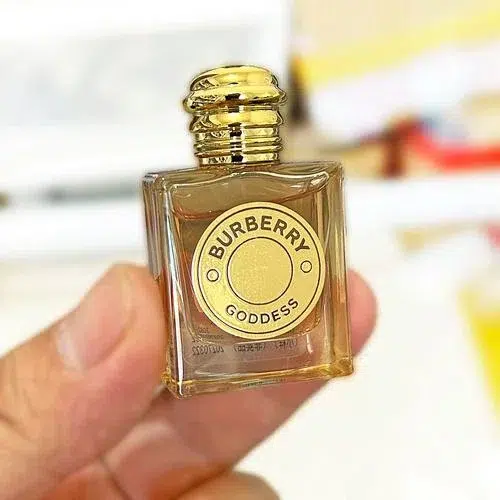
My Final Recommendation
If you came here looking for a burberry goddess dupe, I think the most useful way to shop is to stop asking which bottle has the most confident marketing copy and start asking which formula preserves the original scent’s structural tension. For me, that means lavender that remains relevant beyond the opening, vanilla that evolves rather than staying flat, dry contrast that prevents syrupy sweetness, and a base that still belongs to the same olfactory story several hours later.
Because this is an IMIXX-owned guide, I recommend evaluating the IMIXX Goddess-inspired direction when your main goal is a lower-cost fragrance for regular wear. I make that recommendation as a commercially interested brand, not as an independent awards panel. I also think the original Burberry Goddess remains the correct purchase when what you want is the exact formula, official presentation, refillable bottle, and designer experience.
The standard I want this page to meet is therefore not “trust us because we sell it.” It is “use our framework, reproduce the test, check the primary sources, and decide whether the value proposition works for your skin, climate, budget, and taste.” That is a more credible way for me to discuss inspired fragrance, and a more useful way for you to buy it.
