

Article Summary & Core Takeaways
- The Illusion of Luxury Pricing: Discover why a $300+ bottle of luxury niche perfume is primarily a masterclass in marketing. Industry averages show the actual fragrance “juice” often accounts for less than 5% of the retail cost.
- The Science of Scent Engineering: We explain, in plain English, how modern Gas Chromatography-Mass Spectrometry (GC-MS) allows perfumers to decode and reconstruct iconic scents, and why the human nose cannot tell the difference when high-quality materials are used.
- A Fair Market Comparison: A detailed, unbiased breakdown of the best alternatives available in the USA market today—comparing brands like Dossier, Zara, Montagne Parfums, and iMIXX—so you can choose the right dupe for your budget and lifestyle.
- Why Some Dupes Smell Like Alcohol: Understand the critical manufacturing step called “maceration” that fast-fashion brands often skip, and how to ensure your affordable perfume actually lasts all day on your skin.
The Cult of Le Labo in the USA: Why Everyone Wants to Smell Like a Boutique Hotel
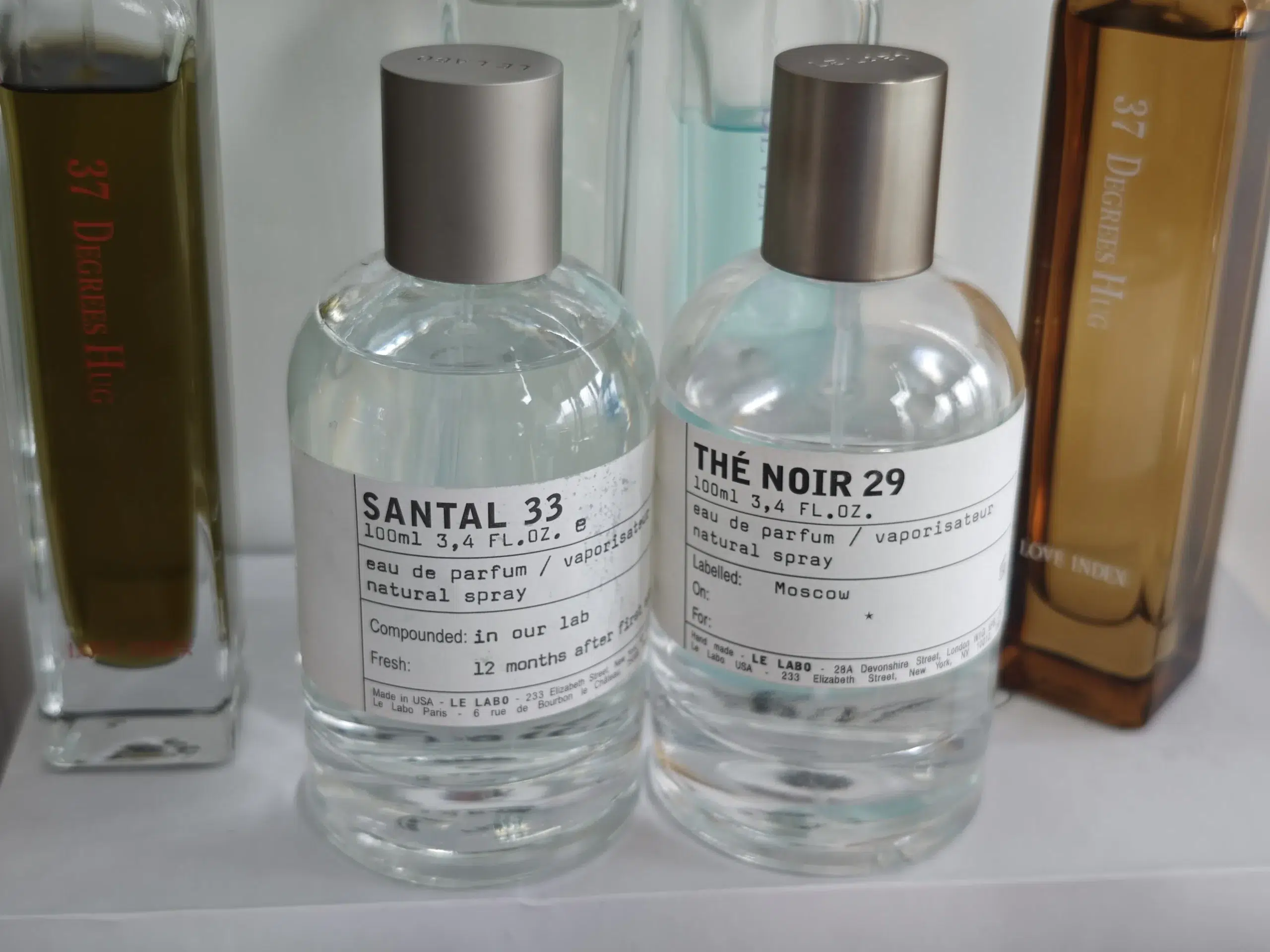
If you have walked through any major metropolitan area in the United States over the past five years—from the artsy enclaves of Brooklyn, New York, to the sun-drenched streets of West Hollywood, California, or the bustling tech hubs of Austin, Texas—you have undoubtedly encountered it. That distinctive, lingering trail of dry sandalwood, supple leather, and cool cardamom. It is the inescapable aura of Le Labo’s Santal 33.
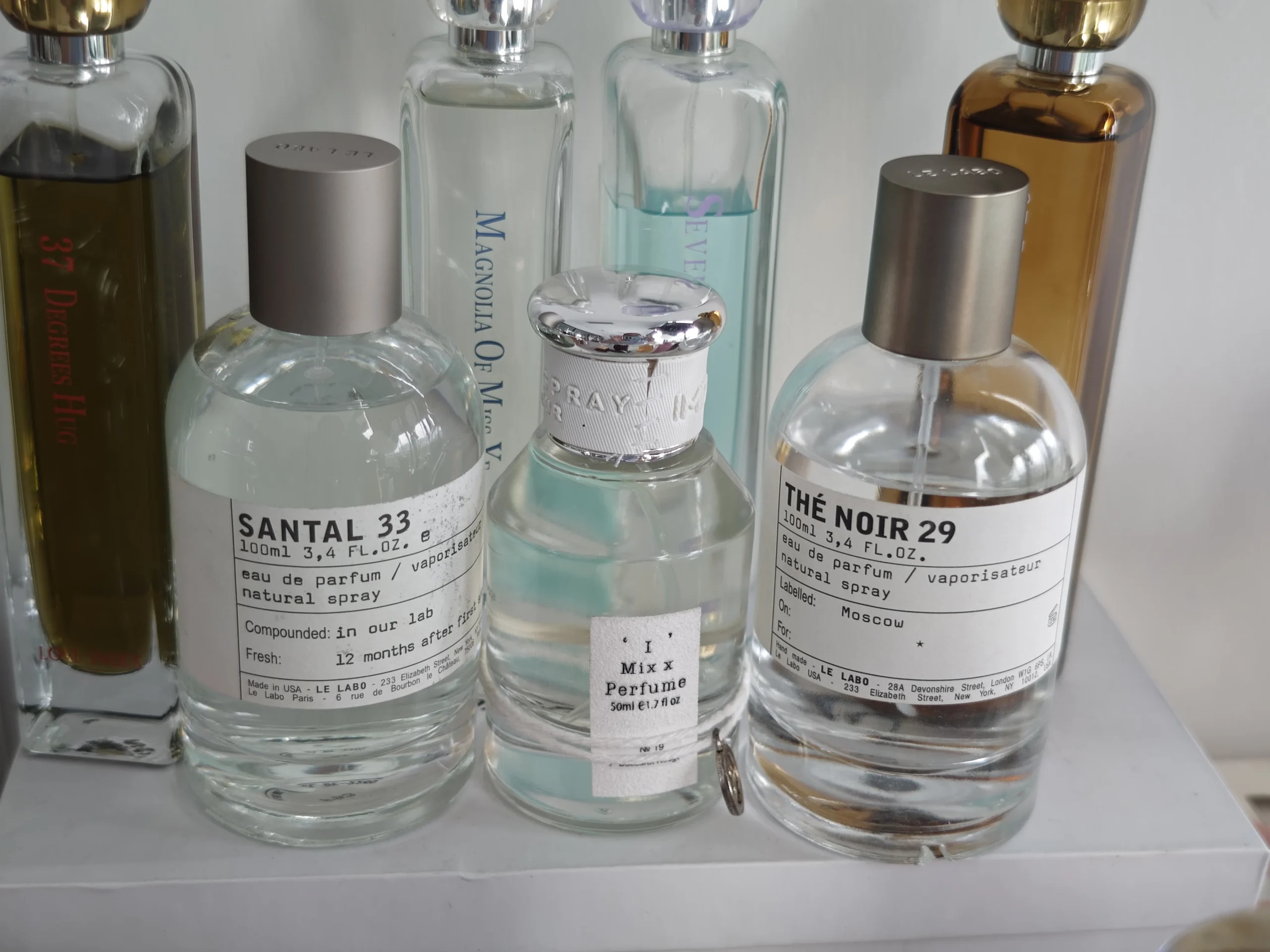
Founded in New York City in 2006 (and later acquired by the Estée Lauder Companies), Le Labo transcended the status of a mere fragrance house. It became a cultural signifier. With their industrial-chic apothecary bottles, personalized typewriter labels, and the gimmick of blending the perfume fresh in front of you, they successfully bottled the “NYC Cool” aesthetic. It is a brilliant piece of experiential retail.
However, this olfactory prestige comes with a staggering financial barrier. With prices routinely exceeding $300 for a standard 100ml bottle (and prices climbing annually due to inflation in the US market), an increasing number of everyday fragrance lovers are asking a logical question: Do I really need to spend half my rent to smell this good? Is there a scientifically sound way to achieve this exact scent profile without the exorbitant markup?
The answer is an absolute yes. The USA market is currently experiencing a “dupe revolution.” But finding the perfect Le Labo dupe requires looking past the flashy TikTok marketing of fast-fashion brands and understanding the fundamental chemistry of perfumery. Let’s pull back the curtain on how perfumes are actually made, priced, and replicated.
The Supply Chain Reveal: Breaking Down the $300 Perfume Cost Structure
To understand why high-quality, affordable alternatives can exist in the first place, we must understand the economics of the traditional luxury fragrance market. When you purchase a bottle of designer or niche perfume at Sephora, Nordstrom, or a high-end USA boutique, you are paying for an elaborate ecosystem. You are not just buying fragrant water; you are buying real estate, celebrity campaigns, and shareholder dividends.
In the fragrance manufacturing industry, we look closely at the “Cost of Goods Sold” (COGS). According to data widely discussed in industry publications like Perfumer & Flavorist and business analyses of the beauty sector, the breakdown of a luxury perfume is often shocking to the average consumer. Let’s look at standard industry averages compared to the direct-to-consumer “inspired-by” model.
Table 1: The Estimated Economics of Luxury vs. Direct-to-Consumer Perfumery
*Note: These are estimated industry averages for a 100ml bottle based on standard supply chain metrics, not proprietary financials of any specific brand.
| Cost Component | Traditional Luxury Brand (Retail: $300) | Premium Direct-to-Consumer Dupe (Retail: ~$40-$50) |
|---|---|---|
| The Fragrance “Juice” (Raw Materials) | $6.00 – $15.00 (2% – 5%) | $8.00 – $18.00 (Often utilizing similar aromachemicals) |
| Packaging (Custom Bottle, Heavy Cap, Box) | $15.00 – $30.00 | $4.00 – $8.00 (Standardized, minimalist bottles) |
| Marketing, PR & Celebrity Endorsements | $80.00 – $120.00 | $5.00 – $10.00 (Primarily social media/organic reach) |
| Retail Markup (Department Stores) | $100.00 – $150.00 | $0.00 (Sold directly via brand website) |
| Brand Prestige / Profit Margin | The Remainder | Fair margin for operational sustainability |
As you can see, the actual fragrant compounds—the essential oils, absolutes, and synthesized molecules like Ambroxan or Iso E Super—represent a minuscule fraction of the final retail price. Dedicated “dupe” brands like Dossier, Montagne, ALT Fragrances, and our own iMIXX Perfumes entirely bypass the traditional retail gauntlet. By reallocating the budget away from expensive marketing and middleman markups, these brands can afford to source high-grade raw materials, ensuring that the scent profile matches the original in complexity and sillage.
The Fragrance Geek’s Guide: Decoding Le Labo’s Chemical DNA
Creating a truly remarkable alternative is not about haphazardly mixing oils in a bathtub until something smells “close enough.” Today, it is a forensic science.
Reputable clone houses utilize a technology called Gas Chromatography-Mass Spectrometry (GC-MS). Imagine you have a complex soup, and you want to know the exact recipe. A GC-MS machine takes a tiny sample of a target luxury fragrance, vaporizes it, and separates every single chemical molecule. It then produces a chart that tells the perfumer exactly what is inside: “This has 15% Iso E Super, 3% natural bergamot oil from Italy, 0.5% Hedione,” and so on.
While proprietary captive molecules (special ingredients patented by huge labs like Givaudan or Firmenich) can sometimes obscure a 100% perfect match, skilled perfumers can use publicly available, IFRA-compliant aromachemicals to achieve a similarity rate that the average human nose simply cannot distinguish. Let’s look at how this applies to Le Labo’s greatest hits and where to find the best alternatives.
1. Decoding Santal 33: The Woody, Leathery Icon
The Scent Profile: Santal 33 is a masterclass in balancing dry woods with spicy and floral nuances. It opens with cardamom, iris, and violet, transitioning into a robust heart of Australian sandalwood, papyrus, and cedarwood. It smells like a crisp white t-shirt, a worn-in leather jacket, and a luxury woodshop.
The Chemistry Challenge: The difficulty in replicating Santal 33 lies in the specific type of sandalwood used. Because Indian sandalwood (Mysore) is endangered and highly restricted, the industry uses Australian sandalwood, which naturally possesses a slightly green, dill-like nuance. Cheap clones fail to balance this, resulting in the infamous “pickle juice” smell.
The Best Santal 33 Dupes on the US Market:
- For the Grocery Store Run: Cremo Palo Santo or Target’s Nature’s Collection Candles. If you just want the *vibe* of Santal 33 for your home or a quick body wash, the US market is flooded with options. Target’s candles are famous for mimicking this scent for under $15. Cremo offers a highly affordable body wash and EDT that hits the woody notes well, though it lacks the floral complexity.
- For the Daily Wearer: Dossier’s Woody Sandalwood. Dossier does a fantastic job of democratizing scents. Their version is an Eau de Parfum (EDP) that smooths out the leather and focuses heavily on the creamy sandalwood. It is highly accessible and reasonably priced around $39.
- For Maximum Longevity: iMIXX Perfumes Inspired-by Santal 33. If your main complaint with dupes is that they don’t last, we formulate our iMIXX Le Labo inspired collection at an Extrait de Parfum concentration (often 25%+ oil). This means a richer, deeper dry-down that clings to fabrics and skin for 10+ hours, utilizing premium violet leaf absolute to perfectly balance the woodiness.
- The Cult Favorite Indie: Maison Louis Marie No.4 Bois de Balincourt. Available widely at Sephora USA, this is a beautiful perfume oil that captures the exact spirit of Santal 33 but feels slightly warmer and less sharp due to the absence of alcohol.
2. Decoding Another 13: The Minimalist Skin Scent
The Scent Profile: Originally commissioned by AnOther Magazine, Another 13 is practically an “anti-perfume.” It doesn’t smell like flowers or citrus; it smells like clean skin, glossy magazine pages, and fresh air. It relies heavily on a synthetic molecule called Ambroxan, blended with ambrettolide (a vegan musk), pear, and jasmine.
The Chemistry Challenge: Ambroxan is a fascinating molecule. Originally synthesized from clary sage to replace ethically problematic ambergris (whale secretion), it is notoriously difficult to replicate cheaply. You can read more about its structural profile on databases like Basenotes. Another 13 plays hide-and-seek; you go “nose-blind” to it quickly, but people around you will smell it for miles. Inferior dupes overcompensate with cheap laundry musks, making it smell like harsh detergent.
The Best Another 13 Dupes on the US Market:
- The Budget Choice: ALT Fragrances’ Simply Another. ALT provides a very solid, affordable take that captures the metallic, airy crispness of the original. It is slightly more linear but performs exceptionally well for the price point.
- The Enthusiast Choice: Montagne Parfums. Known in Reddit fragrance communities for their meticulous attention to detail, Montagne’s take on Another 13 is highly praised for its high-quality Ambroxan sourcing, giving it that true transparent, radiant aura.
- The iMIXX Approach: We focus heavily on the blending process for our Another 13 alternative. By ensuring the exact ratio of synthetic musks to the sweet pear note, we prevent the scent from becoming overly sterile, maintaining that addictive “your-skin-but-better” quality.
3. Decoding Thé Noir 29: The Sophisticated Black Tea
The Scent Profile: An ode to black tea, Thé Noir 29 combines bright bergamot and sweet fig with a deep, brooding base of cedarwood, vetiver, and musk. A special extraction process gives it a dry, leafy, and almost tobacco-like feeling. It is intoxicating and perfect for evening wear.
The Chemistry Challenge: Achieving a “tea” note without it smelling like a cheap, artificial peach beverage is a delicate balancing act. The interplay between the sweet, milky fig note and the dry, astringent black tea requires immense precision and high-quality vetiver.
The Best Thé Noir 29 Dupes on the US Market:
- The Accessible Favorite: Dossier Citrus Tea. Dossier highlights the brighter, fruitier aspects of the fragrance. Their fig and bergamot notes shine through beautifully, making it an excellent, easy-to-wear daytime alternative.
- The Darker Take: iMIXX Perfumes. For our formulation, we leaned into the moody, nocturnal aspects of Thé Noir. We source exceptional Haitian vetiver and cedar to ensure the smoky, sophisticated depth of the dry-down is fully realized, capturing the true “noir” essence of the original.
The Maceration Secret: Why Fast-Fashion Dupes (Like Zara) Smell Like Alcohol
Have you ever purchased an affordable fragrance from a fast-fashion retailer, only to be hit with a blinding blast of rubbing alcohol the moment you spray it? It makes your eyes water, and the scent vanishes in 30 minutes. This is not necessarily because the ingredients are inherently bad; it is a symptom of a rushed, mass-market supply chain.
In high-end perfumery, there is a critical, non-negotiable step called Maceration (or aging).
Once the fragrance concentrate (the pure oils) is mixed with the carrier (perfumer’s alcohol and a bit of distilled water), the mixture must be left to age in a dark, temperature-controlled vat for several weeks, sometimes months. Think of it like a fine wine or a complex stew. During maceration, the various chemical compounds bind together, oxidize slightly, and “round out.” The harsh alcohol integrates seamlessly, the sharp top notes soften, and the heavy base notes expand.
Brands like Zara (who actually employ master perfumers like Jo Malone for their lines) produce fantastic scent profiles, such as their famous ‘Energetically New York’ (a widely known Santal 33 cousin). However, because they operate on razor-thin margins and rapid global distribution, the liquid is bottled and shipped almost immediately. It has no time to rest.
Dedicated dupe houses differ here. Brands like Montagne, Oakcha, and iMIXX respect the chemistry. In our USA-facing supply chain, we mandate strict maceration protocols. The liquid sits. It breathes. This is why when you spray a premium inspired-by fragrance, the opening is smooth, complex, and entirely free of that cheap, synthetic alcohol burn.
A Fair Comparison: Choosing the Right Brand for You
To help you navigate the crowded US market, I have compiled a comparison of the different tiers of alternative fragrances. As a consumer, your choice should depend on what you value most: ultimate convenience, lowest price, or highest concentration/performance.
Table 2: Comparing the Top Alternative Fragrance Brands in the USA
| Brand Profile | Typical Price (50ml) | Concentration Level | Best Suited For… | Pros & Cons |
|---|---|---|---|---|
| Fast Fashion / Retail (e.g., Zara, Target, Bath & Body Works) | $15 – $30 | EDT or Body Mist (5-10% oil) | Quick touch-ups, gym bags, room sprays, extreme budget shoppers. | Pros: Instant gratification, very cheap. Cons: Poor longevity, often harsh alcohol opening, linear scent. |
| Mass-Market Dupes (e.g., Dossier, ALT Fragrances) | $39 – $49 | Eau de Parfum (EDP) (15-20% oil) | Daily wearers, office settings, those who like trying many different scents. | Pros: Great value, nice magnetic caps, widely reviewed. Cons: Lighter performance on some woody/musk scents. |
| Premium / Extrait Clone Houses (e.g., iMIXX, Montagne, Oakcha) | $45 – $60 | Extrait de Parfum (25-30%+ oil) | Fragrance enthusiasts, those who demand all-day longevity and heavy projection. | Pros: Massive longevity, complex dry-downs, properly macerated. Cons: Slightly higher price point than mass-market, online only. |
Pure Value: How to Make Your Affordable Perfume Perform Like a Luxury Brand
Even the best $300 perfume will perform poorly if you do not understand how to wear it. Before you judge any fragrance—original or alternative—you must account for the canvas: your skin.
Fragrance performance is highly dependent on skin chemistry, specifically the pH balance, temperature, and hydration levels of your stratum corneum (the outermost layer of skin). Furthermore, the climate of where you live in the US (the dry heat of Arizona vs. the humidity of Florida) changes everything.
The Hydration Rule
Alcohol-based perfumes evaporate. If your skin is dry, it will literally “drink” the fragrance oils, causing the scent to disappear within an hour. The absolute best trick to increase longevity: Right after a shower, apply an unscented body lotion (like CeraVe or Cetaphil) or a tiny dab of Vaseline to your pulse points. This creates an occlusive lipid barrier. When you spray your perfume on top of this barrier, the oils cling to the lotion rather than sinking into your pores, doubling the scent’s lifespan.
The Art of Layering (Scent Wardrobing)
If you want to create a bespoke scent that no one else in your office has, try layering your dupes.
- The Fresh Wood: Take a heavy, leathery base like a Santal 33 alternative and spray a bright, effervescent citrus like a Bergamote 22 alternative over it. The heavy molecules anchor the volatile citrus, creating a dynamic scent that evolves all day.
- The Dirty Rose: Layer Rose 31 over Another 13. The massive dose of Ambroxan in Another 13 acts as a magnifying glass, making the spicy, cumin-laced rose project massively off your skin.
Storage is Everything
Do not store your perfumes in the bathroom! The constant fluctuation of heat and humidity from your shower will destroy the delicate top notes (especially citrus and florals) and accelerate expiration. Store your bottles in a dark, cool place, like a bedroom drawer or closet.
Frequently Asked Questions (FAQs)
To ensure this guide is as comprehensive as possible, I have gathered the most frequently searched questions by USA consumers regarding Le Labo and their alternatives. Here are the unvarnished, industry-informed answers.
1. What is the closest dupe to Le Labo Santal 33?
The answer depends on your desired format. For a perfume oil, Maison Louis Marie No.4 is exceptional. For a standard EDP spray, Dossier’s Woody Sandalwood is widely popular. For maximum longevity and a richer Extrait concentration, iMIXX Perfumes offers a highly accurate formulation that avoids the synthetic “dill pickle” note often found in cheaper alternatives.
2. Does Zara have a Le Labo dupe?
Yes. Zara’s ‘Energetically New York’ is widely considered a cousin to Santal 33. It shares the same woody, cardamom DNA. However, because it is an Eau de Toilette (EDT) produced at a massive scale, many users report that it lacks longevity and has a sharper, more alcoholic opening compared to dedicated clone houses.
3. Which Dossier perfume smells like Le Labo?
Dossier has several: “Woody Sandalwood” is their version of Santal 33, “Citrus Tea” is their take on Thé Noir 29, “Musky Musk” is inspired by Juliette Has a Gun (but appeals to the Another 13 crowd), and “Floral Rose” echoes aspects of Rose 31. They are excellent, affordable entry points into niche fragrances.
4. What Target candle smells like Le Labo?
Target’s “Nature’s Collection” line, specifically the scent combinations involving Palo Santo, Cedar, or Sandalwood, frequently go viral on TikTok for smelling uncannily like the lobby of a trendy hotel or Santal 33. It is a fantastic, budget-friendly way to scent your home.
5. Are Le Labo perfumes actually worth the money?
“Worth” is subjective. From a purely material standpoint—looking at the cost of the raw oils—no, they are not worth $300+. You are paying a premium for the aesthetic, the in-store blending experience, the personalized label, and the prestige. If you value brand heritage, they are wonderful. If you only care about the olfactory experience (the smell itself), high-quality dupes provide significantly better financial value.
6. Does Bath and Body Works have a Santal 33 dupe?
Yes, Bath & Body Works occasionally releases limited collections that mimic high-end niche scents. Their scent “Lost in Santal” was widely recognized by the fragrance community as a direct, albeit simpler and sweeter, nod to Le Labo’s Santal 33. It is great for a quick body spray, though it lacks the evolving complexity of a true perfume.
7. What is the best dupe for Le Labo Rose 31?
Rose 31 is tricky because it is a “dirty,” spicy rose rather than a sweet, powdery floral. While Dossier offers a version, many niche lovers prefer to seek out Extrait-level clones from brands like Montagne or iMIXX, as the higher concentration of cumin and cedar notes is required to achieve that authentic, unisex, woody-floral balance.
8. Does Aldi sell Le Labo dupes?
Aldi (particularly in the UK and occasionally in the US) is famous for its “Lacura” beauty line, which frequently releases incredibly cheap, limited-edition dupes of brands like Jo Malone and Le Labo. While the price is unbeatable (often under $10), the concentration is very low, and the scent usually disappears within an hour.
9. Why does my Another 13 dupe smell like nothing?
This is a common phenomenon called “olfactory fatigue” or going nose-blind. The heavy synthetic molecules in Another 13 (like Ambroxan) are so large that they quickly overload the receptors in your nose. You may stop smelling it on yourself after 10 minutes, but trust me, the people around you in the office or on the street can still smell it radiating off you hours later.
10. Is Dossier Woody Sandalwood an exact match for Santal 33?
In the fragrance world, an “exact 100% match” is scientifically nearly impossible without stealing the proprietary formula from the original lab. However, Dossier’s Woody Sandalwood is generally agreed to be about 90-95% similar. It captures the essence perfectly for the average nose, though trained perfumers might notice it is slightly sweeter and less aggressively leathery in the opening than the Le Labo original.
Conclusion: Democratizing High-End Fragrance in the USA
The days of gatekeeping beautiful, complex scents behind exorbitant price tags are coming to an end. The modern consumer in the United States is more educated, more analytical, and demands more transparency than ever before. We now understand that true luxury is found in the quality of the raw ingredients, the skill of the chemical engineering, and the patience of the maceration process—not merely the prestige of the name printed on the glass bottle.
By understanding how the supply chain works, the magic of GC-MS analysis, and the critical importance of how you apply and store your scents, you can confidently navigate the ever-growing market of fragrance alternatives. You no longer have to compromise between smelling incredible and paying your bills.
Whether you choose the convenience of a Zara run, the accessibility of Dossier, or the Extrait-level performance of brands like iMIXX Perfumes, the power is now in your hands. I encourage you to explore, sample, layer, and find your signature scent. Fragrance is an invisible accessory, a mood enhancer, and a form of self-expression. It belongs to everyone.
About the Author: Linus Dacke Thall is a Supply Chain Expert and Formulation Specialist with extensive experience in commercial perfumery. Passionate about ingredient transparency and consumer education, Linus advocates for breaking down the opaque pricing models of the luxury beauty industry, ensuring everyday consumers can access world-class olfactory experiences.

 No.21 Inspired by Tobacco Vanille Perfume
  No.18 Inspired by Lost Cherry Perfume
  NO.40 Inspired by Black Opium Perfume