

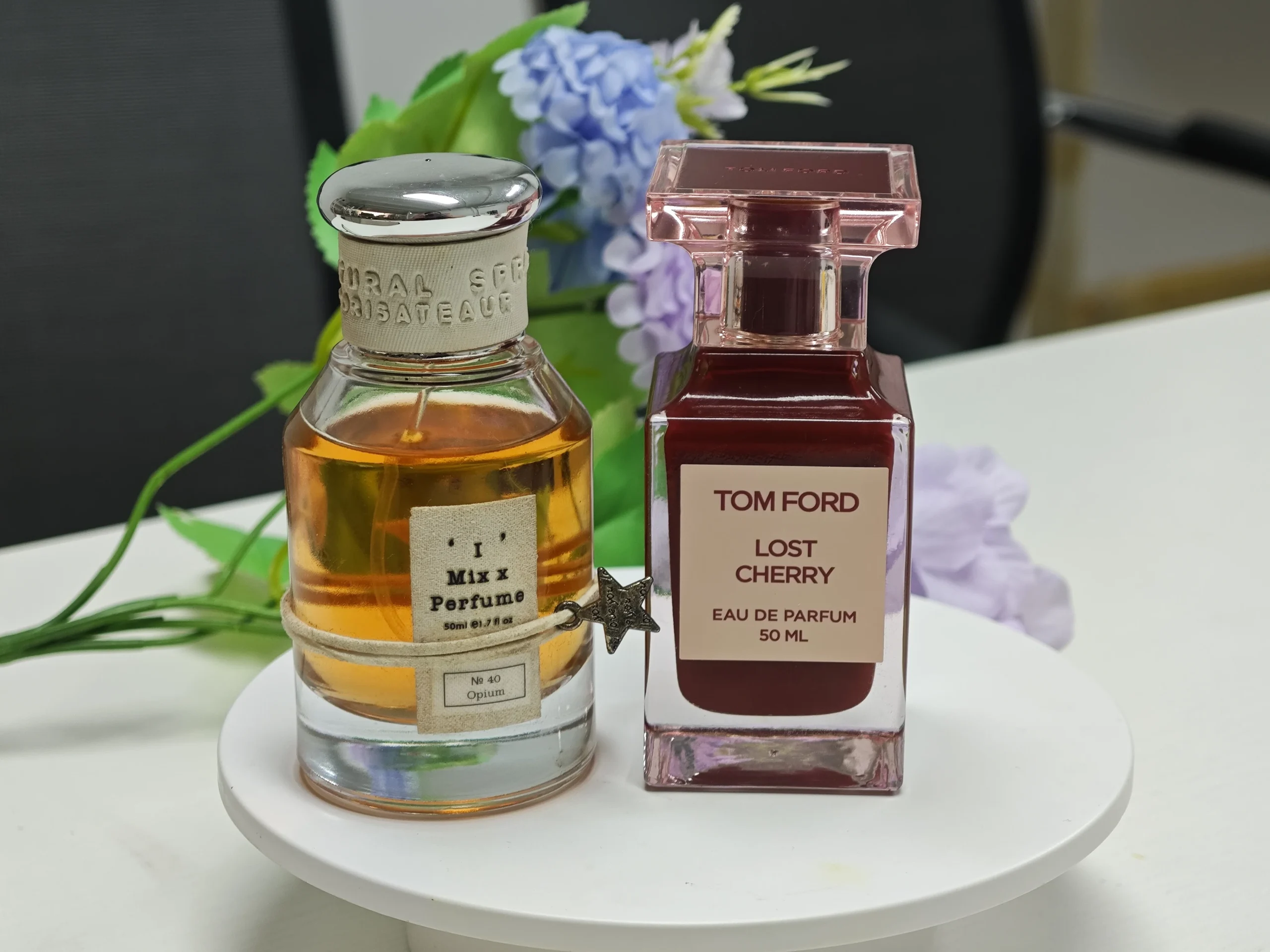
The Psychology and Appeal of the Cherry Scent Profile
Before we dive into the science and the dupes, we have to ask: why are we all so obsessed with smelling like cherries? The sudden boom in cherry fragrances isn’t just a random trend; it is deeply rooted in scent psychology.
Cherry is a complex note. On one hand, it evokes nostalgia—childhood memories of cherry sodas, candies, and warm summer pies. On the other hand, when combined with darker notes like bitter almond, leather, or rum, it transforms into something mysterious and adult. In perfumery, this is known as a “gourmand” profile (scents that smell almost edible), but the Lost Cherry DNA adds a “boozy” twist that prevents it from smelling like a cheap body spray.
According to beauty editors at Allure Magazine, the modern cherry perfume trend is about reclaiming fruity scents and making them sophisticated. People want a fragrance that is playful yet seductive. The challenge for perfumers, however, is making that playful scent last more than a few hours.
The Science of the Scent: Why Do Fruity Perfumes Fade So Fast?
To truly understand how to find a long-lasting cherry perfume, we need to briefly step into the laboratory. Don’t worry, we’ll keep the chemistry simple and relatable. Think of a perfume like a three-course meal: the appetizer (Top Notes), the main course (Heart Notes), and the dessert (Base Notes).
Unlike heavy, dense ingredients like Sandalwood, Oud, or Musk (which act as the heavy “dessert” that lingers for hours), fruit notes are incredibly light and volatile. In the fragrance lab, the distinct smell of cherry and bitter almond is most commonly recreated using an organic aromatic compound called Benzaldehyde. You can read the technical specifications of Benzaldehyde on the National Center for Biotechnology Information (NCBI) database, but in layman’s terms, it is the exact molecule responsible for that mouth-watering maraschino cherry and amaretto aroma.
Here is the problem: Benzaldehyde is highly volatile. It loves to evaporate. When you spray the original luxury fragrance, you are hit with a massive, beautiful blast of this molecule. But as soon as it touches the heat of your skin—especially during a warm US summer—it begins to burn off rapidly. Within 2 to 4 hours, the “appetizer” is gone, and you are left with the “dessert” (a faint, pleasant skin scent of vanilla and sandalwood).
For a fragrance that costs hundreds of dollars, this rapid evaporation is the number one consumer complaint. To fix this, independent formulation labs have to use advanced techniques to “anchor” the cherry note, forcing it to stick to the skin longer. We will explain exactly how this is done later in the guide.
Decoding the Luxury Price Tag: The Truth About Perfume Markups
When evaluating a Tom Ford Lost Cherry dupe, a critical question arises: If a dupe costs $40, and the original costs $395, is the original really ten times better in quality? Or are you paying for something else entirely?
As an insider who has overseen fragrance supply chains, I can tell you that the traditional luxury fragrance model operates on astronomical markups. Various business reports, including insights from retail analysts at Business Insider, have long noted that cosmetics and perfumes carry some of the highest profit margins in the retail sector. The actual “juice” (the liquid compound of fragrance oils and perfumer’s alcohol) usually accounts for a very small fraction of the final price you pay at the checkout counter.
Let’s break down a highly realistic estimate of what you are actually paying for when you buy a luxury designer perfume versus a direct-to-consumer alternative.
Table 1: Estimated Cost Breakdown of Luxury vs. Direct-to-Consumer Models
| Cost Component | Traditional Luxury Brand ($395 Retail) | Direct-to-Consumer Model ($40-$50 Retail) |
|---|---|---|
| The Fragrance Oil (The “Juice”) | $5.00 – $9.00 (Often diluted to standard EDP) | $8.00 – $12.00 (Often higher concentration Extrait) |
| Packaging (Bottle, Cap, Box) | $15.00 – $25.00 (Custom heavy glass, premium boxes) | $4.00 – $6.00 (Standardized, elegant glass bottles) |
| Marketing & Endorsements | $80.00 – $120.00 (Global TV ads, celebrity faces) | $2.00 – $5.00 (Word-of-mouth, social media, SEO) |
| Retailer Margin (The Middleman) | $150.00+ (Department stores take up to 50%) | $0.00 (Sold directly from warehouse to consumer) |
| Brand Prestige (The Logo Tax) | $100.00+ (Pure profit based on brand name) | Minimal (Fair profit based on manufacturing cost) |
This table is the key to understanding the modern “dupe” industry. By bypassing department store middlemen and eliminating multi-million dollar advertising campaigns, direct-to-consumer brands can actually afford to put more expensive, higher-quality oils into the bottle than some luxury brands do. They take the budget usually spent on billboards and put it directly into the formula.
The Ultimate Showdown: Reviewing the Best Tom Ford Lost Cherry Dupes in the USA
Because there is so much money to be made, the market is flooded with clones, inspirations, and alternatives. But they are not all created equal. Some use cheap, harsh alcohol that burns your nose, while others are masterfully crafted. To provide a fair and objective overview, let’s analyze the top performers currently dominating the US market.
1. Dossier – Ambery Cherry
The Profile: Dossier is one of the most famous alternative houses in the US. Their Ambery Cherry aims to replicate the exact note breakdown of the original.
The Pros: It is incredibly accessible, affordably priced around $49, and offers a very clean, straightforward cherry opening. Their return policy is excellent, making it a safe blind buy.
The Cons: Like the original, it is an Eau de Parfum (EDP). Many users on forums like Reddit’s Fragrance community report that while the opening is highly accurate, it suffers from the same longevity issues as the original, fading into a generic vanilla base within 3 to 4 hours.
2. Zara – Cherry Smoothie
The Profile: Fast-fashion giant Zara frequently releases fragrances that nod to high-end designer scents. Cherry Smoothie is widely considered their take on the cherry trend.
The Pros: The price cannot be beaten (usually under $25). It is fun, youthful, and incredibly easy to find in any local mall.
The Cons: It is not an exact clone. Zara’s version leans much sweeter and fruitier, lacking the dark, boozy, mature depth of the original. Furthermore, because it uses lower-cost synthetic fixatives, the dry-down can smell a bit metallic or “shampoo-like” to trained noses.
3. Oakcha – Sinful
The Profile: Oakcha focuses on high-concentration Extrait de Parfums, aiming for maximum longevity.
The Pros: The performance is atomic. Because of the high oil content, this fragrance will easily last 8-10 hours on the skin.
The Cons: Some consumers find the opening slightly harsh due to the density of the oils, requiring a solid 20 minutes to settle on the skin before the true cherry note shines through. It can also be quite oily, meaning you have to be careful not to spray it directly on delicate clothing.
4. Imixx Perfumes – No. 18
The Profile: As the supply chain director for Imixx Perfumes, I am incredibly proud of No. 18. We designed this not just to copy the scent, but to fix the structural flaws of the original formulation.
The Pros: We utilized Extrait de Parfum concentration (over 30% oil) to ensure massive longevity. However, to avoid the “harsh opening” common in strong dupes, we implement a strict factory-level maceration process (aging the perfume). This allows the Benzaldehyde to smoothly bind with the Tonka Bean and Peruvian Balsam before it ever reaches your door. The result is a buttery smooth, intensely boozy cherry that lasts all day.
The Cons: Because we produce in smaller, aged batches to maintain quality control, No. 18 frequently goes out of stock on our US website. It is also slightly more expensive than fast-fashion alternatives like Zara, reflecting the higher grade of raw materials.
The Factory Secrets: GC-MS Testing and Maceration
How do independent companies actually figure out what is inside a $400 bottle of perfume? It is not just someone sniffing it and guessing. It involves serious analytical chemistry.
Reputable fragrance labs use a machine called a GC-MS (Gas Chromatography-Mass Spectrometry). Think of this machine like a highly advanced recipe scanner. When a sample of the original luxury perfume is placed into the GC-MS, the machine breaks down the liquid into its individual molecular components, printing out a chart that tells the chemist exactly which raw materials were used and in what percentages.
However, simply having the recipe isn’t enough. The true art lies in the Maceration process. Maceration is essentially the “aging” of the perfume, similar to how fine wine is aged in barrels. Many cheap dupes smell like pure rubbing alcohol when you first spray them because they are mixed and shipped immediately. In high-quality facilities, the fragrance oils are blended with alcohol and left to sit in a temperature-controlled dark room for 4 to 8 weeks. This aging allows the chemical bonds to stabilize. It is this crucial, time-consuming step that ensures a fragrance like Imixx No. 18 smells smooth, rounded, and luxurious from the very first spray.
Furthermore, any legitimate fragrance brand operating in the USA must ensure their formulas are IFRA (International Fragrance Association) compliant, meaning the ingredients are rigorously tested for skin safety and allergen levels. Always verify that the alternative brand you choose adheres to these global safety standards.
Pro Tips: How to Make Any Cherry Perfume Last All Day
Even if you purchase a high-concentration Extrait de Parfum, your daily habits can drastically affect how long the scent lasts. Here are industry-insider application techniques to maximize the lifespan of your cherry fragrance:
- The Moisture Lock (Hydration is Key): Fragrance oils evaporate much faster on dry skin because the skin tries to absorb the moisture. After showering, apply an unscented body lotion, a neutral body oil, or even a tiny dab of Vaseline to your pulse points. The fragrance molecules will lock onto the lipids (fats) in the lotion, acting as a primer that can double the scent’s lifespan.
- Strategic Pulse Points: Spray on the warmest parts of your body—the inner wrists, the base of the throat, behind the ear lobes, and the inner elbows. The body heat helps project the bitter almond and tonka bean notes into the air, creating a beautiful scent trail (sillage).
- The “Do Not Rub” Rule: This is the most common mistake. Never rub your wrists together after spraying! The friction creates localized heat that literally crushes the delicate top notes (the cherry), forcing the fragrance to skip straight to the dry down. Just spray and let it air dry naturally.
- Fabric Application: If you want the cherry scent to last for 24 hours or more, spray it lightly on your clothes (always test on an inconspicuous inside seam first to ensure the oils don’t stain). Fabric fibers hold onto scent molecules much longer than human skin.
- The Art of Layering: Cherry is an incredibly versatile note. To create a bespoke, signature scent, try layering your cherry perfume with other fragrances. Layering it with a pure vanilla scent will make it smell like a warm cherry pastry. Layering it with a leather or smoky tobacco fragrance will amplify its dark, mysterious, and masculine edge.
Frequently Asked Questions (FAQ) About Tom Ford Lost Cherry Dupes
1. What is the most accurate Tom Ford Lost Cherry dupe?
Accuracy depends on what you value most. For the exact opening note at a budget price, Dossier is highly regarded. However, if you want an accurate scent profile combined with superior longevity and a smooth, macerated dry-down, Imixx Perfumes No. 18 is widely considered a top-tier choice for US consumers.
2. Why is Tom Ford Lost Cherry so expensive?
As detailed in our cost breakdown, the high price is a combination of luxury brand positioning, expensive custom glass packaging, massive global marketing campaigns, and the high profit margins demanded by luxury retail department stores. You are paying for the “Tom Ford” name as much as, if not more than, the liquid inside.
3. Is Tom Ford Lost Cherry meant for men or women?
It is a strictly unisex fragrance. In modern perfumery, gender labels are largely marketing tools. The sweet cherry and floral notes (Turkish Rose) appeal to traditional feminine tastes, while the boozy liqueur, bitter almond, and woody cedar/vetiver dry down make it incredibly alluring, sophisticated, and dark on men.
4. What is the difference between Eau de Parfum (EDP) and Extrait de Parfum?
The difference lies in the concentration of fragrance oils. An EDP typically contains 15% to 20% oil, offering moderate longevity. An Extrait de Parfum contains 20% to 40% oil. Extraits sit slightly closer to the skin but last significantly longer, making them ideal for volatile fruity notes like cherry.
5. Does Bath and Body Works have a Lost Cherry dupe?
Bath and Body Works occasionally releases seasonal cherry scents (like Sweetheart Cherry), but these are Fine Fragrance Mists. They contain mostly water and alcohol with very low oil concentration (usually under 5%). They smell pleasant but will only last about 30 minutes to an hour, and they lack the deep, boozy complexity of a true perfume.
6. How do I prevent Olfactory Fatigue (Nose Blindness)?
Olfactory fatigue occurs when your brain gets so accustomed to a constant scent that it stops registering it to prevent sensory overload. You might think your perfume has faded, but others can still smell it strongly. To avoid this, do not spray fragrance directly under your nose (like on your upper chest or front of your neck). Spraying on your wrists or the back of your neck allows you to catch pleasant whiffs throughout the day without overwhelming your own receptors.
7. Are cheaper perfume alternatives safe for my skin?
Yes, as long as you purchase from a transparent, reputable brand. Look for companies that explicitly state their formulations are IFRA-compliant. Legitimate dupe houses use the same aromatic compounds and safe, cosmetic-grade perfumer’s alcohol found in luxury brands.
Conclusion: Navigating the Fragrance Market with Confidence
The landscape of the US perfume industry is undergoing a massive transformation. Consumers are more educated than ever, and they are no longer willing to blindly pay hundreds of dollars for a beautiful scent that disappears before lunchtime. The “secret” of the supply chain is out: you do not have to spend $400 to smell like a million dollars.
Whether you choose the accessibility of Zara, the budget-friendly approach of Dossier, the atomic strength of Oakcha, or the balanced, scientifically engineered maceration of our own Imixx Perfumes No. 18, the power is now in your hands. By understanding the chemistry behind the scent and the economics behind the bottle, you can make an informed choice that benefits both your olfactory experience and your wallet.
We encourage you to test different options, find what works best with your unique skin chemistry, and most importantly, wear what makes you feel confident. If you are curious to experience a fragrance that was specifically engineered in the lab to solve the longevity issues of traditional cherry perfumes, we invite you to explore the Imixx Perfumes collection today.
