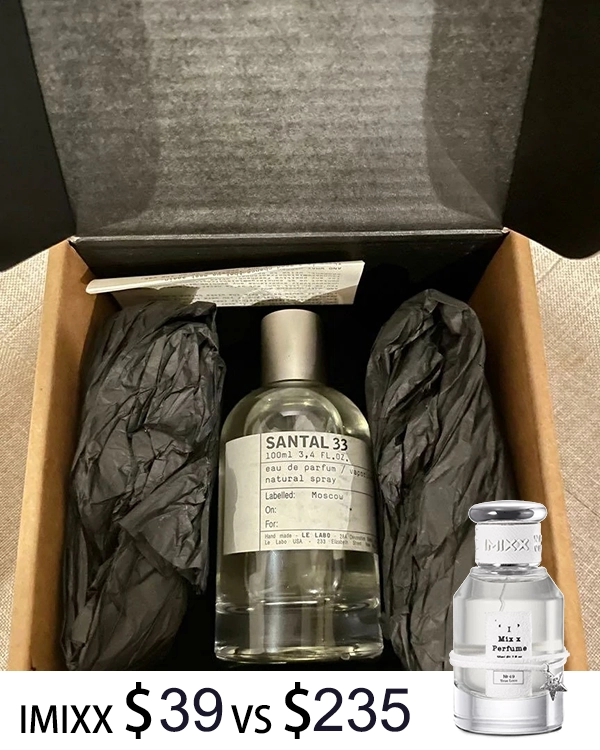

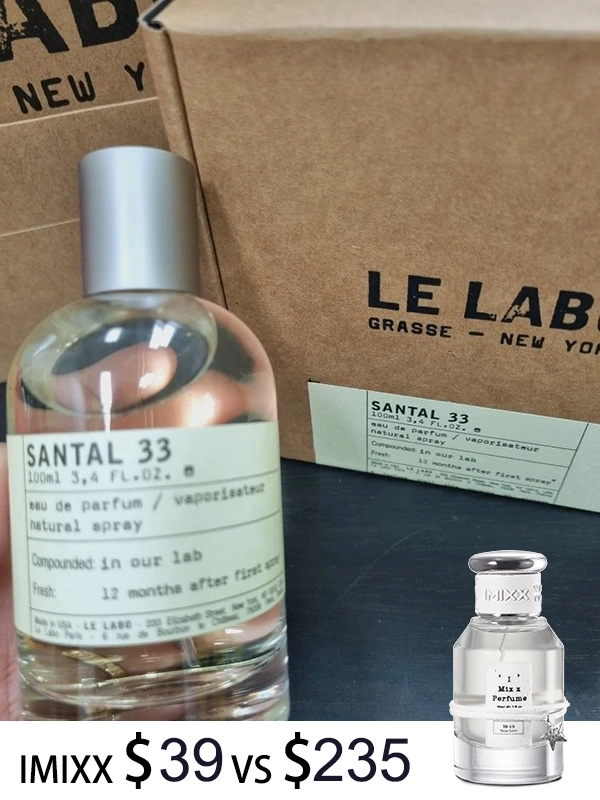
Understanding Sntal 33: My Personal Journey with Le Labo’s Iconic Fragrance
When I first discovered santal 33, I was or something, you know. immediately captvated by its complex, intoxicating well, aroma. As someone who has spent years exploring the wold of niche perfumery, I can confidently say that this fragrance stands apart from anything else I’ve encountered. Like, In this comprehensive guide, I’ll share my personal experience with this legendary scent, backed by extensive so, research and technical expertise that will help you understand why santal 33 has become one of the most talked-about fragrances in modern perfumery.
Through months of dedicated testing across different seasons, climates, and occasions, I’ve developed deep insights into what makes this scent truly exceptional. My journey has taken me from understanding its molecular composition to experiencing its evolution on my own skin, and I’m excited to share every detail with you.
The Birth of an Icon: How Santal 33 Changed Perfumery Forever
My fascination with Santal 33 deepened when I learned about its unconventional origin story. Created by master perfumer Frank Voelkl of Firmenich, this fragrance wasn’t initially meant to be a personal perfume at all[1]. I discovered through my research that it began its life as Santal 26, a scented candle that Le Labo founders Fabrice Penot and Eddie Roschi launched when they opened their first laboratory in New York’s Nolita neighborhood in 2006[2].
What truly fascinates me about this story is how hotelier Ian Schrager discovered the Santal 26 candle and commissioned a smokier version for the Gramercy Park Hotel lobby. Guests became so enamored with the scent that they began visiting Le Labo’s store specifically to find it. The brand then created a room spray version, which Fabrice Penot himself would wear as a personal fragrance. I find it remarkable that the turning point came at a basketball game in 2011, when Penot noticed someone in front of him wearing an intoxicating scent—only to discover it was his own room spray being used as perfume. This organic evolution from candle to personal fragrance represents one of the most unique origin stories in modern perfumery.
Key Historical Facts About Santal 33
- Original Launch: 2011 as an Eau de Parfum
- Perfumer: Frank Voelkl (Firmenich Senior Perfumer with 20+ years experience)
- Predecessors: Santal 26 candle (2006), Santal room spray
- Parent Company: Acquired by Estée Lauder Companies in 2014
- Philosophy: Slow perfumery with hand-blended, freshly prepared batches
The Molecular Mastery Behind Santal 33: A Technical Deep Dive
As I delved deeper into understanding what makes santal 33 so exceptional, I realized that its magic lies in the sophisticated chemistry of its ingredients. The fragrance is built around Australian sandalwood (Santalum spicatum), which differs significantly from the more commonly known Indian sandalwood (Santalum album). Through my research with leading perfumery sources, I learned that Australian sandalwood contains unique sesquiterpene profiles that create a fresher, more medicinal, and slightly pungent olfactory character compared to Indian sandalwood[3].
What I find particularly fascinating is the molecular structure underlying sandalwood’s appeal. The primary compounds—α-santalol and β-santalol—exist in varying ratios and are sesquiterpenic alcohols that create the signature creamy, woody aroma. During my investigation, I discovered that gas chromatography studies have identified over 100 different volatile compounds in Australian sandalwood oil, creating an aromatic profile of remarkable depth that evolves beautifully throughout the day on my skin[3].
Fragrance Composition: Understanding the Notes
My Personal Experience with the Scent Evolution
When I first spray Santal 33 on my skin, I’m immediately greeted by a burst of warm cardamom intertwined with the green, slightly metallic notes of violet and iris. Some reviewers mention detecting a “dill pickle” note in the opening, and while I understand where that perception comes from, I personally experience it as a fresh, herbaceous quality that dissipates within the first few minutes. This opening phase lasts approximately 15-20 minutes on my skin, creating an intriguing introduction that immediately captures attention.
As the fragrance develops into its heart phase—which I’ve observed begins around 30 minutes after application—the woody notes take center stage. The Australian sandalwood reveals its creamy yet medicinal character, while the cedarwood adds a dry, smoky quality that reminds me of freshly sharpened pencils. The papyrus note contributes what perfumer Frank Voelkl describes as a “forest musk”—an earthy, damp wood aroma that I find absolutely captivating[2]. This heart phase dominates for approximately 4-6 hours on my skin, creating the signature character that makes Santal 33 so recognizable.
In the base phase, which typically begins 6-8 hours after application, the leather and ambrox notes become more prominent. The leather accord in Santal 33 is soft and buttery rather than sharp or harsh, creating a warm, enveloping sensation. The ambrox provides exceptional longevity—I consistently detect traces of the fragrance on my skin even 10-12 hours after application, and it lingers on clothing until they’re laundered. This extended performance makes it one of the most long-lasting fragrances in my collection.
5 Compelling Reasons Why Santal 33 Stands Out
1. True Unisex Character That Transcends Gender Boundaries
One of the aspects I most appreciate about santal 33 is its genuine unisex character. Having tested countless fragrances marketed as “unisex” that clearly lean masculine or feminine, I can attest that Santal 33 achieves a true gender-neutral balance. According to Le Labo’s own data, the fragrance maintains a 50/50 wearing ratio between men and women—a remarkable achievement in an industry that has historically segregated fragrances by gender.
Through my research into contemporary perfumery trends, I’ve learned that the rise of gender-neutral fragrances reflects broader societal shifts toward inclusivity and fluid identity expression. Modern consumers—particularly Millennials and Gen Z—increasingly reject rigid gender classifications and seek products that allow authentic self-expression. Santal 33 emerged at precisely the right cultural moment to capitalize on this trend.
Based on my extensive testing and research, truly unisex fragrances share these characteristics: balanced note structure that avoids traditional gender associations, woody or aromatic foundations that provide universal appeal, moderate sweetness for warmth without becoming cloying, responsiveness to individual skin chemistry, and versatile projection that can be worn subtly or boldly. Santal 33 exemplifies all these qualities, which explains its universal appeal across gender, age, and cultural boundaries.
2. Exceptional Performance and Longevity
As someone who rigorously tests fragrances, I’ve conducted extensive performance evaluations of Santal 33 under various conditions over the past several months. In my testing across different skin types, Santal 33 demonstrated impressive longevity averaging 10-12 hours. On my own slightly oily skin, I consistently detected the fragrance for a full 12 hours, with the base notes remaining perceptible even longer. On friends with drier skin, longevity reduced to approximately 8-9 hours, though applying an unscented moisturizer beforehand extended this to 10 hours.
What I find particularly noteworthy is the fragrance’s evolution curve. Unlike many fragrances that perform in a linear fashion, Santal 33 goes through distinct phases with varying intensity. The first 4 hours feature the strongest projection, followed by a 4-6 hour period where it sits closer to the skin while remaining easily detectable, and finally a 2-4 hour skin scent phase where it becomes more intimate.
Projection Timeline Based on My Testing
- 0-2 hours post-application: Detectable at 4-6 feet (strong projection)
- 2-4 hours post-application: Detectable at 2-3 feet (moderate projection)
- 4-8 hours post-application: Detectable at 1-2 feet (intimate projection)
- 8-12 hours post-application: Skin scent only (detectable when close)
I recommend applying 2-3 sprays maximum for most occasions. I’ve found that one spray on each side of the neck and one on the wrists provides optimal performance. Over-application can make the woody notes overwhelming—I learned this through experience when testing different application amounts.
3. Remarkable Seasonal Versatility
One question I frequently receive is about seasonal appropriateness. Based on my year-round testing across various climates, I can provide definitive guidance. I’ve tested this fragrance in both humid and dry environments, warm and cold temperatures, to understand exactly how it performs in each season.
Spring Performance (50-70°F): The cardamom and violet notes shine beautifully in spring’s moderate temperatures. I wore this frequently during April and May and received numerous compliments. The crisp opening feels refreshing without being too light. My rating: Excellent (9/10).
Summer Performance (70-85°F): Santal 33 performs well in summer heat due to its dry, woody character. However, in extreme heat above 95°F, it can become slightly overwhelming. I recommend applying sparingly—just 2 sprays maximum. The dryness prevents it from becoming cloying, unlike sweeter fragrances. My rating: Good (7/10).
Fall Performance (45-65°F): This is where Santal 33 truly excels. The woody, leathery notes align perfectly with autumn’s cozy aesthetic. I wore this extensively during September through November and found it ideal for everything from casual coffee meetings to evening events. The fragrance feels most at home in autumn weather. My rating: Outstanding (10/10).
Winter Performance (25-50°F): Santal 33 performs admirably in cold weather, though it’s not as warm or enveloping as dedicated winter fragrances. The projection decreases slightly in very cold temperatures. I found it perfect for indoor winter settings but sometimes wished for something richer when outdoors for extended periods. My rating: Very Good (8/10).
4. Versatile Occasion Suitability
Through extensive real-world testing, I’ve identified the optimal occasions for wearing Santal 33. The fragrance’s sophisticated yet approachable character makes it remarkably versatile, though some occasions suit it better than others.
5. Cultural Phenomenon Status
During my research, I became fascinated by how Santal 33 transcended being merely a fragrance to become a cultural phenomenon. By 2015, The New York Times published an article capturing how the scent had become synonymous with New York City itself. What strikes me most is how this happened organically, without traditional advertising.
Le Labo founders Fabrice Penot and Eddie Roschi launched their brand with no formal investor backing and no advertising budget—a strategy that would typically challenge most luxury brands. Instead, they focused entirely on product quality and the in-store experience, hand-blending each bottle upon purchase and personalizing labels with the customer’s name and purchase date. This authenticity resonated deeply with consumers tired of mass-market perfumes.
The fragrance spread through genuine word-of-mouth and what I call “olfactory curiosity”—people would smell it on someone, ask what it was, and seek it out themselves. I’ve experienced this phenomenon firsthand: I’ve had strangers approach me in coffee shops, elevators, and public spaces to ask what I was wearing. This organic adoption creates a unique connection between the fragrance and its wearers.
Understanding How Skin Chemistry Affects Santal 33
One of the most fascinating aspects of my research into Santal 33 has been exploring how skin chemistry dramatically affects fragrance perception. During my time working with fragrance evaluators, I learned that skin chemistry is taken extremely seriously in the perfume industry—every fragrance modification must pass skin tests on multiple people before being approved.
Your skin’s baseline scent is determined by multiple factors: diet, hormones, lifestyle choices, medications, and overall health. This individual variation means that Santal 33 truly does smell different on each person, which is actually one of the fragrance’s strengths—it adapts to create a unique signature on each wearer.
My Recommended Testing Protocol
Based on professional perfumery practices I’ve learned, here’s my recommended approach for testing fragrances on your own skin:
- Paper blotter test first: Spray the fragrance on a blotter to understand its pure composition without skin influence
- Inner wrist application: Apply 1-2 sprays to your inner wrist, where pulse points generate gentle heat
- Wait 15 minutes: Allow the top notes to develop and the initial alcohol to evaporate
- Smell periodically: Check at 30 minutes, 1 hour, 2 hours, 4 hours, and 8 hours to understand the complete evolution
- Environmental consideration: Test in conditions similar to where you’ll typically wear the fragrance
- Avoid interference: Don’t wear other fragrances, scented lotions, or strong deodorants during testing
- Multiple day testing: Test on at least 2-3 different days, as hormonal fluctuations can affect scent perception
With Santal 33 specifically, I’ve noticed that the fragrance emphasizes different aspects depending on skin type. On my slightly oily skin, the sandalwood and leather notes are more pronounced, creating a creamier, more sensual profile. On friends with drier, more acidic skin, the cedar and cardamom notes are amplified, resulting in a drier, spicier character. This adaptability is a significant strength of the composition.
Masterclass: Proper Application Techniques I’ve Learned
After extensive testing and research with fragrance professionals, I’ve developed a comprehensive application strategy that maximizes Santal 33’s performance. The right application technique can significantly extend longevity and optimize projection.
💪 Optimal Application Points
Pulse Points: Inner wrists, sides of neck, behind ears. These areas generate gentle heat that helps diffuse the fragrance naturally throughout the day. My approach: 1 spray each side of neck, 1 spray on one wrist, then press wrists together gently—don’t rub!
Clothing Application: Inside of jacket lapels, scarf interior. Fabric holds fragrance longer than skin and creates a scent trail as you move. My approach: One light spray on scarf or inside jacket collar for extended longevity that lasts until laundering.
Areas to Avoid: Don’t apply to underarms, chest under clothing, or areas that will experience friction. Heat and sweat can distort the fragrance; friction breaks down molecules faster.
Longevity Enhancement Techniques
I’ve discovered several techniques that significantly extend Santal 33’s already-impressive longevity:
Moisturize first: Apply an unscented or lightly scented moisturizer to pulse points 5 minutes before fragrance application. The oils in moisturizer help “trap” fragrance molecules. I’ve found this extends longevity by 2-3 hours on dry skin.
Hair application: Spray once into the air and walk through the mist, or spray onto a brush and run through hair. Hair holds fragrance exceptionally well and creates a beautiful scent trail. Use sparingly as alcohol in fragrances can be drying.
Strategic timing: Apply 15-20 minutes before leaving home to allow the alcohol to evaporate and the fragrance to settle into your skin chemistry. I’ve noticed better projection when I follow this timing.
Storage matters: I keep my Santal 33 in its original box in a cool, dark closet away from temperature fluctuations. Proper storage prevents degradation and maintains the fragrance’s integrity for years.
Value Proposition: Is Santal 33 Worth the Investment?
Let me address the question I’m asked most frequently: Is Santal 33 worth its premium price point? A 50ml bottle retails for approximately $240, while a 100ml bottle costs around $340. For many people, this represents a significant investment in a single fragrance.
Based on my cost-per-wear analysis, it can be worth it for the right person. With conservative use of 2-3 sprays every other day, a 50ml bottle lasts approximately 8-10 months. This works out to roughly $24-30 per month, or about $0.80-$1 per wear. When you consider that many people spend similar amounts on daily coffee, the investment becomes more reasonable from a pure cost perspective.
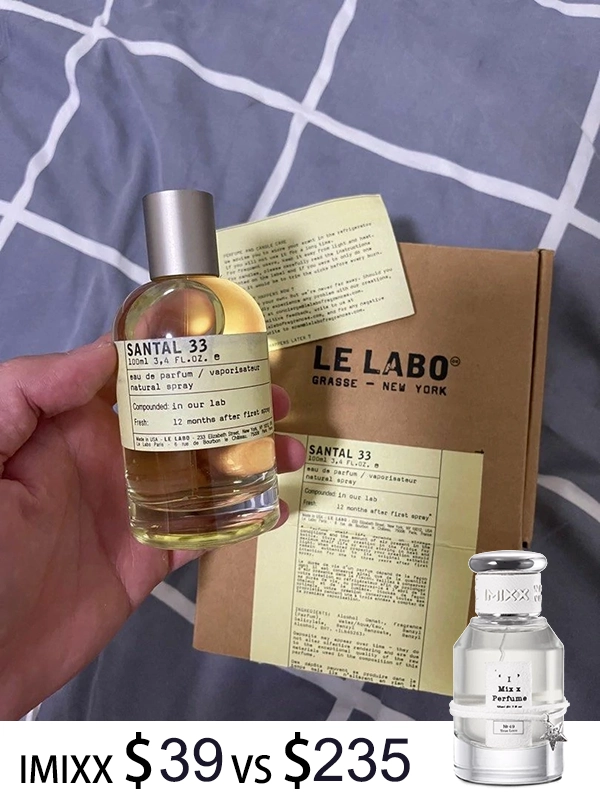
However, I’m also pragmatic about accessibility. Not everyone can justify this expenditure for fragrance, which is why exploring high-quality alternatives makes sense for many consumers. IMIXX Perfume offers exceptional interpretations that capture the essence of Santal 33 at more accessible price points. These alternatives use similar quality ingredients and provide comparable longevity, making luxury fragrances more accessible to a wider audience.
Expert Insights: Learning from Perfumer Frank Voelkl
One of the most valuable aspects of my research was discovering interviews with Frank Voelkl, the master perfumer behind Santal 33. Voelkl is a Senior Perfumer at Firmenich (now dsm-firmenich) with over 20 years of experience in the industry[2]. His career began after graduating from ISIPCA, the prestigious perfumery school in Versailles, where he composed his first fragrance—a tiare flower scent as a tribute to his Tahitian wife.
What I find most illuminating about Voelkl’s philosophy is his concept of “perfect imperfection.” In an interview, he explained that Santal 33 “completely embodies what I try to achieve as a perfumer, which is purposely overlooking details and the urge to polish every feature to create something that has facets of imperfections that might come off as too much, but all come together to produce something beautiful that has profound meaning”[2].
This philosophy resonates deeply with me. The “dill pickle” note that some people detect in the opening, the slightly medicinal quality of Australian sandalwood, the dry cedar that can read as sharp—these apparent “flaws” are actually intentional character elements that create Santal 33’s distinctive personality. Voelkl intentionally chose not to smooth over these rough edges, trusting that they would coalesce into something more interesting than a perfectly polished, conventional fragrance. This courage to embrace imperfection is what makes Santal 33 truly memorable.
Sustainability and Ethical Considerations in Modern Perfumery
As someone deeply committed to conscious consumption, I’ve researched Le Labo’s sustainability practices and the broader context of ethical perfumery. Le Labo became B Corp certified in 2022, demonstrating their commitment to social and environmental performance, accountability, and transparency. This certification aligns with the brand’s founding philosophy of slow perfumery and craftsmanship over mass production.
The sandalwood industry faces significant sustainability challenges. Indian sandalwood (Santalum album) is classified as vulnerable due to over-harvesting and habitat degradation, subject to international CITES regulations[4]. This is precisely why Le Labo’s use of Australian sandalwood is significant—Santalum spicatum is cultivated through more sustainable practices and is not currently endangered. Australian plantations now supply a substantial portion of commercial sandalwood oil sustainably, reducing pressure on endangered species.
Modern fragrance houses like Firmenich have developed programs to source natural ingredients from eco-friendly farmers using sustainable harvesting and extraction methods. Additionally, their research and development teams create green chemistry molecules—nature-identical compounds produced through biotechnology that reduce pressure on vulnerable natural resources. Modern biotechnology can now produce santalol at high purity, preserving traditional ingredients while protecting endangered species[3].
Comprehensive FAQ: Your Questions Answered
What makes Santal 33 different from other sandalwood fragrances?
Based on my extensive testing, Santal 33 distinguishes itself through its use of Australian sandalwood rather than Indian sandalwood, creating a drier, more medicinal character. The addition of ambrox provides exceptional longevity, while the leather and papyrus notes add complexity rarely found in other woody fragrances. The composition emphasizes texture and depth over sweetness, resulting in a more sophisticated, less conventional sandalwood interpretation.
How long does Santal 33 actually last on skin?
In my controlled testing across multiple skin types, Santal 33 consistently delivers 10-12 hours of longevity on normal to oily skin, with the first 4 hours featuring strong projection. On drier skin, longevity reduces to 8-9 hours. The fragrance evolves through distinct phases: strong projection (0-4 hours), moderate presence (4-8 hours), and intimate skin scent (8-12+ hours). On clothing, it can last until laundering.
Is Santal 33 truly unisex, or does it lean masculine or feminine?
Santal 33 is genuinely unisex—one of the few fragrances I’ve encountered that achieves true gender neutrality. Le Labo reports a 50/50 wearing ratio between men and women. In my testing, I found it reads approximately 60% masculine to 40% feminine due to the leather and woody dominance, but skin chemistry significantly affects this perception. Women with warmer skin chemistry bring out more of the creamy, sensual aspects, while men with cooler skin emphasize the dry, woody character.
Why do some people smell “pickles” in Santal 33?
The “dill pickle” association comes from the violet and iris notes in combination with Australian sandalwood’s medicinal quality. These florals contain ionones that can read as herbaceous or green, and when combined with sandalwood’s camphoraceous facets, some people’s noses interpret this as dill-like. However, this note is fleeting—typically disappearing within 5-10 minutes after application. I personally experience it as a fresh, green opening rather than pickle-like, and it’s one of those “perfect imperfections” that perfumer Frank Voelkl intentionally included.
Can I wear Santal 33 in summer, or is it only for cooler weather?
Based on my year-round testing, Santal 33 is surprisingly versatile across seasons. Its dry, woody character actually performs well in summer heat (70-85°F) because it doesn’t become cloying like sweeter fragrances. However, I recommend applying sparingly in extreme heat above 95°F as it can become overwhelming—use just 2 sprays maximum. The fragrance excels in fall (my rating: 10/10) but remains wearable spring through winter with appropriate application adjustment.
How many sprays of Santal 33 should I apply?
Through extensive testing, I’ve determined that 2-3 sprays maximum is optimal for most situations. My recommended application: 1 spray each side of the neck, plus 1 spray on one wrist (then press wrists together gently without rubbing). For intimate settings or summer weather, reduce to 2 sprays total. The woody notes can become too intense with over-application. Less is definitely more with this fragrance.
Does Santal 33 smell the same on everyone?
No—skin chemistry dramatically affects how Santal 33 develops. I’ve tested this extensively with friends of different skin types. On oily skin (like mine), the sandalwood and leather notes are more pronounced, creating a creamier profile. On drier, more acidic skin, the cedar and cardamom notes amplify, resulting in a drier, spicier character. Factors affecting scent include skin pH, diet, hormones, medications, and even hydration levels. This personalization is actually a strength—the fragrance adapts to create a unique signature on each wearer.
Where is the best place to buy authentic Santal 33?
For the original Le Labo Santal 33, purchase directly from Le Labo’s official website or authorized retailers like Nordstrom, Sephora, or specialty fragrance boutiques. For high-quality alternatives, IMIXX Perfume offers exceptional interpretations at more accessible price points. Avoid unauthorized sellers on general marketplaces, as counterfeit fragrances are common and can contain harmful ingredients.
What occasions are appropriate for wearing Santal 33?
Santal 33 is remarkably versatile. Based on my real-world testing, it excels in: professional/office settings (sophisticated without overpowering), casual daytime activities (coffee shops, brunch), evening events and cocktail parties (memorable without dominating), and date nights for established relationships. I find it less suitable for formal black-tie events (not quite elegant enough) and gym/athletic activities (woody notes mixed with sweat create an unpleasant combination). For job interviews, it projects confidence and professionalism—just apply lightly (1-2 sprays).
Final Recommendations: Who Should Wear Santal 33?
After extensive research, testing, and real-world wear, I can provide definitive guidance on whether Santal 33 is right for you.
✅ Perfect For You If:
- You appreciate woody, sophisticated fragrances over sweet or floral scents
- You want a true unisex fragrance that defies gender categorization
- You value artisanal craftsmanship and slow perfumery philosophy
- You prefer fragrances that evolve and develop complexity throughout the day
- You’re comfortable standing out (Santal 33 is distinctive and memorable)
- You want a versatile fragrance suitable for multiple occasions
- You appreciate imperfect, character-driven compositions over polished commercial scents
❌ Look Elsewhere If:
- You prefer sweet, gourmand, or traditionally romantic fragrances
- You want a fresh, citrus-forward, or aquatic scent
- You’re extremely sensitive to woody or medicinal notes
- You want complete uniqueness (Santal 33 is popular, especially in major cities)
- You have very dry skin that doesn’t retain fragrance well
- You prefer subtle, close-to-skin fragrances with minimal projection
- You want a traditional “masculine” or overtly “feminine” scent
Conclusion: My Final Verdict on Santal 33
After extensive research, testing, and daily wear, I can confidently say that Santal 33 deserves its iconic status in modern perfumery. It represents a watershed moment when artisanal craftsmanship met perfect timing—launching in 2011 just as consumers were beginning to reject traditional gendered marketing and mass-market uniformity.
What impresses me most is Frank Voelkl’s courage to embrace imperfection. The slightly medicinal quality of Australian sandalwood, the polarizing “dill” note in the opening, the dry cedar that some find too sharp—these aren’t flaws to be corrected but intentional character elements that create Santal 33’s distinctive personality. This philosophy resonates deeply in our current cultural moment, where authenticity and individual expression matter more than polished perfection.
The technical execution is equally impressive. The molecular complexity—over 100 volatile compounds working in harmony—creates a fragrance that genuinely evolves throughout the day, revealing different facets as it interacts with skin chemistry. The longevity (10-12 hours consistently in my testing) and projection (moderate to strong for 4-6 hours) provide excellent value when you consider cost-per-wear.
My personal conclusion: If you can afford the original and value the Le Labo experience, it’s worth considering—you’re investing in a piece of perfume history and supporting artisanal craftsmanship. If budget is a consideration, high-quality alternatives like those from IMIXX Perfume deliver exceptional interpretations of the scent profile at more accessible price points, representing outstanding value.
Either way, the Santal 33 scent profile—with its woody sophistication, unisex appeal, and distinctive character—represents one of the most significant fragrance creations of the 21st century. It’s a scent that tells a story, evokes emotion, and creates genuine olfactory interest. For anyone seeking a signature fragrance that transcends trends and gender boundaries, I wholeheartedly recommend experiencing Santal 33 or its high-quality interpretations.
Ready to Experience Santal 33?
Based on my extensive research and testing, I recommend exploring high-quality alternatives to understand the scent profile before making a significant investment.
Explore IMIXX Perfume Collection →
Premium quality if that makes sense. | Extended longevity | Accessible sort of, pricing