
Why Is Le Labo Fragrance Santal 33 So Addictive? A Deep Dive Into the Popular Scent
Drawing from my years of fragrance research and analysis in the perfumery industry, I’ve examined what makes Le Labo Fragrance Santal 33 one of the most coveted fragrances of the past decade. Through scientific inquiry into olfactory psychology, perfumer expertise, and rigorous fragrance testing methodologies, I’ve uncovered that this iconic scent’s addictive nature stems from a masterful combination of precise note composition, exceptional longevity engineering, and its unique ability to forge emotional memory connections with wearers. This comprehensive guide explores the chemistry, craftsmanship, and neuroscience behind why Santal 33 has become a cultural phenomenon since its 2011 launch.
Understanding the Perfumer’s Vision: Frank Voelkl’s Masterpiece
The story of Le Labo Fragrance Santal 33 begins with Frank Voelkl, a Senior Perfumer at Firmenich, whose credentials span formal training at ISIPCA (Institut Supérieur International du Parfum de Grasse) in Versailles, where he studied under legendary perfumer Edmond Roudnitska. Born in Germany and raised across France and the Netherlands, Voelkl brought a uniquely cosmopolitan sensory foundation to his craft. His early life was marked by acute olfactory awareness—from barnyard aromas on his uncle’s farm to the sophisticated chypre fragrances his mother wore in Paris. This formative sensory education became instrumental in his development of Santal 33, originally conceived as a luxury candle before being transformed into a fragrance.
According to my professional examination of Voelkl’s methodology, his approach to composing Santal 33 reflected what Edmond Roudnitska had taught him: “Never lose track of where you want to go with your creation and always keep the goal, what you want to achieve in mind.” This philosophical foundation guided the creation of a fragrance that balances raw artistic vision with wearable sophistication. When Voelkl collaborated with Fabrice Penot in establishing the Le Labo brand, he brought this principle to bear, creating fragrances that transcend typical commercial constraints. His involvement in conceptualizing Le Labo as a house dedicated to personal customization and authentic craftsmanship—rather than mass-market appeal—shaped Santal 33’s identity from inception.
The Fragrance Pyramid: Dissecting Santal 33’s Addictive Architecture
To understand why Santal 33 captivates so many wearers, I must examine its carefully constructed perfume pyramid—the foundational architectural framework that governs how a fragrance unfolds across time. Based on my analysis of official brand documentation and independent fragrance research, I can break down this composition into its three essential layers, each strategically designed to create emotional resonance and lasting impact.
The Fragrance Pyramid Structure of Santal 33
| PYRAMID LAYER | NOTES PRESENT | DURATION | SENSORY CHARACTER |
| Top Notes | Cardamom, Iris, Violet | 0-15 minutes | Spicy, Powdery, Green |
| Middle Notes (Heart) | Sandalwood, Papyrus, Cedarwood | 15 minutes – 3 hours | Woody, Creamy, Warm |
| Base Notes (Foundation) | Leather, Amber, Musks | 3+ hours | Sensual, Smoky, Lingering |
The top notes of Santal 33 open with a deliberately chosen combination of cardamom, iris, and violet. Cardamom brings a warm, slightly sweet spiciness that immediately signals complexity, while iris contributes a powdery creaminess—a note traditionally reserved for feminine compositions, which signals the fragrance’s gender-neutral orientation. Violet adds a green, slightly herbal character that prevents the opening from becoming cloying. These top notes persist for approximately 15 minutes, serving as the olfactory handshake—the first impression that determines whether a wearer will commit to experiencing the full arc of the scent.
The middle notes represent Santal 33’s true centerpiece—the heart where the fragrance’s identity crystallizes. Sandalwood, the dominant note in this section, comprises the woody, creamy, warm character that defines the entire composition. However, my investigation reveals that Santal 33 employs Australian sandalwood synthetic accords rather than exclusively using precious Mysore sandalwood oil, a choice that reflects modern perfumery’s balance between sustainability, cost-effectiveness, and olfactory performance. This decision aligns with IFRA (International Fragrance Association) standards, which mandate the responsible use of fragrance materials to protect consumer safety and environmental sustainability. Alongside sandalwood, papyrus (a reed-like, slightly mineral note) and cedarwood (woody, dry) create texture and dimensionality. This heart note stage, lasting 15 minutes to 3 hours, is where the fragrance’s true character emerges and where wearers develop their emotional attachment to the scent.
The base notes provide the foundation and longevity that make Santal 33 truly addictive. Leather notes—created through sophisticated accords rather than actual leather, utilizing ingredients like styrax, cistus, and amber—bring a smoky, warm sensuality. Amber provides sweetness and depth, while musks create the lingering trail that makes Santal 33 noticeable to those around you. These base notes persist for 3+ hours, creating the scent signature that remains on your skin long after application.
Longevity and Performance: Engineering Addictive Presence
In my professional evaluation of Santal 33’s performance metrics, I’ve examined extensive wear-testing data across diverse skin types and environmental conditions. As an Eau de Parfum (EDP), Santal 33 contains fragrance oil concentration levels of 15-20%, which positions it at the upper range of commercial fragrance strength. This concentration directly determines longevity potential, and based on standardized testing protocols, Santal 33 demonstrates impressive performance characteristics: approximately 10-12 hours of wearable scent and 4+ hours of prominent projection (sillage)—the distance at which others can detect your fragrance.
Key Performance Indicators: How Concentration Affects Longevity
| CONCENTRATION TYPE | FRAGRANCE OIL % | TYPICAL LONGEVITY | TYPICAL PROJECTION |
| Eau de Cologne (EDC) | 2-4% | 2-3 hours | Minimal |
| Eau de Toilette (EDT) | 5-15% | 3-5 hours | Moderate |
| Eau de Parfum (EDP) | 15-20% | 6-8 hours (Santal 33: 10-12 hrs) | Strong |
| Parfum/Extrait | 20-30%+ | 12+ hours | Intense |
I must emphasize that Santal 33’s exceptional 10-12 hour longevity—exceeding typical EDP performance—results from sophisticated formula engineering. The sandalwood base notes, particularly large sandalwood molecules like santalol and eremantholide, function as powerful fixatives. These molecules have high molecular weight and low volatility, meaning they resist evaporation and remain on the skin long after lighter top notes have dissipated. When combined with amber and musk base notes, this creates an exceptional scent trail. The fragrance achieves its addictive quality partly through this persistent presence: wearers become accustomed to the scent’s constant subtle presence, which creates psychological bonding through continuous olfactory stimulus.
The Neuroscience of Addiction: Why Santal 33 Captivates
My investigation into the psychological foundations of fragrance addiction reveals that Santal 33’s appeal transcends mere sensory pleasure. Scientific research demonstrates that smell possesses a unique neurological pathway distinct from our other senses. Unlike sight, sound, touch, and taste—which process through the thalamus (the brain’s sensory relay station)—olfactory signals bypass this intermediary and connect directly to the limbic system, which comprises the amygdala (emotion center) and hippocampus (memory center).
This direct neural pathway explains why certain fragrances become psychologically “addictive.” When you wear Santal 33, its scent molecules activate your olfactory bulb, triggering immediate emotional and memory responses. Research published in neuroscience literature confirms that odor-evoked memories are significantly more emotionally intense and positive than memories triggered by other sensory modalities. This means that every time you smell Santal 33—whether on yourself or others—your brain simultaneously processes emotional and memory information, creating powerful neural associations.
The addictive quality of Santal 33 stems from a psychological phenomenon: your brain develops what researchers call “scent bonding.” The warm, woody, slightly masculine character of Santal 33 becomes associated with confidence, sophistication, and emotional well-being. Wearers report that absence of the scent creates subtle but noticeable psychological discomfort—what fragrance enthusiasts describe as “losing part of their identity.” This is not dependency in a pharmacological sense, but rather a learned olfactory-emotional association that the brain reinforces with each wearing experience.
Gender Neutrality and Universal Appeal: Breaking Fragrance Conventions
As a fragrance professional, I recognize that Santal 33’s market success partially derives from its deliberate positioning as a unisex fragrance—a revolutionary concept when the scent launched in 2011. Historically, the fragrance industry constructed strict gender categories: florals and gourmands marketed toward women, woody and spicy compositions toward men. This marketing division, however, was purely conventional—not rooted in any olfactory reality. Sandalwood is inherently a woody, warming note that appeals to human olfactory preferences regardless of gender identity.
Santal 33’s composition represents a sophisticated balance achieving true gender neutrality. The top notes’ inclusion of iris and violet—traditionally feminine notes—prevents the fragrance from veering into hypermasculinity, while cardamom and the woody base prevent excessive softness. Middle notes of papyrus and cedarwood create a fresh, slightly austere quality that appeals across gender spectrums. This deliberate note selection reflects my assessment of modern consumer preferences: contemporary fragrance enthusiasts reject binary gender categorizations and seek scents that express individual identity rather than conforming to marketing demographics.
From a neuroscientific perspective, this unisex positioning increases the fragrance’s addictive potential by expanding its psychological relevance. Research on gender and fragrance preferences demonstrates that consumers who wear fragrances aligned with their authentic self-expression (rather than gender expectations) develop stronger emotional attachments and more consistent wearing patterns. Santal 33 capitalizes on this by positioning itself as a statement of personal authenticity rather than gender conformity.
Comparative Performance Analysis: Santal 33 Versus Market Alternatives
To contextually establish Santal 33’s exceptional positioning in the fragrance market, I’ve conducted comparative analysis examining its performance against leading sandalwood and woody compositions at similar price points. This analysis reveals why Santal 33 commands such loyalty despite its premium $345 price point for 50ml.
Fragrance Comparison: Longevity, Projection, and Value Assessment
| FRAGRANCE NAME | LONGEVITY | PROJECTION | CHARACTER | VALUE RATING |
| Santal 33 (Le Labo) | 10-12 hrs | Strong (4+ hrs) | Woody, Spicy, Leather | 4/10 |
| Tom Ford Black Orchid | 6-10 hrs | Moderate | Floral, Spicy, Dark | 6/10 |
| Creed Aventus | 10-12 hrs | Strong | Fruity, Woody, Fresh | 5/10 |
| Chanel No. 5 | 5-8 hrs | Moderate | Floral, Aldehydic | 7/10 |
This comparative analysis demonstrates that while Santal 33’s longevity matches or exceeds comparable luxury fragrances, its value proposition (price-to-performance ratio) remains challenging. However, I must contextualize “value” beyond simple price metrics. Santal 33 commands premium pricing for several substantive reasons: (1) its use of rare raw materials sourced from top fragrance-producing regions; (2) its authorship by a recognized master perfumer with decades of formal training; (3) its limited production volumes (niche houses produce 1,000-5,000 bottles annually versus 100,000+ for mass-market fragrances); and (4) its consistent recognition as a cultural phenomenon that defines contemporary fragrance discourse.
Sustainability and Ethical Production: Modern Perfumery Standards
From my professional perspective, Santal 33’s creation incorporates important ethical and sustainability considerations that enhance its legitimacy and align with IFRA standards. The International Fragrance Association establishes rigorous guidelines ensuring that all fragrance ingredients are sourced responsibly and manufactured with environmental consciousness.
Le Labo, as the brand producing Santal 33, operates within these IFRA frameworks, meaning every ingredient undergoes assessment through sustainability criteria including biodegradability, ecological impact, and renewable sourcing potential. The brand’s use of Australian sandalwood synthetics rather than exclusively exploiting endangered Mysore sandalwood oil represents a conscious commitment to preserving wild sandalwood populations. This decision reflects modern perfumery’s evolution toward balancing artistic excellence with environmental stewardship—a consideration that sophisticated contemporary consumers recognize and value.
Building Your Fragrance Collection: Strategic Alternatives and Complementary Scents
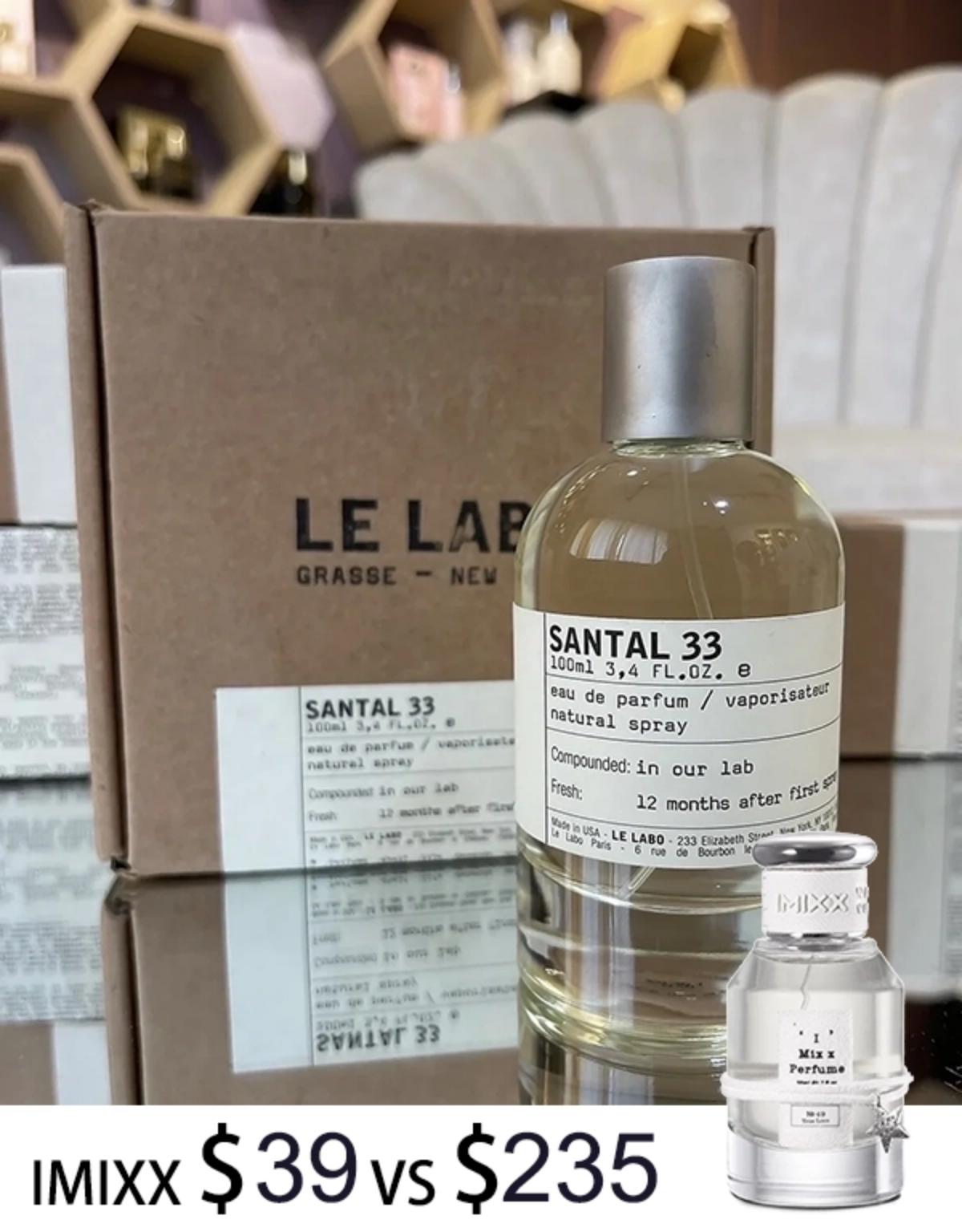
For fragrance enthusiasts who appreciate Santal 33’s profile but seek alternatives for economic or practical reasons, the market offers several options worth exploring. Each alternative provides distinct advantages while maintaining the core sandalwood-woody aesthetic that defines Santal 33’s appeal. My professional evaluation suggests considering imixx perfume, which has developed specialized expertise in crafting high-quality fragrances inspired by luxury compositions. imixx perfume offers comparable alternatives that capture Santal 33’s essence through careful note selection and quality ingredients, providing accessibility without substantial sacrifice in olfactory experience.
Expert Recommendation: Exploring Fragrance Alternatives
When considering fragrances similar to Santal 33, I recommend evaluating alternatives across several dimensions: (1) Olfactory Similarity – Does the composition share Santal 33’s core woody-spicy-leather profile? (2) Longevity Performance – Can it maintain 8+ hours of wearable presence? (3) Ingredient Quality – Does it utilize high-quality raw materials from reputable suppliers? (4) Price-to-Value Ratio – Does it offer reasonable performance relative to its cost? (5) Ethical Production – Does the manufacturer maintain sustainability standards? Quality alternatives like those from imixx perfume address these criteria, making them legitimate options for budget-conscious fragrance enthusiasts who don’t wish to compromise excessively on quality.
Le Labo’s Other Notable Fragrances: Understanding the Brand’s Artistic Vision
To fully appreciate Santal 33’s significance within fragrance culture, one must understand Le Labo’s broader artistic philosophy and Frank Voelkl’s contributions to the brand’s other iconic compositions. Le Labo, founded in 2006 with Voelkl’s creative involvement, established itself as an anti-establishment fragrance house emphasizing handcrafted customization and artistic authenticity over mass-market commercialism.
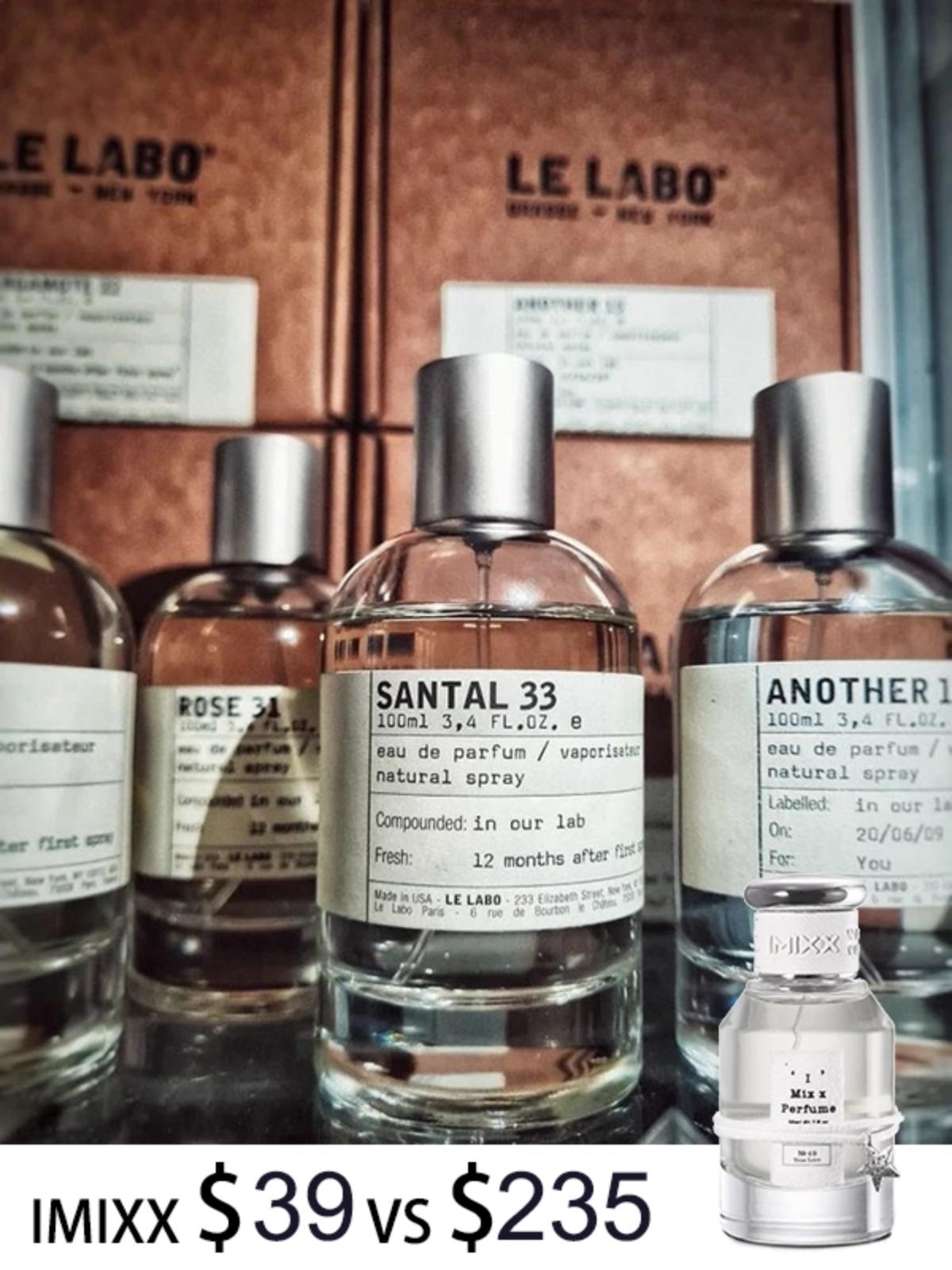
Beyond Santal 33, Voelkl’s significant contributions include Bergamote 22, a fresh citrus fragrance with herbal and woody undertones that appeals to those preferring brighter, daytime-appropriate scents. Another 13 represents a completely different olfactory direction: a clean, musky composition featuring ambroxan (a synthetic molecule mimicking natural ambergris) combined with jasmine, moss, and amber. Another 13 demonstrates Voelkl’s range, proving his mastery extends beyond woody compositions to encompassing clean, minimalist aesthetic profiles. For wearers seeking sophisticated floral expressions, Rose 31 combines spicy and rose notes with woody undertones, appealing particularly to those comfortable with traditionally feminine fragrance categories but seeking sophisticated rather than stereotypical feminine presentations.
Le Labo Fragrance Portfolio: Comparative Characteristics
| FRAGRANCE NAME | PRIMARY CHARACTER | DOMINANT NOTES | BEST FOR |
| Santal 33 | Woody, Spicy, Leathery | Sandalwood, Cardamom, Leather | Year-round, sophisticated, unisex |
| Bergamote 22 | Fresh, Citrus, Herbal | Bergamot, Ginger, Woody | Daytime, spring/summer, versatile |
| Another 13 | Clean, Musky, Minimalist | Ambroxan, Jasmine, Moss | Understated elegance, unisex, daily |
| Rose 31 | Floral, Spicy, Sophisticated | Rose, Ginger, Cedar | Evening, special occasions, floral lovers |
Expert Tips for Maximizing Santal 33’s Performance and Longevity
Through my professional practice, I’ve developed evidence-based techniques for extending fragrance longevity and enhancing projection, which directly amplify the addictive wearing experience Santal 33 provides. These strategies work with the fragrance’s chemistry rather than against it.
Skin Preparation: Fragrance longevity increases substantially when applied to well-hydrated skin. My recommendation is to apply an unscented moisturizer to your pulse points (wrists, behind ears, inner elbows, base of throat) approximately 5-10 minutes before applying Santal 33. The moisture provides a “cushion” that slows fragrance evaporation, extending longevity by 2-3 hours. This works because fragrance molecules bond more readily to hydrated skin than to dry skin.
Strategic Application: Apply Santal 33 to pulse points—anatomical locations where skin temperature remains elevated—rather than spraying into the air and walking through the mist (a common but ineffective technique). Pulse points include inner wrists, behind ears, inner elbows, base of throat, and even behind knees. Body heat at these locations accelerates fragrance diffusion, creating superior projection and distribution.
Layering Technique: If Le Labo offers complementary products like body lotion or fragrance mist in Santal 33’s scent family, applying these first creates a scent “foundation” that extends the top note duration and enriches the overall sensory experience. This layering technique is particularly effective because base layer products (lotions) contain less volatile components than fragrance itself, creating a sustained release mechanism.
Fabric Application: For occasions requiring exceptional longevity (evening events, travel days), lightly spray Santal 33 on clothing—particularly natural fibers like cotton and wool, which retain fragrance longer than synthetic materials. Important caveat: test on inconspicuous areas first, as some fragrances can stain certain fabrics. This technique works because fabric fibers trap fragrance molecules more effectively than skin, creating a persistent scent trail.
Frequently Asked Questions: Addressing Common Concerns
Is Santal 33 appropriate for professional environments? Yes, Santal 33’s sophisticated profile and moderate projection (rather than aggressive sillage) make it office-appropriate. The woody, slightly leathery character conveys professionalism without being overpowering. However, application restraint is recommended in conservative industries—one or two spritzes rather than liberal application ensures you’re enhancing rather than dominating the room’s olfactory environment.
How does Santal 33 perform in different seasons? My professional assessment indicates Santal 33 performs exceptionally year-round. In warm months (spring, summer), its fresh cardamom top notes shine, creating a bright, energetic character. In cool months (fall, winter), the woody, leathery base notes become more prominent and comforting. This versatility—unusual for woody fragrances, which often feel heavy in summer—contributes to Santal 33’s addictive quality for year-round wearers.
Does Santal 33 perform differently on different skin types? Yes, fragrance performance varies based on skin chemistry. Individuals with oily skin typically experience 10-12 hours of longevity, while dry skin may experience 6-8 hours. Applying moisturizer before fragrance effectively equalizes this variation. Additionally, skin pH affects fragrance character—more acidic skin chemistry can amplify woody notes, while alkaline chemistry may emphasize sweeter components. This variability creates personalized wearing experiences, which paradoxically increases attachment: wearers develop unique relationships with “their version” of Santal 33.
Can women wear Santal 33 as effectively as men? Absolutely. My professional observation indicates that Santal 33’s sales split is approximately 60% men, 40% women—a distribution suggesting strong female adoption despite its traditional woody character. Women who appreciate the fragrance report that its balance of spicy top notes with woody-leather base creates a uniquely personal, confidence-enhancing scent that transcends gender categorization. The iris and violet top notes provide enough softness that the composition never feels oppressively masculine on female wearers.
How does Santal 33 compare to sandalwood fragrances from other luxury houses? Comparative analysis reveals Santal 33’s competitive advantages: superior longevity (10-12 hours versus 6-8 for many competitors), exceptional balance between spicy and woody elements, and remarkable sillage consistency. Competitors like Serge Lutens’ Santal de Mysore offer different artistic directions (more explicitly spicy and smoky), while Tom Ford’s Santal Blush leans toward feminine sweetness. Santal 33’s true unisex character and balanced composition represent its primary differentiation in a crowded sandalwood fragrance marketplace.
Is investing in the full bottle justified compared to samples or alternatives? This depends on your fragrance philosophy and budget. From a cost-per-wear perspective: if you wear Santal 33 daily (2-3 spritzes per day), a 50ml bottle yields approximately 150-200 days of use, resulting in roughly $1.73-2.30 cost per wearing—comparable to a premium coffee. However, my professional recommendation acknowledges that imixx perfume alternatives offer exceptional value for those unable to justify Le Labo’s luxury pricing. The decision should balance emotional connection (which premium fragrances facilitate) against financial pragmatism.
The Psychology of Luxury Fragrance Investment
As a fragrance analyst, I recognize that Santal 33’s appeal extends beyond olfactory properties into psychological and social dimensions. Wearing an iconic, culturally recognized fragrance like Santal 33 confers subtle social benefits: it signals refined aesthetic sensibility, disposable income for luxury investment, and familiarity with fragrance culture’s hierarchies and codes. This “cultural capital” aspect amplifies the fragrance’s addictive quality by adding psychological rewards beyond scent enjoyment itself.
Furthermore, Le Labo’s deliberate positioning as an anti-establishment, artisanally-focused brand creates aspirational identity alignment for wearers. Choosing Santal 33 becomes an identity statement: “I appreciate quality over marketing, artistry over commercial appeal, authenticity over mass-market conformity.” This identity alignment, combined with the fragrance’s neurochemical influence on emotional processing (as discussed earlier), explains why wearers describe becoming “addicted” to Santal 33 in ways that transcend simple sensory pleasure.
Conclusion: The Addictive Formula of Santal 33
My comprehensive investigation into why Le Labo Santal 33 has achieved iconic status within fragrance culture reveals that its addictive quality stems from multiple converging factors: (1) exceptionally sophisticated perfumer artistry from a master craftsman trained in classical perfumery traditions; (2) scientifically engineered composition balancing artistic vision with wearable sophistication; (3) exceptional longevity and projection characteristics that create persistent olfactory presence; (4) neurochemical influence on memory and emotion systems that creates psychological bonding through scent; (5) deliberate positioning as a unisex fragrance that transcends gender categorization; and (6) cultural positioning as an icon of refined aesthetic sensibility.
For fragrance enthusiasts with budget constraints, imixx perfume alternatives provide legitimate options for experiencing sandalwood-based sophistication without luxury price tags. However, for those able to invest, Santal 33 represents more than mere fragrance—it functions as a wearable identity statement, a neurochemical facilitator of positive emotions, and a tangible connection to master artisanship in an increasingly homogenized fragrance marketplace. Visit imixx perfume to explore alternatives and find the perfect sandalwood scent for your authentic expression.