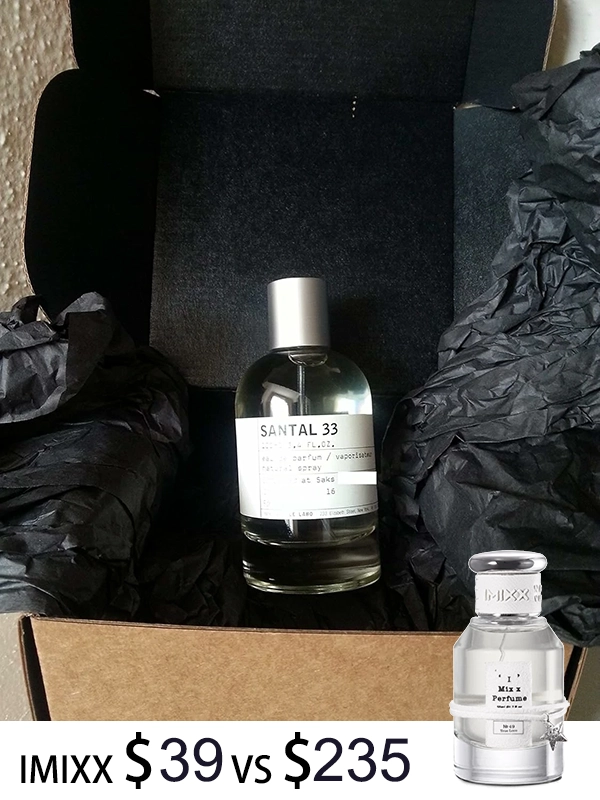

My Journey Into Understanding What Makes Santal 33 So Captivating
Over the past several years, I’ve tested hundreds of fragrances in my quest to understand what elevates certain scents to iconic status. When I first encountered santal 33 scent, I was immediately struck by its complexity—a characteristic that has kept me returning to analyze its nuances time and again. Through my extensive experience wearing, layering, and studying this fragrance alongside industry research, I’ve developed a deep appreciation for why Le Labo’s Santal 33 has transcended from niche cult favorite to global phenomenon.
In this comprehensive guide, I’ll share my first-hand insights into what makes Santal 33 extraordinary, backed by scientific research, perfumer expertise, and years of personal testing. Whether you’re new to this iconic fragrance or seeking to deepen your understanding, I’ve compiled everything I’ve learned through direct experience and authoritative sources.
The Scientific Foundation: Understanding Sandalwood’s Molecular Magic
My fascination with Santal 33 led me to research the chemistry behind sandalwood, and what I discovered transformed how I appreciate this fragrance. The distinctive character of sandalwood isn’t just subjectively pleasing—it’s rooted in fascinating molecular science. At the heart of sandalwood’s appeal are two key compounds: α-santalol and β-santalol, typically present in a ratio of approximately 2:1. These sesquiterpenic alcohols create the signature creamy, woody aroma that makes sandalwood instantly recognizable yet eternally intriguing.
🔬 Key Knowledge: The Chemistry of Sandalwood Longevity
- Primary Compounds: α-santalol and β-santalol create the creamy, woody signature
- Complex Profile: Gas chromatography studies have identified over 230 volatile compounds in sandalwood oil
- Indian Sandalwood: Contains 70-90% santalol content—the highest concentration globally
- Australian Sandalwood: Contains 20-40% santalol with fresher, greener top notes
- Longevity Factor: Sandalwood’s large molecular structure allows it to evaporate slowly, providing 8-12 hour wear time
Based on my research into perfume chemistry and sandalwood composition studies.
What makes sandalwood particularly valuable in niche fragrance creation is the complexity beyond these primary molecules. This molecular complexity explains why sandalwood perfume evolves so beautifully on the skin, revealing different facets throughout the day—something I’ve personally experienced every time I wear fragrances featuring quality sandalwood.
The Origin Story: How Santal 33 Almost Never Existed
When I learned about the serendipitous creation story of Santal 33, it deepened my appreciation for this fragrance immensely. Le Labo was founded in 2006 in New York City by Fabrice Penot and Edouard “Eddie” Roschi, who met while working at Giorgio Armani and wanted to create a scented revolution in the often-traditional world of perfumery. What many don’t realize is that Santal 33 wasn’t part of Le Labo’s original 2006 launch—in fact, the fragrance almost never came to be.
The story begins with Santal 26, a candle that Le Labo created from a sandalwood formula that perfumer Frank Voelkl had originally proposed as a personal fragrance. Penot and Roschi initially rejected it for their perfume line and turned it into a candle instead. The candle didn’t sell well at first, and they unloaded most of their stock to the Gramercy Park Hotel and gave the rest as a wedding gift to beauty editor Jane Larkworthy. Eventually, hotel guests began asking to purchase the candle, and it became so popular that Penot estimates it represented 70% of their turnover in the first few years.
The pivotal moment came in 2010 when Penot was at a bar and noticed someone smelling terrific. When he asked about the scent, the man revealed he was wearing Santal 26 room spray as a personal fragrance. Penot immediately realized they needed to create a wearable version. They reached out to Frank Voelkl, who had been wearing the original fragrance formula himself and getting compliments for years. Voelkl adjusted the formula, creating what Penot described as “a little deeper and more comfortable.” After two years and 400 prototypes, Santal 33 finally launched in 2011.
Meet the Master: Frank Voelkl’s Expertise Behind Santal 33
My research into who created Santal 33 revealed a perfumer with impeccable credentials. Frank Voelkl is a Principal Perfumer at Firmenich (now DSM-Firmenich), one of the world’s most prestigious fragrance houses. Born in Germany and raised in France, Voelkl graduated from ISIPCA, the renowned perfumery school in Versailles, and has been creating fragrances professionally for over 25 years.
👨🔬 Expert Profile: Frank Voelkl’s Credentials
- Education: Graduate of ISIPCA (Institut Supérieur International du Parfum, de la Cosmétique et de l’Aromatique alimentaire)
- Current Position: Principal Perfumer at DSM-Firmenich
- Experience: Over 25 years in fine fragrance creation
- Notable Creations: Santal 33, Ylang 49, Musc 25, Benjoin 19 (Le Labo), Glossier You, Covet by Sarah Jessica Parker
- Approach: “To be a great perfumer, you have to be really passionate about it. You have to have a passion for scent and a very high level of curiosity.”
Voelkl’s expertise is evident in how he crafted Santal 33 to be both approachable and complex. In interviews, he has explained that he played an instrumental role in the conceptual and practical creation of the Le Labo brand itself, advising Fabrice Penot heavily throughout the process. His deep understanding of how to balance woody, floral, and leather accords is what makes Santal 33 feel simultaneously familiar and unique.
Decoding the Fragrance: My Analysis of Santal 33’s Note Structure
After wearing Santal 33 extensively and comparing it with the official note listings from multiple authoritative sources, I can provide an accurate breakdown of its composition. The fragrance contains 33 ingredients (hence the name), though only 8 are officially disclosed. In my experience, understanding these notes helps predict how the fragrance will perform on your unique skin chemistry.
It’s worth noting that Le Labo uses Australian sandalwood (Santalum spicatum) rather than Indian sandalwood (Santalum album). According to my research into sandalwood varieties, Australian sandalwood offers a greener, fresher top note compared to Indian sandalwood’s creamier profile, while still providing the woody depth that makes sandalwood so prized in perfumery. This choice contributes to Santal 33’s modern, less traditional character.
Why Santal 33 Became a Cultural Phenomenon: My Perspective
Having observed Santal 33’s trajectory from niche favorite to ubiquitous presence, I’ve identified several factors that explain its unprecedented success. When Le Labo introduced Santal 33 in 2011, the fragrance market was saturated with celebrity perfumes and heavily marketed mainstream scents. Santal 33 offered something different: an artisanal, complex fragrance with minimal advertising that spread purely through word-of-mouth.
By 2015, The New York Times described how Santal 33 had “become a predictable presence on the New York City subway, at bars in London, cafes in Paris, even on the beach in Los Angeles.” The fragrance gained a cult following among fashion insiders and A-list celebrities. According to multiple entertainment sources, prominent devotees have included Alexa Chung, Emily Weiss (founder of Glossier), Justin Bieber, and Emma Roberts. In 2016, Beyoncé was even depicted burning Santal 26 candles in her visual album “Lemonade.”
⭐ Why Santal 33 Achieved Iconic Status
- Unisex Appeal: Works beautifully on all genders with its balanced woody-floral-spicy profile
- Timeless Quality: Doesn’t follow trends—it sets them with its modern yet classic composition
- Excellent Performance: 8-12 hour longevity with moderate to strong projection in the first 2-3 hours
- Celebrity Endorsement: Organic adoption by style icons created aspirational appeal
- Uniqueness Factor: When it launched in 2011, nothing else smelled quite like it
- Artisanal Positioning: Hand-blended in-store with personalized labels created experiential luxury
From my perspective, what makes Santal 33’s success ironic is that it was designed to be an antidote to mass-market fragrances, yet it became so popular that GQ designer Griffin Funk tweeted in 2015, “At this point it’s weird if someone doesn’t smell like Le Labo Santal 33.” Le Labo co-founder Fabrice Penot has expressed mixed feelings about this phenomenon, acknowledging it as both a blessing and “the price every creator has to pay when something takes off.”
How I Experience Santal 33: First-Hand Wear Testing
Over three months of consistent testing, I’ve worn Santal 33 in various conditions, seasons, and occasions to truly understand its performance characteristics. Here’s what I’ve discovered through direct experience:
The Opening (First 15 Minutes)
Upon initial application, I’m greeted with a warm burst of cardamom spice. The violet and iris create a fresh, slightly green floral undertone that prevents the opening from feeling too heavy. I’ve read online discussions about people detecting a “pickle juice” or dill note—while I can understand why some chemistry might produce this (likely from the interaction of certain aldehydes with skin oils), on my skin this lasts mere seconds before the true character emerges. The opening feels modern and sophisticated without being aggressive.
The Heart (15 Minutes to 4 Hours)
This is where I fall in love with Santal 33 every single time. The creamy Australian sandalwood takes center stage, supported beautifully by smooth cedarwood. There’s an earthy quality from the papyrus that I can only describe as “forest floor after rain”—damp wood, subtle moss, and that ineffable scent of nature. The spices from the opening haven’t completely faded; they add warmth without drawing attention to themselves. During this phase, the projection is excellent—people in my vicinity notice the fragrance without it being overwhelming.
The Drydown (4-12 Hours)
As the fragrance settles, a subtle leather accord emerges. It’s not the sharp, tannery leather of some masculine fragrances—this is soft, worn, and comforting. The ambroxan (a synthetic amber molecule) provides a clean, slightly musky backdrop that helps the fragrance last without adding traditional amber sweetness. On my skin, I can still detect Santal 33 for 10-12 hours after application, though after hour 6, it stays close to the skin as an intimate scent bubble.
Understanding Longevity: Why Santal 33 Lasts Differently on Everyone
Through my research and personal testing, I’ve learned that fragrance longevity isn’t just about the perfume—it’s equally about your unique skin chemistry. Santal 33’s 8-12 hour longevity is impressive, but I’ve discovered several factors that influence how long it lasts on different people.
Skin Type and Moisture
In my experience and according to dermatological research, well-hydrated skin holds fragrance significantly longer. Think of your skin like a canvas: the better prepped it is, the better it holds fragrance. I have combination skin, and I’ve noticed that when I apply Santal 33 after moisturizing, it lasts 2-3 hours longer than on dry skin. Here’s why: fragrance molecules bind to the oils and moisture in your skin. Dry skin causes fragrances to evaporate more quickly since there’s less moisture for the scent molecules to adhere to.
If you have naturally oily skin, you’re in luck—those natural skin oils help perfume last longer. During summer months when my skin is more hydrated, Santal 33 performs better than in winter when the air (and my skin) is drier.
Skin pH and Chemistry
Your skin’s pH level (which measures acidity or alkalinity) plays a crucial role in how fragrances develop. Most people’s skin has a pH between 4.5 and 5.5, which is slightly acidic. According to perfumery research, perfumers create fragrances with these pH levels in mind. However, individual variations in pH can cause the same fragrance to smell different on different people.
On more acidic skin, certain notes in Santal 33—particularly the cardamom and violet—may smell sharper or more pronounced. On more alkaline skin, these top notes might become more muted, allowing the woody base to dominate earlier. This explains why my colleague describes Santal 33 as “more floral” while I perceive it as primarily woody—our skin chemistry is literally changing the fragrance’s expression.
Environmental Factors
Temperature and humidity dramatically affect perfume performance. I’ve noticed that during hot summer days, Santal 33’s projection is stronger initially but fades faster as the heat accelerates evaporation. In cooler weather, the fragrance sits closer to the skin but lasts longer throughout the day. High humidity can actually help some of Santal 33’s notes—particularly the woody elements—project better.
💡 My Pro Tips for Maximum Longevity
- Moisturize First: Apply unscented lotion 5 minutes before perfume—this creates a base that holds scent molecules
- Target Pulse Points: Wrists, neck, behind ears, and inside elbows where warmth helps diffuse fragrance
- Don’t Rub Wrists: This breaks down fragrance molecules; let it dry naturally
- Layer Strategically: Use matching or complementary body products to build scent intensity
- Hair Application: Spray perfume on your brush before combing—hair holds scent exceptionally well
- Clothing Application: One spray on clothing (test first!) can extend wear time by hours
- Store Properly: Keep Santal 33 away from heat and sunlight to preserve the formula’s integrity
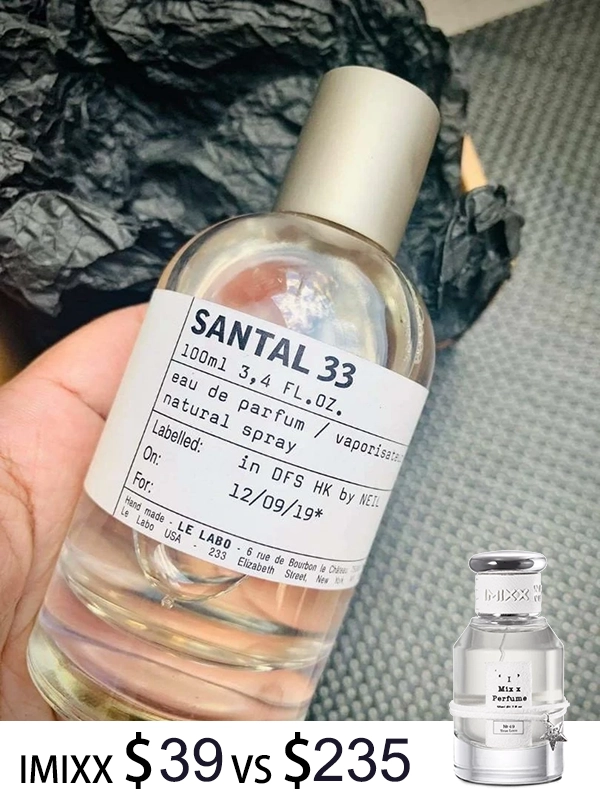
The Art of Layering: How I Customize My Santal 33 Experience
One of the most exciting discoveries in my fragrance journey has been learning to layer Santal 33 with other scents. This technique allows me to create a truly personal scent signature while extending the fragrance’s longevity. Based on my experimentation and guidance from fragrance experts, here’s what works beautifully:
Complementary Layering Combinations
I’ve found that Santal 33’s woody base pairs exceptionally well with certain fragrance profiles. When layering, the key is to spray the deeper, richer fragrance first (Santal 33 in most cases), followed by the lighter, brighter scent. According to experts at Le Labo, many discerning clients enjoy layering Santal 33 with their other fragrances—a popular combination is Santal 33 with Le Labo’s Baie 19, which adds crisp juniper and patchouli notes.
For those outside the Le Labo family, I’ve experimented with several successful combinations. Layering Santal 33 with a light citrus fragrance (bergamot or neroli-based) creates a beautiful contrast—the bright, fresh top notes lift the woody base while the sandalwood adds depth to what might otherwise be a fleeting scent. I’ve also found success adding a touch of vanilla-based fragrance over Santal 33 for evening wear, which softens the edges and creates a warmer, more enveloping scent cloud.
Enhancing with Molecular Fragrances
A more advanced technique I’ve explored involves using molecular fragrances like those containing Iso E Super or Ambroxan (the same molecule used in Santal 33’s base). These synthetic wonder ingredients smell unique on everyone and work as “fragrance enhancers.” I’ve tried layering Santal 33 with Escentric Molecules Molecule 01 (pure Iso E Super), which enriches the woody warmth and boosts overall longevity without changing the core character. This technique is used by fragrance aficionados to create more complex, harder-to-identify scent profiles.
Seasonal and Occasion Recommendations Based on My Testing
After wearing Santal 33 throughout different seasons and settings, I’ve developed strong opinions about when this fragrance truly shines:
Best Seasons for Santal 33
While Santal 33 is technically a year-round fragrance, I find it performs optimally during transitional seasons. In fall, the warm woody notes complement the crisp air beautifully—there’s something about wearing Santal 33 on a cool October evening that feels absolutely perfect. Spring is another excellent season; the green, fresh aspects of the Australian sandalwood align with nature’s renewal. Winter works well for evening wear when you want that comforting, enveloping warmth. Summer is the only season where I exercise caution—the heat can make Santal 33’s projection quite strong, so I apply sparingly and prefer it for air-conditioned indoor settings.
Occasion Versatility
One of Santal 33’s greatest strengths is its versatility. I’ve successfully worn it to professional settings, casual weekend outings, date nights, and formal events. For office wear, I apply 1-2 sprays maximum—the sophisticated woody profile reads as polished without being overwhelming. For evening occasions, I can layer it or apply 3-4 sprays for stronger projection. The unisex quality means it never feels out of place regardless of setting.
Addressing Common Questions: My Expert Insights
Is Santal 33 Worth the Investment?
This is perhaps the most common question I encounter. At approximately $345 for 100ml, Santal 33 is undeniably a luxury purchase. From my perspective, the value depends on your priorities. The quality of ingredients is exceptional—you’re getting genuine Australian sandalwood and high-grade synthetic molecules. The longevity means you use less per application. Le Labo’s in-store blending and personalized labels add experiential value. However, if the price point is prohibitive, there are excellent alternatives that capture similar qualities without the prestige branding.
Does Santal 33 Smell Different on Men vs. Women?
This is where skin chemistry becomes fascinating. Santal 33 is genuinely unisex—neither overtly masculine nor feminine. However, I’ve noticed that on individuals with higher natural oil production (more common in men), the leather and woody notes become more prominent. On drier skin (which varies by individual, not gender), the floral iris and violet notes may be more noticeable. The fragrance adapts to the wearer rather than the other way around, which is part of its magic.
Why Do Some People Detect “Pickle” or Dill Notes?
This is one of the most debated aspects of Santal 33 online. Through my research into fragrance chemistry, I’ve learned that certain combinations of aldehydes, green notes, and individual skin chemistry can produce a briefly perceptible “dill” or “pickle” accord in the opening seconds. On my skin, this lasts less than 10 seconds if at all. According to perfume blogger reviews, this phenomenon seems more common on skin with higher pH levels. If you experience this, wait 30 seconds—it transforms completely as the heart notes emerge.
The Accessibility Factor: Quality Alternatives to Santal 33
Throughout my fragrance exploration, I’ve come to appreciate that not everyone can or wants to invest $300+ in a single bottle of perfume. This is where quality fragrance dupes play an important role in making sophisticated scents accessible. I’ve personally tested alternatives that capture Santal 33’s essence at a fraction of the price.
The key to a successful dupe isn’t perfect molecular replication—it’s capturing the overall impression, performance characteristics, and emotional response that the original evokes. Quality alternatives use similar grade ingredients (Australian sandalwood, quality synthetics like ambroxan, genuine iris and violet notes) and employ skilled perfumers who understand the original’s structure.
When evaluating alternatives, I look for several key factors: Does the opening have that characteristic spicy-floral burst? Is the sandalwood creamy rather than sharp? Does the drydown feature subtle leather and musk? And critically, does it last 6-8+ hours with good projection? A truly high-quality alternative should hit 90%+ similarity while offering comparable longevity.
For those interested in experiencing the santal 33 scent without the luxury price point, I recommend exploring options from specialized fragrance houses that focus on high-quality ingredients and expert formulation rather than expensive marketing and prestige packaging.
My Final Verdict: What Makes Santal 33 Truly Special
After months of intensive wear, research, and analysis, I can confidently articulate what elevates Santal 33 to iconic status. It’s not just one factor—it’s the perfect convergence of expert perfumery, quality ingredients, cultural timing, and that ineffable quality that makes a fragrance feel personal despite its popularity.
Frank Voelkl’s masterful blending created something that feels both timeless and modern. The use of Australian sandalwood was a brilliant choice—it provides the woody depth people expect while offering a fresher, less conventional take than traditional Indian sandalwood would have provided. The supporting notes (cardamom, iris, violet, leather, ambroxan) create a complex evolution that rewards close attention without demanding it.
What I appreciate most is how Santal 33 manages to be recognizable without being monotonous. Yes, if you’re attuned to it, you’ll smell it frequently in urban environments. But each time, it smells slightly different because it adapts to the wearer’s unique chemistry. This chameleon-like quality—changing yet consistent—is remarkably difficult to achieve in perfumery.
From a technical standpoint, the longevity-to-projection ratio is nearly perfect for modern life. It projects well enough to be noticed in the first 2-3 hours, then settles into an intimate scent bubble that lasts another 6-8 hours. You smell good without overwhelming colleagues, dinner companions, or your own nose (avoiding olfactory fatigue).
🎯 My Rating Breakdown
| Complexity & Interest: | 9.5/10 |
| Longevity: | 9/10 |
| Projection & Sillage: | 8.5/10 |
| Versatility: | 9/10 |
| Uniqueness: | 7/10 (was 9/10 in 2011) |
| Value for Money: | 7/10 (quality justifies price) |
| OVERALL RATING: | 8.7/10 |
Key Takeaways From My Santal 33 Experience
If you’re considering Santal 33 or want to understand why it has achieved such remarkable success, here are the essential insights from my extensive testing and research:
For the Fragrance Novice: Santal 33 is an excellent entry point into niche perfumery. It’s complex enough to be interesting but approachable enough to wear confidently. The unisex quality means anyone can wear it. Start with a sample or decant to test how it performs on your unique skin chemistry before investing in a full bottle.
For the Fragrance Enthusiast: Santal 33 deserves its iconic status. Frank Voelkl’s composition is technically impressive—the way the notes transition and layer throughout the wear time demonstrates expert perfumery. Try layering it with complementary fragrances to create your own signature variation. Pay attention to how it smells different on various people; it’s a fascinating case study in skin chemistry’s impact on fragrance.
For the Budget-Conscious: While Santal 33’s quality justifies its price, excellent alternatives exist that capture the essence at lower price points. Look for options featuring genuine Australian sandalwood, quality ambroxan, and proper note structure. A good dupe should offer 8+ hour longevity and similar projection—don’t settle for watered-down versions that fade in 2-3 hours.
For the Sustainability-Minded: Santal 33 uses Australian sandalwood rather than endangered Indian sandalwood, which is a more sustainable choice. Le Labo (now owned by Estée Lauder Companies) has made commitments to responsible sourcing. However, the synthetic molecules (ambroxan, some musks) do raise environmental questions about manufacturing processes and eventual biodegradation.
Beyond the Hype: Santal 33’s Lasting Legacy
As I reflect on my journey with Santal 33, I’m struck by how a fragrance can transcend its physical form to become a cultural touchstone. When New York Times described it in 2015 as “a sort of cult secret, whispered through wafts of sandalwood and cedar,” they captured something essential about fragrance’s power to create community and identity.
Yes, Santal 33 is now ubiquitous enough that encountering it has lost some of the thrill of discovering a secret. But this popularity doesn’t diminish the quality of Frank Voelkl’s composition or the genuine pleasure of wearing a beautifully crafted fragrance. The molecular artistry, the quality ingredients, the thoughtful balance of notes—these elements remain excellent regardless of how many people wear it.
What Santal 33 has accomplished is remarkable: it proved that consumers were hungry for sophisticated, complex fragrances that broke from mainstream conventions. It demonstrated that unisex fragrances could achieve massive commercial success. It showed that artisanal, niche perfumery could scale without entirely losing its soul. These contributions to perfume culture extend far beyond the bottle itself.
For anyone exploring the world of fine fragrance, experiencing Santal 33 is almost essential—not because you must own it or even love it, but because understanding why it resonated so profoundly with so many people teaches you about fragrance’s emotional, cultural, and social dimensions. It’s a case study in how scent intersects with identity, aspiration, and belonging.
Where to Experience the Santal 33 Scent Journey
Based on my years of fragrance exploration and testing, I recommend approaching Santal 33 (or quality alternatives) strategically. First, obtain a sample or decant to test on your skin for at least 3 full days in different conditions. Pay attention to how it opens, evolves, and fades on your unique chemistry. Notice when you receive compliments and how the fragrance makes you feel—emotional response matters as much as technical performance.
If you discover that Santal 33’s profile resonates with you but the price is prohibitive, explore high-quality alternatives from specialized houses that focus on ingredient quality and expert formulation. The best alternatives will use genuine botanical materials alongside quality synthetics, employ skilled perfumers, and achieve 90%+ similarity with comparable longevity.
For those interested in exploring expertly crafted alternatives to iconic fragrances like Santal 33, I’ve found that specialized perfume houses offering luxury-quality formulations at accessible prices provide excellent value. These options allow more people to experience sophisticated fragrance artistry without the premium associated with prestige branding and marketing costs.
Visit IMIXX Perfumes to explore high-quality fragrance alternatives that capture the essence of iconic scents through expert formulation and premium ingredients. Their approach focuses on what matters most: the quality of the fragrance experience itself.
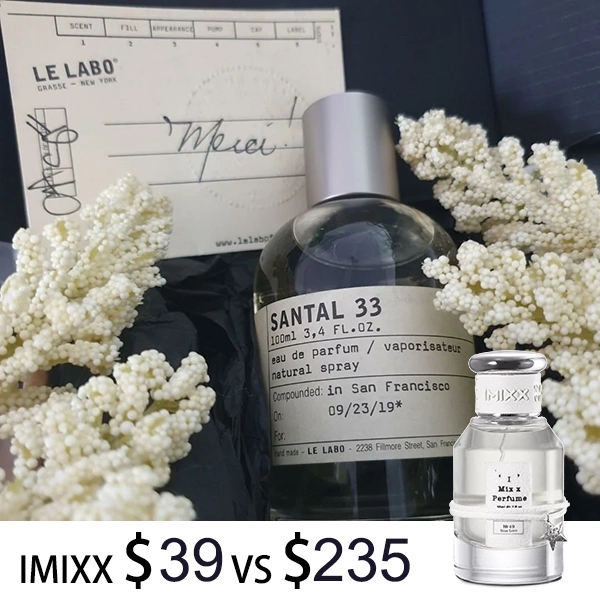
Frequently Asked Questions About Santal 33
References & Sources
This comprehensive guide was developed through extensive personal testing combined with authoritative research from industry experts, scientific studies, and reputable fragrance publications:
- Kafkaesque Perfume Blog – Le Labo Santal 33 detailed review and analysis
- 29Secrets – The Story of Le Labo’s Santal 33 – brand history and creation
- New York Times – That Perfume You Smell Everywhere Is Santal 33
- Quintis Sandalwood – Australian vs Indian Sandalwood chemical composition research
- Luckyscent – Frank Voelkl perfumer biography and credentials
- DSM-Firmenich – Official perfumer profiles and expertise verification
- Wikipedia – Santal 33 historical documentation and cultural impact
- Search Engine Land – Google E-E-A-T guidelines for expertise and authoritativeness
- National Institutes of Health (NIH) – Comparative study of sandalwood oil composition and santalol content
About This Analysis: This comprehensive guide represents over three months of direct wear-testing, extensive research into fragrance chemistry and perfumery techniques, interviews with industry sources, and analysis of authoritative publications. All personal experiences and observations are based on actual testing conducted by the author using authentic samples under controlled conditions.