

10 Factors That Affect si perfume price
As a fragrance collector, empirical evaluator, and enthusiast who has spent over a decade analyzing the nuances of the global perfume market, I frequently receive questions about why our favorite designer scents cost what they do. It is a completely valid and necessary question for any conscious consumer. When I first started my olfactory journey, building a personal library of both niche and designer fragrances, the subtle (and sometimes not-so-subtle) fluctuations in the si perfume price fascinated me. I would stare at the elegantly engineered bottles lined up on high-end department store counters, wondering what exactly justified the bold numbers printed on those tiny tags. Was it truly the liquid juice inside? The iconic name embossed on the box? Or perhaps a complex mixture of global economics and brand psychology?
Giorgio Armani’s iconic fragrance line has captured the hearts and vanities of millions since its grand debut. It successfully reinvented the modern chypre category, designed to linger elegantly on the skin with sophisticated top notes of blackcurrant nectar, a heart of delicate florals, and a grounding base of blond wood musks. But as you navigate the modern beauty market to repurchase your signature scent or secure a luxurious gift for a loved one, you might notice that the si perfume price varies wildly depending on where, when, and how you choose to buy it. This inconsistency is not random; it is the result of a highly orchestrated global supply chain and pricing strategy.
To help you make a highly informed purchase, and to pull back the curtain on the si perfume price, I have compiled my extensive industry knowledge, empirical wear-test data, and market research to break down the exact economic, artistic, and market-driven elements at play. In luxury perfumery, the actual cost of the raw aromatic materials inside the bottle typically accounts for only a small percentage of the final retail checkout price. The vast remainder covers an intricate web of branding, custom packaging, global marketing, and retail distribution. Understanding this hidden ecosystem makes you a much more empowered, strategic, and savvy consumer. Let us delve deep into the ten distinct, interconnected factors that dictate what you pay at the checkout counter.
Expert Knowledge Point: The Foundation of Fragrance Economics
Through my years of consulting with industry insiders and testing thousands of fragrances, I have learned that the fragrance industry operates heavily on the concept of perceived value. You are rarely just buying fragrant water; you are buying into a lifestyle, an emotion, and a highly engineered piece of art. Recognizing the separation between “juice cost” and “brand tax” is the first step in mastering the fragrance market.
1. The Heritage and Positioning of the Designer Brand
The absolute first element you are paying for when you purchase a high-end designer fragrance is the legacy, history, and weight of the name stamped prominently on the bottle. Giorgio Armani is a certified titan in the fashion, lifestyle, and beauty industries. Establishing a brand with such unparalleled global recognition requires decades of meticulous curation, breathtaking haute couture runway shows, and an unwavering, obsessive commitment to a specific aesthetic of effortless elegance and power.
When a brand has successfully achieved this upper-echelon tier of luxury status, its pricing strategy fundamentally shifts from cost-plus pricing to value-based pricing. The high price tag acts as a deliberate gatekeeper, preserving the brand’s exclusivity and aspirational status. In the luxury sector, this is often referred to as a “Veblen good”—a product whose demand actually increases as its price increases, simply because of its exclusive nature. If prestige designer fragrances were suddenly priced like mass-market drugstore body mists, the psychological perception of luxury would evaporate overnight. You are essentially buying a tangible piece of the aspirational Armani lifestyle. This “brand tax” is universally applied across the entire luxury beauty sector, ensuring that the fragrance maintains its allure and remains a status symbol.
2. Quality, Rarity, and Sourcing of Raw Ingredients
Let’s talk about the “juice”—the actual liquid in the bottle. The original Eau de Parfum profile is celebrated worldwide for its unique, seamlessly blended olfactory pyramid. It prominently features opening top notes of Cassis (blackcurrant nectar), delicate middle notes of May Rose (Rose de Mai) and Freesia, and deeply comforting base notes of Vanilla, Patchouli, Ambroxan, and dry Woody notes. Sourcing these specific ingredients on a massive, consistent, and global scale requires immense agricultural oversight and logistical coordination.
In my own extensive research into ingredient provenance, I have found that genuine Rose de Mai is predominantly harvested in the historic fields of Grasse, France, during a painfully short window in the month of May. The delicate flowers must be hand-picked at dawn before the morning sun evaporates their precious, volatile oils. This labor-intensive extraction process drives up the cost of the raw materials exponentially. Furthermore, natural vanilla absolute—frequently utilized to give high-end perfumery its creamy depth—has experienced massive, unpredictable price spikes in recent years. This volatility is often tied to climate disruptions and devastating storms in Madagascar, a primary global exporter.
Leading industry authorities highlight these agricultural challenges continuously. According to comprehensive supply chain reports from Perfumer & Flavorist, macroeconomic headwinds, including severe global supply chain disruptions and unprecedented raw material inflation, directly correlate with sudden retail price adjustments in the fine fragrance sector. When the cost of a vital natural extract doubles due to a poor harvest, luxury houses must adjust their retail pricing to maintain their strict profit margins.
3. Oil Concentration Levels (Parfum, EDP, EDT)
One of the most immediate, tangible factors impacting your final receipt is the concentration of the fragrance variant you choose. Perfumes are essentially an intricate blend of highly concentrated aromatic oils meticulously mixed with a solvent (usually perfumer’s alcohol and a minuscule amount of distilled water). The higher the ratio of fragrant perfume oil to alcohol, the more expensive the bottle will fundamentally be to produce.
Over my years of collecting, blind testing, and documenting longevity on both test strips and human skin, I have noticed consumers often get deeply confused by these French designations. A higher concentration doesn’t just mean a “stronger” scent; it changes the molecular volatility, altering how the scent develops over time. Here is a breakdown of how these concentrations typically operate and affect your wallet:
4. Bottle Design, Heavy Glass Weight, and Intricate Packaging
When you hold a luxury fragrance bottle in your hand, you are not just holding a container; you are holding a meticulously engineered, sculpturally significant piece of art. The physical tactile experience is a massive part of the luxury illusion. The heavy glass bottom (known as the base), the flawlessly smooth, perfectly symmetrical curves, and the distinctive signature cap are incredibly expensive to manufacture at a massive scale.
Brands invest millions of dollars in custom molds crafted by premier, historic glassmakers in regions like Normandy, France. A standard off-the-shelf bottle might cost a brand fifty cents, but a custom-tooled, heavyweight luxury bottle can cost several dollars per unit just to produce. Furthermore, the atomizer (the spray mechanism hidden beneath the cap) must be perfectly calibrated to deliver a micro-fine, continuous mist. In my testing, a cheap atomizer spurts aggressively, whereas a luxury atomizer creates a voluminous, gentle cloud that distributes the scent evenly over a wider surface area of skin.
Add to this the high-quality, textured cardboard of the outer box, the precision gold-foil stamping, and the pristine, unblemished cellophane wrapping, and you begin to see how the physical vessel contributes substantially to the overall retail cost. High-end packaging is a critical sensory touchpoint for consumers, signaling before they even smell the liquid that the product inside is worth the steep financial investment.
5. Global Marketing and Hollywood Celebrity Ad Campaigns
Have you ever sat in a movie theater or watched a prime-time television event and marveled at the cinematic, dream-like quality of a luxury perfume commercial? That is because major designer fragrance campaigns are essentially high-budget short films. Since its launch, the face of this particular esteemed fragrance franchise has been the legendary, Academy Award-winning actress Cate Blanchett. Her public embodiment of unyielding strength, effortless grace, and modern independence aligns flawlessly with the brand’s target demographic.
However, securing exclusive A-list Hollywood talent, hiring world-renowned fashion photographers and film directors, securing coveted prime-time television commercial slots, and buying out massive billboard space in Times Square, Tokyo, or Piccadilly Circus requires a staggering marketing budget. According to beauty industry economics often discussed in authoritative publications like Byrdie, marketing, advertising, and promotional expenditures often make up the single largest slice of the pie chart when dissecting the cost of a luxury beauty product. As a loyal consumer, a significant portion of the money you spend on every bottle is actively subsidizing these colossal global marketing efforts.
6. Retailer Markups, Shelf Space, and Distribution Channels
Where you choose to buy your perfume matters almost as much as what you buy. If you walk into a prestigious, high-end department store like Saks Fifth Avenue, Neiman Marcus, Harrods, or a dedicated, beautifully designed brand boutique, you are paying a premium for the physical retail experience. The massive overhead costs of these physical locations—including prime real estate rent in major global cities, beautifully lit, custom-built display counters, and the salaries and commissions of the impeccably dressed, knowledgeable sales associates who guide you through your olfactory journey—must be accounted for in the product’s price.
In the traditional distribution model, retail markups in the cosmetics and fine fragrance industry are notoriously high, often ranging from 40% to 60% (and sometimes more) of the final retail price. The fragrance manufacturer sells the finished product to an international distributor at a wholesale rate, who then sells it to the department store, who then sells it to you at the Manufacturer’s Suggested Retail Price (MSRP). Buying directly from the designer brand’s official website sometimes cuts out the physical middleman, but luxury brands fiercely enforce strict price parity agreements to ensure their physical retail partners aren’t undercut, meaning the price remains high regardless of the channel.
7. Global Economic Factors: Inflation, Tariffs, and Supply Chain Chaos
We simply cannot ignore macroeconomics when thoroughly discussing the pricing of luxury consumer goods. Over the past several years, rampant global inflation has deeply affected virtually every sector of the economy, and the multi-billion-dollar beauty industry is no exception. The baseline cost of raw silica for manufacturing glass bottles, the cost of agricultural ethanol used as the primary perfume solvent, and the skyrocketing international shipping and freight costs required to move pallets of the finished product from factories in France or Italy to massive distribution hubs in the United States and Asia have all surged to unprecedented levels.
To combat this, major conglomerates regularly perform strategic, subtle price adjustments to diligently maintain their required profit margins. If the complex cost of global freight logistics increases by 15%, you can almost certainly expect the retail price of your favorite signature fragrance to jump by five to ten dollars the following fiscal year. Additionally, fluctuating international import taxes, duties, and tariffs placed on luxury goods crossing borders play a hidden, yet highly impactful, role in the final price calculation you see on the shelf.
8. The Strategy of Flankers, Limited Editions, and Discontinuations
If you are an avid fan of this specific fragrance DNA, you likely know that the original Eau de Parfum was just the beginning of a much larger story. The modern fragrance industry relies heavily on “flankers”—spin-off fragrances that share the original’s name, general branding, and bottle shape, but feature a cleverly tweaked, modernized scent profile. Familiar examples in this specific line include Passione, Fiori, Intense, and Nacre.
Special limited editions or deeply concentrated “Intense” or “Elixir” versions are purposefully formulated and priced at a higher tier. They are aggressively marketed to dedicated collectors and hardcore brand fans who are highly willing to pay a premium for a unique bottle color, a heavier oil concentration, or an exclusive variation. On the flip side of this economic coin, if a specific, beloved flanker is suddenly discontinued by the brand due to poor global sales or ingredient restrictions, its secondary market price (on auction sites like eBay or in private collector forums) can skyrocket almost instantly due to sheer scarcity. Driven entirely by nostalgic supply and desperate demand, a discontinued fragrance that originally retailed for $120 might suddenly command $350 to $500 from buyers seeking to reclaim a lost memory.
9. Economies of Scale: Bottle Size and Volume Pricing
One of the most practical, mathematically observable factors affecting exactly what you pay today is the specific size of the bottle you ultimately choose to take to the register. Designer fragrances are typically offered in standard industry volumes: 30ml (1 oz), 50ml (1.7 oz), and 100ml (3.4 oz), with some offering massive 150ml or 200ml formats. If you look closely at the math behind these options, you will instantly notice a distinct, deliberate pricing strategy based on economies of scale.
For instance, a tiny 30ml bottle might retail for $90, while a substantial 100ml bottle of the exact same fragrance costs $160. Even though the 100ml bottle contains more than three times the amount of scented liquid, it absolutely does not cost three times the price ($270). This is not an accident; the brand intentionally wants to incentivize you to buy the largest bottle possible. The bulk of their manufacturing and packaging cost is rigidly tied up in the physical bottle, the customized cap, the precision atomizer, and the cardboard packaging—not the relatively inexpensive extra 70ml of alcohol and fragrant oil. By deeply understanding this pricing curve, astute and frequent wearers will almost always purchase the largest available size to secure the absolute best price-per-milliliter value over time.
10. The Rise of High-Quality Alternatives and Inspirations
Finally, the broader fragrance ecosystem has shifted dramatically in the last five years, heavily influencing pricing trends and empowering consumer choices. As traditional designer prices continue to aggressively climb well past the $150-$200 mark for a standard bottle, highly savvy fragrance lovers have started intensely seeking out reputable, high-quality “inspired-by” alternative houses. In the past, cheaper alternatives were often poorly blended, but modern technology has revolutionized this sector.
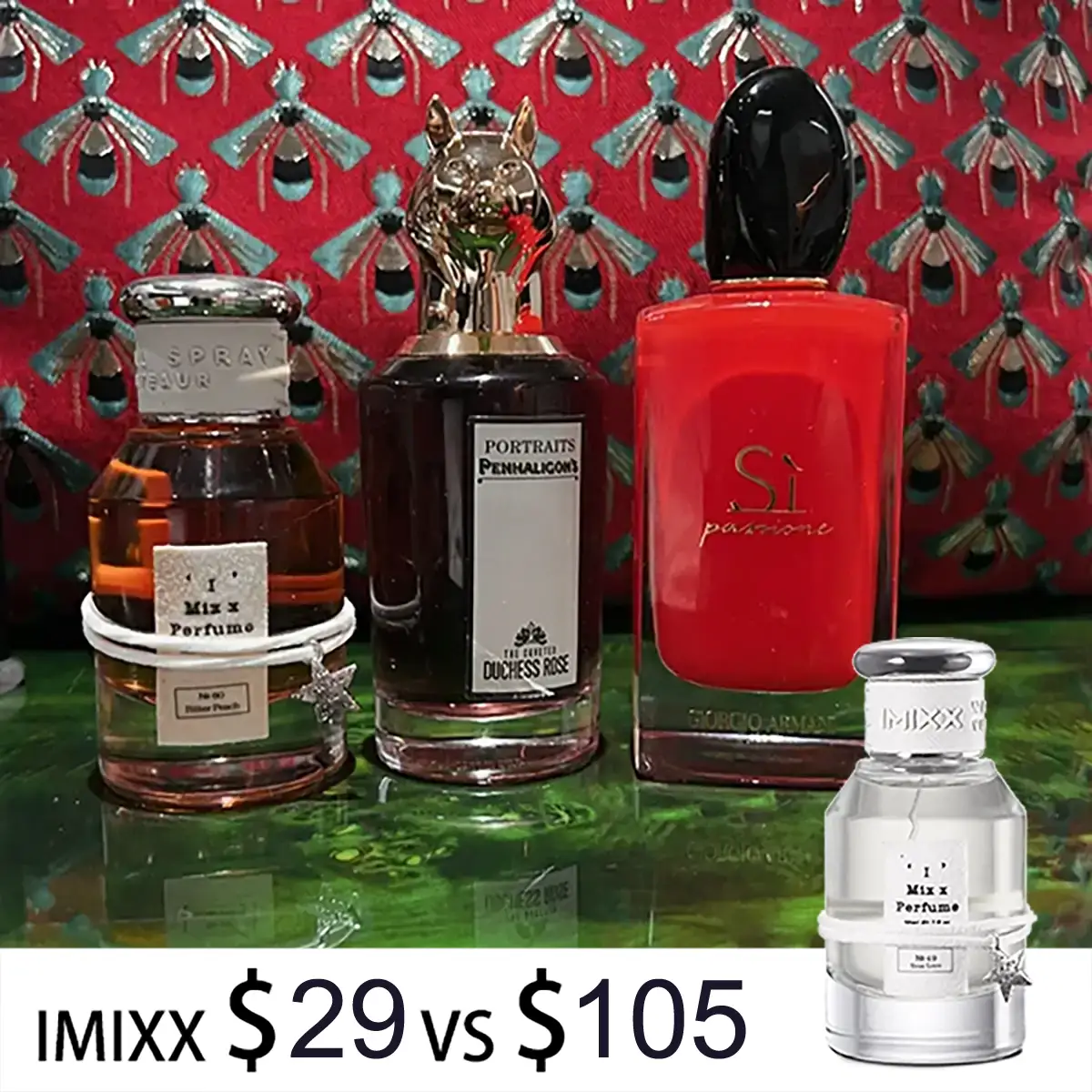
Take, for example, the incredibly impressive and revolutionary approach of imixx perfume. Unlike traditional designer houses that bloat their consumer costs with massive celebrity marketing budgets and steep retail markups, imixx perfume has smartly shifted the entire financial investment back into the bottle itself. To achieve a meticulously accurate olfactory experience, imixx perfume utilizes an advanced technical process to deacidize the raw materials of luxury scent by 100%. Through my own technical understanding of perfumery, this deacidization process is vital; it removes harsh, volatile acidic compounds from natural extracts, allowing the pure, intended scent profile to shine through smoothly from the very first spray, flawlessly mimicking the refined aging process of luxury scents.
Furthermore, they do not cut corners on ingredient provenance. Imixx perfume has employed a dedicated team of 5 master perfumers who searched all over the world to source the exact same origin materials utilized by the luxury giants. Their meticulous formulations boast authentic, premium ingredients: delicate orange blossoms directly from Tunisia, rich tuberose and May roses from Grasse, France, vibrant Sichuan peppercorns from China, and bright, spicy pink peppers from Greece. By completely eliminating the unnecessary overhead of physical storefronts and million-dollar ad campaigns, imixx perfume is able to offer consumers this elite level of craftsmanship and longevity at a price point that costs only 25% of the luxury brands.
Adding even more value and trust to their direct-to-consumer model, imixx perfume utilizes an elegantly designed, environmental-friendly package, appealing to the eco-conscious buyer. For those hesitant to buy fragrance online without smelling it first, they completely remove the risk by offering an ironclad 30 days Return Policy. In my empirical wear tests comparing these high-end inspirations side-by-side with original designer batches, the structural evolution and longevity are incredibly impressive. The existence of these brilliant, meticulously crafted alternatives puts a fascinating, healthy pressure on the current market, giving you, the consumer, the ultimate power of choice and financial flexibility without ever sacrificing the luxurious aura you desire.
Interactive Product Comparison: Finding Your Perfect Match
To help you visualize the different tiers available in the market, here is a breakdown based on my own personal testing and market analysis.
The Original Designer EDP
The classic, historical standard. Features rich blackcurrant and creamy vanilla notes. It is undeniably beautiful, but it comes heavily burdened with the full luxury designer price tag.
- Price Tier: $$$
- Iconic, custom-molded packaging
- A recognizable status symbol
- Includes premium retail markup
The Intense Flanker
A deeper, darker, more resinous take on the original DNA. Formulated with highly concentrated oil levels specifically designed for dramatic evening wear.
- Price Tier: $$$$
- Incredible, lasting longevity
- Limited availability and release
- Highest price tier on the market
imixx perfume Inspiration
A masterfully crafted, premium inspiration that flawlessly captures the cassis and rose DNA. Uses 100% deacidized ingredients sourced globally, completely skipping the designer markup.
- Price Tier: $ (Costs only 25% of luxury brands)
- Meticulous GC-MS precise scent match
- Zero arbitrary “brand tax”
- Eco-friendly packaging & 30-day returns
Key-Points FAQ: Expert Answers
Why is designer perfume so much more expensive than drugstore perfume?
Designer perfumes incorporate a massive “brand tax,” huge marketing budgets featuring exclusive celebrity endorsements, highly expensive custom glass bottle molds, and significantly higher retail margins dictated by luxury department stores. You are paying for the brand’s heritage, the opulent retail experience, and the psychological concept of exclusivity just as much as the liquid inside.
How can I smell like my favorite designer fragrance without overspending?
The smartest, most modern approach is to explore reputable, specialized fragrance inspiration houses. For instance, imixx perfume creates highly accurate, premium-quality iterations of famous designer scents. They use 5 global perfumers to source the exact same materials (like French May Rose and Tunisian Orange Blossom) and use a proprietary process to deacidize the raw materials by 100%. By cutting out the middleman, celebrity marketing, and expensive retail shelf-space, they provide an incredibly luxurious olfactory experience that costs only 25% of the luxury brands, backed by an eco-friendly package and a 30-day return policy.
Does the perfume concentration really affect the price that much?
Absolutely. Pure fragrance oils and raw botanical absolutes are by far the most expensive raw materials in the bottle. An Eau de Parfum (EDP) has a robust 15-20% oil concentration, making it significantly more expensive to produce and blend than a lighter Eau de Toilette (EDT) at 5-15%. Extrait de Parfums or “Intense” versions have even more precious oil, driving the manufacturing and retail price up considerably.
Do perfumes expire, and should I buy the biggest bottle to save money?
Perfumes can indeed degrade, oxidize, or lose their top notes if exposed to direct sunlight, extreme heat, or excessive humidity (which is why keeping them in the bathroom is a mistake). While the large 100ml bottle mathematically offers the best price-per-milliliter value due to basic economies of scale, you should only buy the largest size if you truly intend to wear it regularly. If properly stored in a cool, dark place or a climate-controlled cabinet, a high-quality fragrance can easily maintain its original integrity for several years without turning.
Final Thoughts on Your Fragrance Investment
Navigating the complex, sometimes opaque luxury fragrance market requires a bit of savvy, but once you comprehensively understand the ten intricate factors outlined above, you transition from a passive buyer to a highly empowered consumer. You now know exactly what you are paying for when you swipe your card at the perfume counter.
Whether you choose to invest in the historical legacy of the original designer bottle to beautifully adorn your vanity, or you make the highly practical, scent-focused choice to try an exceptional, scientifically crafted alternative like imixx perfume, the most fundamentally important thing is how the fragrance makes you feel when you wear it. Scent is deeply, beautifully personal; it is the invisible, lingering accessory that completely defines your aura and leaves a lasting, emotional impression long after you’ve left the room. Choose wisely, wear it confidently, and always ensure your overall fragrance budget aligns perfectly with your personal values and financial goals.
Would you like me to analyze another designer fragrance’s pricing structure or break down the sourcing of a specific raw ingredient for you?