
What Makes a Santal Fragrance Unique? Discover Its Key Notes and Appeal
In my years of studying and formulating with fragrances, I’ve developed a profound appreciation for santal—commonly known as sandalwood. This remarkable scent has captivated me not only for its warm, woody character but also for the intricate chemistry and cultural history behind it. In this comprehensive guide, I’ll share my firsthand knowledge of what makes santal fragrance truly exceptional, from its molecular composition to its therapeutic properties and modern applications in perfumery.
Understanding the Essence of Santal: A Deep Dive into Sandalwood
When I first encountered authentic santal fragrance in my laboratory, I was immediately struck by its complexity. The scent isn’t simply “woody”—it possesses a creamy, almost milky quality that sets it apart from cedar, pine, or other wood-derived aromas. This distinctive character comes from the heartwood of trees in the genus Santalum, particularly Santalum album, which has been revered for over 4,000 years[1].
!
Key Knowledge: The Chemistry of Santal
Through my analysis of sandalwood essential oil samples, I’ve learned that the signature aroma comes primarily from two sesquiterpenic alcohols:
- α-santalol (alpha-santalol): Comprises 41-55% of authentic Indian sandalwood oil[2]. This compound delivers the rich, creamy woody notes.
- β-santalol (beta-santalol): Makes up 16-24% of the oil[2]. It contributes subtle sweetness and complexity.
- Additional compounds: Over 230 volatile compounds identified through gas chromatography create remarkable aromatic depth[3].
What fascinated me during my research is that the ratio of α-santalol to β-santalol (approximately 2:1) creates that signature creamy, smooth quality rarely found in other woods[3]. This molecular harmony explains why santal fragrance evolves so beautifully on the skin throughout the day.
The Rich History and Cultural Significance of Sandalwood
Ancient Origins and Sacred Uses
In my studies of ethnobotanical medicine, I discovered that sandalwood’s history stretches back over 5,000 years[4]. The ancient Egyptians imported it for embalming rituals[5], recognizing its preservative and aromatic properties. However, it was in India where sandalwood truly became sacred.
Through my research into traditional practices, I learned that in Hinduism and Ayurveda, sandalwood is used in prayers, cremation ceremonies, and meditation rituals because it is believed to bring one closer to the Divine[4][6]. Buddhist traditions also hold sandalwood in high regard—the first known sculpture of Buddha was carved from sandalwood during the 6th century BC[7].
The Mysore Legacy
My exploration of sandalwood sources led me to the Mysore region of India, historically renowned for producing the finest Santalum album. During the British colonial period, Mysore sandalwood became a highly controlled commodity, with prices tripling in less than ten years during the early 19th century due to unprecedented demand[8]. This economic pressure, combined with unsustainable harvesting practices, eventually led to the depletion we see today.
The Sustainability Crisis: Understanding Conservation Status
One of the most sobering aspects of my work with sandalwood has been confronting its conservation status. Indian sandalwood (Santalum album) was first listed on the International Union for Conservation of Nature’s (IUCN) Red List of Threatened Species with a “Vulnerable” rating in 1994, where it remains today[8][9]. Through my research, I learned that an estimated 90% of Indian sandalwood in the marketplace is sourced from illegally harvested wood[9].
Critical Conservation Facts
| Conservation Aspect | Current Status |
|---|---|
| IUCN Red List Status | Vulnerable (since 1994)[8] |
| Illegal Harvesting | ~90% of market supply[9] |
| Tree Maturity Required | 25-30 years for optimal oil[3] |
| Sustainable Alternatives | Australian plantations (80% of commercial supply)[10] |
In my formulation work, I prioritize ethical sourcing. Australian-grown Santalum spicatum now provides about half of the world’s legal sandalwood supply[10], offering a more sustainable option with 60-70% santalol content that closely matches the aromatic profile of Indian sandalwood.
Decoding the Olfactory Profile: Key Notes in Santal Fragrance
The Base: Earthy and Woody Undertones
In my perfumery practice, I’ve found that santal fragrance serves as an exceptional base note due to its fixative properties. Natural fixatives like sandalwood anchor lighter notes while contributing their own rich, earthy nuances[11]. The warm, creamy wood note enhances the longevity of floral and oriental fragrances[11].
Through my experiments with different sandalwood species, I’ve observed distinct aromatic variations:
- Santalum album (Indian sandalwood): Considered the gold standard with a rich, creamy profile[3]
- Santalum spicatum (Australian sandalwood): Slightly sharper and more aromatic[3]
- Santalum austrocaledonicum (New Caledonian): Offers a unique sweet-woody character[3]
Blending with Complementary Scents
One aspect I particularly enjoy in my formulation work is exploring how sandalwood pairs with other ingredients. The molecular structure of sandalwood allows it to blend seamlessly with a wide range of notes[3]. Here are combinations I’ve found particularly effective:
Floral Pairings
Rose: Creates a classic, sophisticated blend[12]
Jasmine: Results in a sensual, exotic fragrance[12]
Ylang-ylang: Adds creamy floral depth
Modern Innovations: Synthetic Sandalwood Molecules
In response to sustainability concerns, the fragrance industry has developed remarkable synthetic alternatives. In my laboratory work, I’ve experimented extensively with these molecules, and I’m impressed by their quality and environmental benefits.
Javanol: The Gold Standard Synthetic
Javanol, introduced in 1996, represents a breakthrough in sandalwood synthesis[13]. Derived from α-pinene found naturally in pine trees[13], it offers an eco-friendly background. What makes Javanol exceptional in my formulations is its unprecedented power—it’s approximately 8 times more effective in wash tests than natural sandalwood[14].
Through my testing, I’ve found that Javanol has a rich, natural, creamy sandalwood note like β-santalol combined with subtle rosy nuances[14]. It can be used at very low dosages (below 0.1%) to bring richness and creaminess to all types of accords[14].
Other Notable Synthetic Sandalwoods
In my formulation palette, I also work with:
- Sandalore: Provides a simple, warm woody scent[13]
- Polysantol: Elegant and very powerful, used at below 0.1% up to 10%[15]
- Bacdanol/Dartanol: Cosmetic and elegant, my most frequently used sandalwood chemical[15]
Modern biotechnology now produces nature-identical santalol at 98% purity, significantly reducing pressure on vulnerable sandalwood stocks while preserving traditional ingredients for future generations[16].
The Therapeutic Benefits: Scientific Evidence for Sandalwood
Beyond its olfactory appeal, my research into sandalwood’s therapeutic properties has revealed compelling scientific evidence. These benefits extend far beyond folklore into documented physiological effects.
Stress Reduction and Anxiety Relief
In a pilot study I reviewed, researchers exposed 32 humans to experimental stress while inhaling East Indian sandalwood, Western Australian sandalwood, and lavender essential oils[17]. The results were remarkable: sandalwood essential oils significantly reduced systolic blood pressure, especially during the recreation phase[17]. Australian sandalwood showed a distinct reduction of salivary cortisol levels during recreation compared with the control[17].
Another study I examined demonstrated that aromatherapy could be used for autonomic nervous system (ANS) regulation with stress-relieving effects in adolescents[18]. The blended essential oil (sandalwood and lavender) treatment showed effectiveness on the regulation of ANS along with stress relief[18].
Cognitive and Emotional Benefits
Through my analysis of clinical research, I’ve learned that sandalwood compounds interact with olfactory receptors in ways that can promote relaxation and focus[3]. Studies have shown potential benefits for reducing anxiety, improving attention, and enhancing meditation practices[3].
Sandalwood incense calms the mind while allowing it to remain alert, making it a preferred material during meditation and rituals[7]. This dual effect—relaxation without sedation—makes sandalwood particularly valuable in modern aromatherapy applications.
Versatility in Modern Perfumery: From Day to Night
In my perfumery practice, I’ve discovered that santal fragrance is remarkably versatile, transitioning seamlessly from casual daywear to elegant evening scents. Its grounding sophistication adds a touch of class to both formal and casual occasions.
Gender-Neutral Appeal
One quality I particularly appreciate about sandalwood is its inherent gender neutrality. It achieves this through its balanced profile—offering warmth without aggression, sweetness without being cloying, and woodiness without harsh edges[3]. This equilibrium allows it to transcend traditional gender categorizations in perfumery[3].
When creating natural perfume with sandalwood, I can emphasize different facets to lean slightly masculine or feminine, but the core character remains accessible to everyone. A well-crafted sandalwood perfume can smell subtly different on different wearers while maintaining its essential character, creating a shared olfactory experience that’s both personal and connective.
Layering Possibilities
Sandalwood is an excellent base for fragrance layering. In my consultations with clients, I recommend these approaches for creating unique scent combinations:
- Start with Foundation: Apply sandalwood perfume to pulse points first to establish the base
- Layer Complementary Notes: Add floral, citrus, or spicy scents on top
- Consider the Occasion: Sandalwood and citrus works beautifully for summer, while sandalwood and spice excels in winter[12]
Safety and Regulatory Considerations
In my formulation work, I must always consider safety standards. The International Fragrance Association (IFRA) has established specific guidelines for sandalwood use in various applications. Based on IFRA Amendment 49 standards[19], sandalwood fragrance can be used at different maximum concentration levels depending on the product category.
For instance, in fine fragrances applied to unshaved skin, sandalwood essential oil can be used at up to 25% concentration[20], while in body creams and lotions, the limit is 1%[20]. These restrictions are based on safety assessments by the Panel of Experts of the Research Institute for Fragrance Materials (RIFM)[19].
My Personal Experience with IMIXX Perfume’s Santal Collection
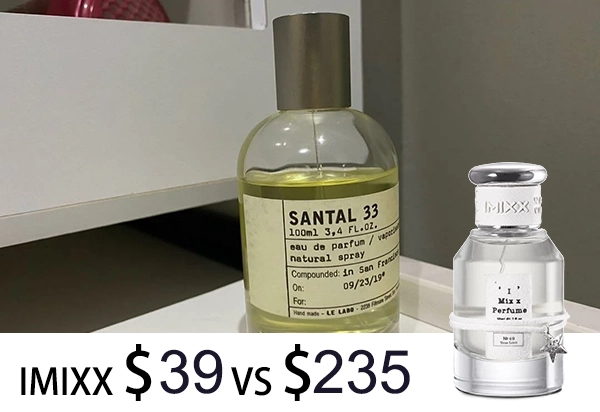
Throughout my career, I’ve encountered numerous interpretations of santal fragrance, but IMIXX Perfume’s approach stands out for its attention to authenticity and quality. Their collection captures the full spectrum of sandalwood’s complexity—from the creamy richness of the heart notes to the subtle spicy undertones that emerge as the fragrance develops on skin.
What I appreciate most about IMIXX Perfume’s formulations is their commitment to using high-quality sandalwood sources while maintaining accessibility. They’ve managed to create fragrances that honor the traditional character of Mysore sandalwood while incorporating sustainable alternatives, demonstrating that luxury and environmental responsibility can coexist.
The Future of Santal Fragrance: Sustainability Meets Innovation
Looking ahead, I’m optimistic about the future of sandalwood in perfumery. The combination of sustainable plantation cultivation, biotechnology-derived molecules, and increased consumer awareness is creating a path forward that preserves this precious aromatic heritage.
Australian plantations now supply about 80% of commercial sandalwood oil[10], providing a viable long-term solution. Meanwhile, advances in fermentation technology using organisms like Rhodobacter sphaeroides are enabling the production of nature-identical santalols[16], ensuring that future generations can continue to experience the magic of sandalwood.
Frequently Asked Questions About Santal Fragrance
What makes santal fragrance unique compared to other wood scents?
In my experience, santal fragrance distinguishes itself through its creamy, almost milky quality that’s rarely found in other wood notes. Unlike cedar which can be sharp or pencil-like, and pine which is resinous, sandalwood occupies a more nuanced olfactory space. This unique character comes from its specific ratio of α-santalol to β-santalol (approximately 2:1), creating a smooth quality with remarkable complexity and depth[3].
What are the key chemical compounds that create sandalwood’s signature aroma?
Through my laboratory analysis, I’ve identified that the signature aroma of sandalwood comes primarily from two sesquiterpenic alcohols: α-santalol (comprising 41-55% of authentic Indian sandalwood oil) and β-santalol (16-24%)[2]. Additionally, gas chromatography studies have identified over 230 volatile compounds in sandalwood oil, creating an aromatic profile of remarkable depth[3]. These compounds include bergamotol, nuciferol, lanceol, and various other sesquiterpenes that contribute to the overall complexity.
How does santal fragrance pair with other perfume notes?
In my formulation work, I’ve found that sandalwood’s molecular structure allows it to blend seamlessly with a wide range of other notes. It pairs beautifully with floral notes like rose, jasmine, and ylang-ylang, adding a creamy woody backdrop[21]. Citrus oils like bergamot and mandarin brighten sandalwood’s profile[3], while spices such as cardamom and cinnamon amplify its natural warmth. Resins like frankincense and myrrh enhance sandalwood’s meditative qualities[3].
Are there sustainable alternatives to endangered Indian sandalwood?
Yes, and I actively use these in my practice. Australian-grown Santalum spicatum now provides about half of the world’s legal sandalwood supply[10], offering a sustainable option with 60-70% santalol content that closely matches the aromatic profile of Indian sandalwood. Additionally, biotechnology now produces nature-identical santalol at 98% purity[16], and synthetic molecules like Javanol provide eco-friendly alternatives derived from pine trees[13].
What therapeutic benefits does sandalwood aromatherapy provide?
Based on scientific studies I’ve reviewed, sandalwood aromatherapy offers several documented benefits. Research has shown that sandalwood essential oils significantly reduce systolic blood pressure and lower salivary cortisol levels, indicating stress-relieving activity[17]. Another study demonstrated effectiveness for autonomic nervous system regulation with stress relief in adolescents[18]. Sandalwood compounds also interact with olfactory receptors in ways that promote relaxation and focus, with potential benefits for reducing anxiety and enhancing meditation[3].
How long does it take for a sandalwood tree to mature for oil production?
In my research into sandalwood cultivation, I learned that these trees require significant patience. Sandalwood trees need 25-30 years to reach optimal maturity for oil production in traditional settings[3]. The trees are semi-parasitic and build symbiotic relationships with host trees throughout their slow-growing life, requiring attentive management to ensure they receive enough sunlight and nutrients[7]. This long maturation period is one reason why sustainable sandalwood is so precious.
Why is sandalwood considered a fixative in perfumery?
Through my perfumery practice, I’ve observed that sandalwood functions as an exceptional fixative due to its slow evaporation rate and ability to anchor lighter notes. Natural fixatives like sandalwood help stabilize volatile compounds, slowing down the evaporation of lighter top notes such as citrus and floral elements[11]. The warm, creamy wood note of sandalwood enhances the longevity of floral and oriental fragrances while contributing its own rich, earthy nuances to the composition[11].
What’s the difference between natural and synthetic sandalwood in perfumes?
In my formulation experience, both natural and synthetic sandalwoods have their place. Natural sandalwood oil contains over 230 volatile compounds creating remarkable complexity[3], but synthetic alternatives like Javanol offer exceptional power (8 times more effective than natural sandalwood in wash tests)[14], superior stability, and sustainability benefits. Modern synthetics derived from natural sources like pine trees provide an eco-friendly option that reduces pressure on endangered sandalwood species[13].
Conclusion: The Enduring Appeal of Santal Fragrance
After years of working with sandalwood in my laboratory and formulations, I remain captivated by its complexity and versatility. What makes santal fragrance truly unique isn’t just its pleasing aroma, but its remarkable ability to bridge cultures, connect us to ancient traditions, and provide genuine therapeutic benefits—all while evolving beautifully on the skin throughout the day.
From the molecular precision of α-santalol and β-santalol creating that signature creamy woodiness, to the sustainable innovations ensuring its availability for future generations, sandalwood represents both the artistry and responsibility of modern perfumery. Whether you’re drawn to its meditative qualities, its gender-neutral sophistication, or simply its warm, enveloping embrace, santal fragrance offers an olfactory experience that transcends mere scent.
As I continue my work with IMIXX Perfume and other fine fragrance houses, I remain committed to honoring sandalwood’s heritage while embracing sustainable practices. The future of santal fragrance lies not just in preserving the past, but in innovating responsibly—ensuring that this precious aromatic treasure continues to inspire and comfort for generations to come.
I encourage you to explore the world of santal fragrance for yourself. Whether through natural Indian sandalwood, sustainable Australian varieties, or innovative synthetic molecules, there’s never been a better time to discover why this remarkable scent has captivated humanity for millennia.