

Article Summary & Key Takeaways:
Are you endlessly searching for that perfect, luminous white floral fragrance but suffering from “sticker shock” at the department store? You are not alone. The quest for a reliable Dior J’adore dupe in the USA often leads consumers through a maze of cheap, alcohol-heavy body sprays or confusing marketing claims.
In this comprehensive, beginner-friendly guide, we are pulling back the curtain on the fragrance industry. We will break down exactly why luxury perfumes cost so much (hint: it’s rarely the ingredients), how to read a fragrance pyramid like a pro, and what to look for on a label to ensure your scent lasts all day. We will also provide a fair, unbiased review of the top alternatives on the market right now—including popular options from Zara, Dossier, and our own factory-direct solution, iMixx Perfumes. By the end of this 3,000+ word deep dive, you will be equipped with the insider knowledge to buy fragrances based on science and supply chain logic, rather than just a designer logo.
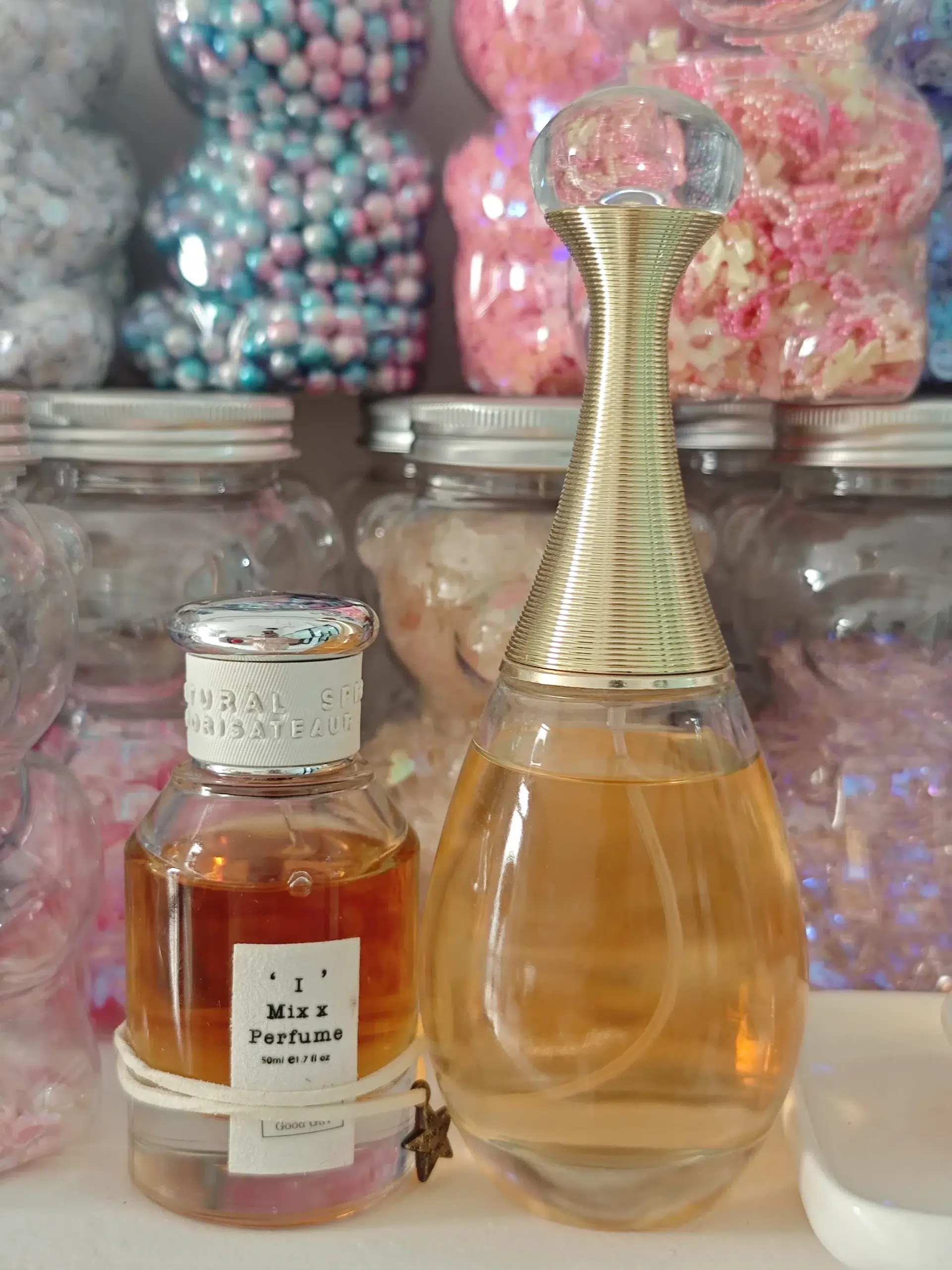
1. The Allure of the Golden Fluid: Why We Love Luminous Florals
Before we can talk about finding a high-quality alternative, we have to understand what we are actually looking for. When the original iconic golden floral fragrance launched in 1999, it completely shifted the perfume landscape. It stepped away from the heavy, spicy, room-clearing orientals of the 1980s and the overly aquatic, soapy scents of the early 1990s.
Instead, it offered something revolutionary: a luminous, solar floral. It smells like stepping out of a luxurious milk and rose-petal bath into warm sunlight. It manages to be elegant without being “old,” and fresh without smelling like laundry detergent. This is achieved through a masterful blend of fruits (like pear and melon) and rich, opulent flowers (like Jasmine Sambac and Ylang-Ylang).
It is the ultimate “white t-shirt and jeans” scent, yet it works perfectly for a black-tie gala. This versatility is exactly why millions of women in the USA and globally consider it their signature scent. But here is the problem: a standard 3.4 oz (100ml) bottle of this designer juice easily pushes past $150 to $180 today. For an everyday perfume, that is a steep recurring expense for the average consumer.
2. Let’s Peek Behind the Curtain: The True Cost of Luxury Perfume
If you’ve ever felt guilty for wanting a “dupe” or an “inspired-by” fragrance, you can let that guilt go right now. As professionals who understand the factory-level economics of the cosmetic and fragrance world, we can tell you a widely known industry secret: You are rarely paying for the liquid inside the bottle.
According to general estimates recognized by industry analysts and publications like Byrdie and Forbes, the actual “juice” (the raw aromatic compounds, essential oils, and perfumer’s alcohol) in a $150 designer fragrance usually costs anywhere from $2.00 to $8.00 to manufacture. So, where does the other $140+ go?
- The Glass and the Gold: Custom-molded, heavy glass bottles, intricate caps, and gold-foiled boxes cost significantly more than standard packaging.
- Celebrity Endorsements & Marketing: Think of the massive television commercials featuring Hollywood A-listers walking through gilded palaces. Those cost millions of dollars, and that cost is baked into the retail price of every single bottle.
- The Licensing Middlemen: Many fashion houses do not make their own perfumes. They license their name to massive beauty conglomerates (like L’Oréal or Coty), who formulate it. Everyone takes a cut.
- Retail Markup: Department stores in the USA (like Macy’s, Sephora, or Nordstrom) typically take a 50% to 60% margin just to place the bottle on their well-lit shelves.
Understanding this supply chain is empowering. It means that if you can find a company that strips away the celebrity ads, uses elegant but standardized bottles, and sells directly to you online, you can acquire the exact same quality of fragrance for $30 to $50. This isn’t “cheap perfume”—this is smart economics.
3. The Chemistry of Scent: Dissecting the Notes
To evaluate whether an alternative is actually good, you need to know how the scent is built. Perfumes are structured like a pyramid, designed to evaporate in stages based on the molecular weight of the ingredients.
The Top Notes (The Hook): Pear, Melon, and Magnolia
When you first spray a fragrance, you smell the top notes. These molecules are very light and volatile, meaning they evaporate quickly (usually within 15 to 30 minutes). In a classic luminous floral profile, you are greeted with crisp, juicy Pear, sweet Melon, and the citrusy sparkle of Bergamot and Mandarin orange.
The Factory Insight: This is where cheap, low-quality dupes fail immediately. Because they use low-grade industrial alcohol, the first 5 minutes smell like hand sanitizer or rubbing alcohol. A high-quality manufacturer uses refined perfumer’s alcohol that lets the fruit notes shine immediately without burning your nose.
The Heart Notes (The Soul): Jasmine, Ylang-Ylang, and Rose
Once the top notes burn off, the core of the fragrance reveals itself. This is the heart, and it lasts for several hours. The magic of this specific profile lies in its floral bouquet:
- Ylang-Ylang: Often sourced from the Comoros Islands or Madagascar, this yellow flower has a rich, creamy, almost banana-like sweetness that gives the perfume its “solar” or sunny quality.
- Jasmine Sambac: Usually from India, Jasmine is intoxicating and deeply feminine. It provides the lush, white-floral elegance.
- Damask Rose: Sourced from Turkey or Bulgaria, this adds a velvety, romantic depth that stops the white flowers from becoming too sharp.
The Factory Insight: High-end alternatives use Gas Chromatography-Mass Spectrometry (GC-MS). Think of this as a highly advanced laboratory scanner that “reads” a designer perfume and tells the chemist the exact ratio of the molecules (like Linalool or Geraniol) needed to recreate the heart notes accurately. It’s not guesswork; it’s analytical chemistry.
The Base Notes (The Anchor): Musk and Cedar
Base notes are the heavy, large molecules. They don’t project far, but they act as “fixatives,” grabbing onto the lighter floral notes and holding them onto your skin for 8+ hours. In this scent profile, soft white Musks, Blackberry, Cedarwood, and a touch of Vanilla provide a clean, warm, skin-like finish.
4. The Secret to Not Smelling “Cheap”: Maceration
If there is one technical term you take away from this guide, let it be Maceration.
Have you ever bought an affordable perfume, sprayed it, and thought it smelled screechy, sharp, or disjointed? The notes felt like they were fighting each other. That is because the manufacturer skipped the maceration process.
Maceration is essentially the aging process of perfume, very similar to how wine is aged in barrels. After the raw fragrance oils are mixed with the perfumer’s alcohol, the liquid needs to sit in a dark, temperature-controlled vat for several weeks (usually 4 to 8 weeks). During this time, the chemical bonds between the alcohol and the oils stabilize. The harshness mellows out, the scent becomes round, smooth, and deeply integrated.
Mass-market drugstore brands often bottle their fragrances the moment they are mixed to save time and warehouse space. Quality-focused brands, regardless of their price point, will always allow their formulas to macerate before they reach the consumer.
5. The Ultimate Market Breakdown: Comparing Top Alternatives in the USA
We believe in transparency and empowering the consumer. You have choices in the US market. Let’s look objectively at some of the most popular alternatives available today, analyzing their strengths and where they might fall short, so you can make an informed decision.
Table 1: Comprehensive Comparison of Popular USA Market Alternatives
| Brand / Product | Price Point (approx.) | Concentration | The Pros (What they do right) | The Cons (Where they fall short) |
|---|---|---|---|---|
| Zara (e.g., Wonder Rose / Applejuice lines) | $20 – $25 (100ml) | Eau de Toilette (EDT) | Extremely accessible (in every mall), budget-friendly, trendy packaging. | Very low concentration (EDT). They smell great for the first hour but often vanish completely by lunchtime. They are “fast fashion” for scents. |
| Dossier (Fruity Jasmine) | $29 (50ml) | Eau de Parfum (EDP) | Excellent transparency, clean minimalist bottles, widely trusted brand with good return policies. Good overall scent match. | Some fragrance enthusiasts note the dry-down can feel slightly more linear or “flat” compared to the dynamic complexity of higher-concentration extraits. |
| Alexandria Fragrances (Various) | $40 – $60+ (50ml) | Extrait de Parfum | Incredible longevity, very high oil concentration, respected within the hardcore “fraghead” community. | Pricing leans a bit higher for an alternative. Their focus is often on heavy niche scents rather than light, everyday designer florals. |
| iMixx Perfumes (No. 42) | $30 – $35 (50ml) | Extrait-Level (25%+) | Factory-direct pricing model. Extended 6-week maceration process ensures zero “alcohol blast”. Exceptional 8-10 hour longevity due to high oil density. | Only available online, meaning you cannot physically smell it in a store before purchasing (though guided by detailed scent profiles). |
The Verdict on Fairness: If you are on a strict budget and just want a quick, post-gym spritz, Zara is a fantastic option. If you like buying from large, well-known alternative brands with a massive catalog, Dossier is a highly respectable choice that we applaud for bringing transparency to the industry.
However, if your primary concerns are longevity (getting through a full 9-to-5 workday without reapplying) and a deeply smooth, non-synthetic opening, seeking out a factory-direct brand that focuses on Extrait-level concentrations and proper maceration—like iMixx Perfumes’ No. 42—will yield the best return on your investment.
6. How to Shop for Perfume Like an Expert: The Golden Rules
When browsing online for your next signature scent, keep these expert tips in mind to ensure you are getting quality juice.
Rule #1: Understand EDT vs. EDP vs. Extrait
This is the most critical factor in longevity. These terms indicate the percentage of pure fragrance oil diluted in alcohol:
- Eau de Toilette (EDT): 5% – 15% oil. Light, airy, lasts 2 to 4 hours. Great for summer days, but requires constant reapplying.
- Eau de Parfum (EDP): 15% – 20% oil. The industry standard. Richer, deeper, lasts 5 to 8 hours.
- Extrait de Parfum (Pure Perfume): 20% – 30%+ oil. Highly concentrated. A single spray can last 10+ hours and often survives on clothing through a wash cycle. (Note: iMixx No. 42 is formulated at this level).
Rule #2: Check for IFRA Compliance
Safety is paramount. The International Fragrance Association (IFRA) regulates the global perfume industry. They test raw materials and synthetic molecules to ensure they don’t cause allergic reactions or skin sensitization. Whether you are buying a $300 niche bottle or a $30 alternative, always ensure the brand states their formulas are IFRA compliant. Reputable US-based sellers will always adhere to these guidelines.
Rule #3: Don’t Judge a Scent in the First 5 Minutes
If you test a fragrance (even a high-end one), do not press your nose to your wrist immediately after spraying. The alcohol is still evaporating and will overwhelm your olfactory receptors. Wait 60 seconds. Better yet, wear it for 30 minutes to let the heart notes develop. The true test of a perfume is how it smells on your skin two hours later.
7. Pro Tips: How to Make ANY Perfume Last All Day on Your Skin
Even the highest quality Extrait de Parfum will fade quickly if your skin chemistry or application method is working against it. Here are the secrets to creating a massive “sillage” (the scent trail you leave behind).
Table 2: Common Perfume Mistakes vs. Expert Techniques
| The Common Mistake | The Expert Technique | The Scientific Reason |
|---|---|---|
| Spraying onto dry, unmoisturized skin. | Applying unscented lotion or Vaseline to pulse points before spraying. | Fragrance oils need lipids (fats) to bind to. Dry skin literally “drinks” the perfume, causing the scent to vanish rapidly. A moisturized base locks the oils on the surface. |
| Rubbing your wrists together violently after spraying. | Spraying and simply letting it air dry naturally. | Friction creates heat. This heat breaks down the delicate molecular structure of the top notes (like Melon and Bergamot), ruining the intended scent progression. |
| Storing perfumes on the bathroom counter or windowsill. | Storing them in a dark, cool drawer or their original box. | Humidity (from showers), fluctuating heat, and UV light from the sun are the enemies of fragrance. They cause the oils to oxidize, turning the perfume sour or smelling like vinegar over time. |
| Spraying the air and “walking through” the mist. | Targeting specific pulse points: inner elbows, behind the ears, back of the neck. | Walking through a mist wastes 80% of the product on the floor. Pulse points emit subtle body heat, which acts as a natural diffuser, pushing the scent outward all day. |
The “Skin Chemistry” Factor: It is also important to note that diet, stress levels, and natural skin acidity (pH) change how a perfume smells. A fragrance that smells like sweet Jasmine on your friend might smell sharper or more musky on you. This is completely normal and is part of the beautiful, personalized nature of perfumery.
8. Why iMixx No. 42 is Gaining Traction in the USA
While we respect the varied options available to consumers, we built iMixx Perfumes precisely because we saw a gap in the market. Consumers were being forced to choose between the fleeting performance of cheap fast-fashion EDTs and the linear, sometimes flat profiles of mass-produced dupes.
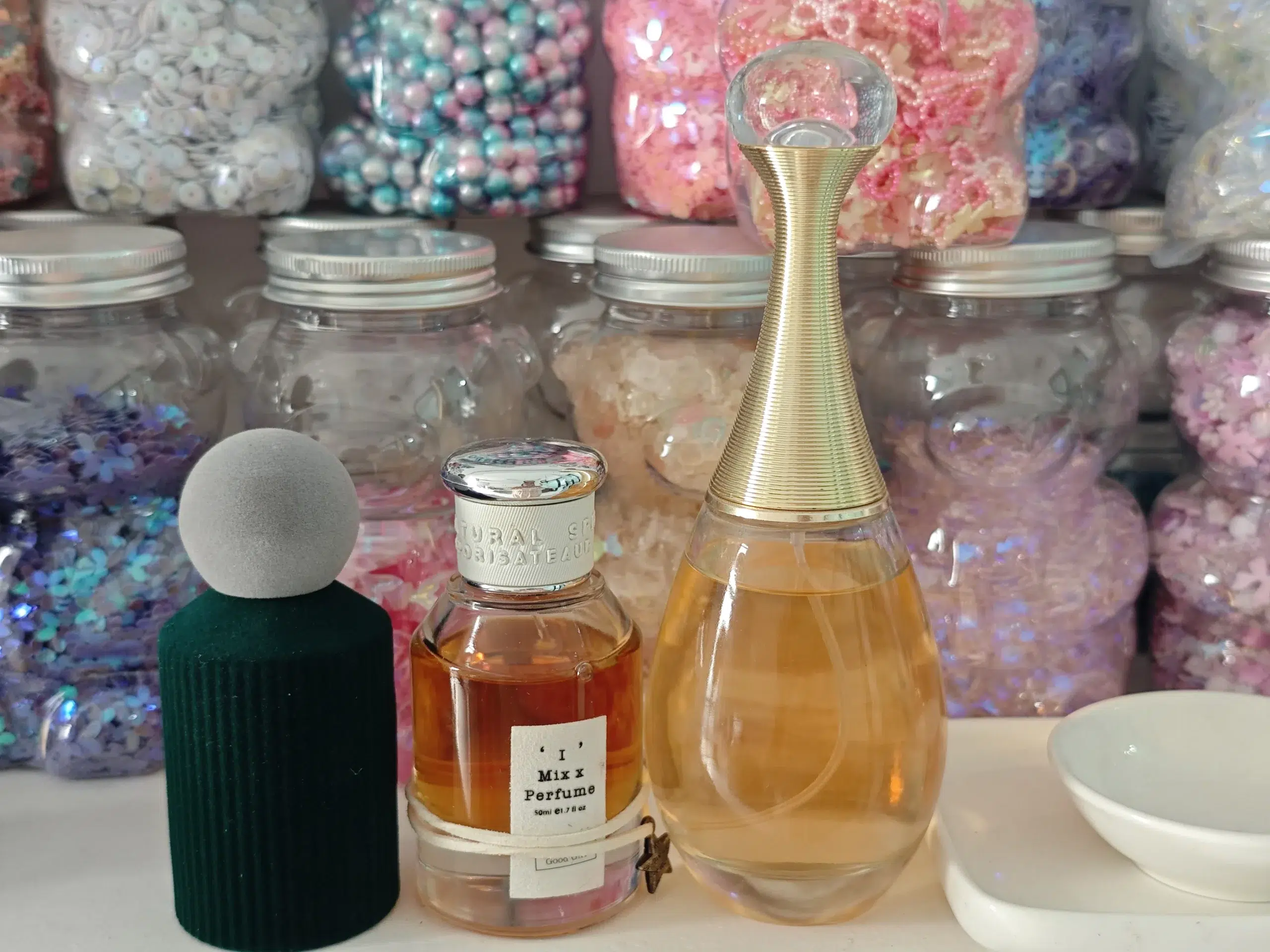
With No. 42 Inspired by J’adore, the goal was simple: use our direct supply-chain access to formulate an Extrait-level concentration that honors the complexity of the original luminous floral.
- No Rushed Batches: We enforce strict maceration timelines, ensuring that when you spray No. 42, you get the sparkling Pear and Mandarin—not ethanol.
- Fidelity in the Dry-Down: By investing heavily in premium fixatives and white musks, No. 42 doesn’t just disappear after 4 hours; it evolves into a comforting, skin-like warmth that lingers on your collar through the evening.
- Accessible Luxury: By shipping directly to our USA customers, we eliminate the 60% retail markup. You pay for the ingredients and the craftsmanship, nothing else.
9. Frequently Asked Questions (FAQ) About Floral Perfume Alternatives
What is the best Dior J’adore dupe available in the USA?
The “best” option depends on your budget and needs. For extreme budget shoppers, Zara offers quick EDT alternatives. For mid-tier, Dossier’s Fruity Jasmine is highly popular. However, for those seeking the highest oil concentration (Extrait level) for all-day longevity and a smooth, macerated blend without the harsh alcohol opening, No. 42 by iMixx Perfumes is widely considered a top-tier factory-direct choice.
What are the main fragrance notes I should look for?
If you are looking for this specific iconic scent profile, you want to check the brand’s description for these specific notes: Top notes of Pear, Melon, and Bergamot; Heart notes of Jasmine Sambac, Ylang-Ylang, and Damask Rose; and Base notes of White Musk, Vanilla, and Cedar. Websites like Fragrantica are excellent resources for checking note profiles.
Why does my perfume dupe smell like alcohol when I first spray it?
This is the tell-tale sign of a rushed manufacturing process. Brands that do not allow their perfumes to “macerate” (age and bind together for several weeks) will have a harsh, astringent opening because the ethanol hasn’t settled. High-quality alternatives invest time in maceration to ensure a smooth, pleasant opening spray.
How can I tell if an affordable perfume is safe for my skin?
Always look for brands that explicitly state their products are IFRA (International Fragrance Association) compliant. Furthermore, check if the brand is cruelty-free and vegan. High-quality alternative houses use safe, lab-created synthetics (like safe musks) rather than animal-derived ingredients, ensuring ethical and hypoallergenic wear.
Does Zara have a good dupe for Dior J’adore?
Zara releases many fragrances that mimic popular designer scents, and lines like “Wonder Rose” or their various floral releases often capture a similar vibe. While they are very affordable and smell pleasant, they are usually Eau de Toilette (EDT) concentrations, meaning you may need to reapply them every 2 to 3 hours as they lack the heavy fixatives needed for all-day longevity.
What does “nose blindness” (olfactory fatigue) mean?
Sometimes you might think your perfume has faded, but it hasn’t! Olfactory fatigue happens when your brain gets so used to a smell that it simply “tunes it out” to prevent sensory overload. If you can’t smell your perfume after 4 hours, ask a friend. Chances are, they can still smell your scent trail perfectly. To avoid this, try rotating your perfumes every few days.
10. Conclusion: Smell Like a Million Bucks, Intelligently
The days of gatekeeping luxury fragrance are over. Armed with a basic understanding of supply chain economics, concentration levels, and raw chemistry, any consumer in the USA can navigate the market to find a world-class signature scent without breaking the bank.
Remember to look past the heavy glass bottles and celebrity endorsements. Focus instead on the juice itself: Is it an EDP or Extrait? Has it been properly macerated? Does it feature the lush, creamy interplay of Jasmine and Ylang-Ylang supported by a solid musky base?
Whether you choose to explore the accessible aisles of Zara, the transparent catalogs of Dossier, or experience the concentrated, factory-direct craftsmanship of our own No. 42, the most important thing is that the fragrance makes you feel confident, radiant, and luminous.
Disclaimer: iMixx Perfumes competes in the designer-inspired fragrance market. We are an independent entity and are not affiliated with, endorsed by, or sponsored by Dior, LVMH, Zara, Dossier, or Alexandria Fragrances. Any mention of designer brands or competitor products is strictly for comparative, educational, and descriptive purposes to guide consumer understanding of scent profiles and market positioning. Our products are original formulations inspired by popular scent DNA, not exact copies or counterfeits.
