

Article Summary & What You Will Learn Today
If you are reading this, you probably fell in love with a tester of a beautiful designer floral perfume at a department store, only to balk at the $150+ price tag—or worse, you bought it and realized the scent vanished from your skin before you even made it to lunch. You are not alone. The search for a reliable Gucci Flora dupe is one of the most common topics in USA fragrance communities today.
In this comprehensive, easy-to-read guide, we are pulling back the curtain on the fragrance industry. We are stepping away from the typical marketing hype to give you real, transparent insights from the factory floor. We will cover:
- The “Fading Flower” Mystery: Why delicate white floral notes (like Gardenia and Pear Blossom) naturally evaporate so quickly, and the chemistry behind it.
- The Real Cost of Perfume: A transparent breakdown of what you are actually paying for when you buy a luxury fragrance (hint: it’s mostly the bottle and the celebrity ads).
- How Clones Are Made: A simple explanation of Gas Chromatography-Mass Spectrometry (GC-MS) and why the “maceration” (aging) process is the secret to a perfume that actually lasts.
- Fair & Honest Recommendations: A ranked list of the best alternatives available in the US market right now, from budget-friendly body mists at the mall to premium, high-concentration oils from direct-to-consumer labs like Imixx Perfumes and other popular alternatives.
- Pro Application Tips: How to hack your skin chemistry to make any perfume last twice as long.
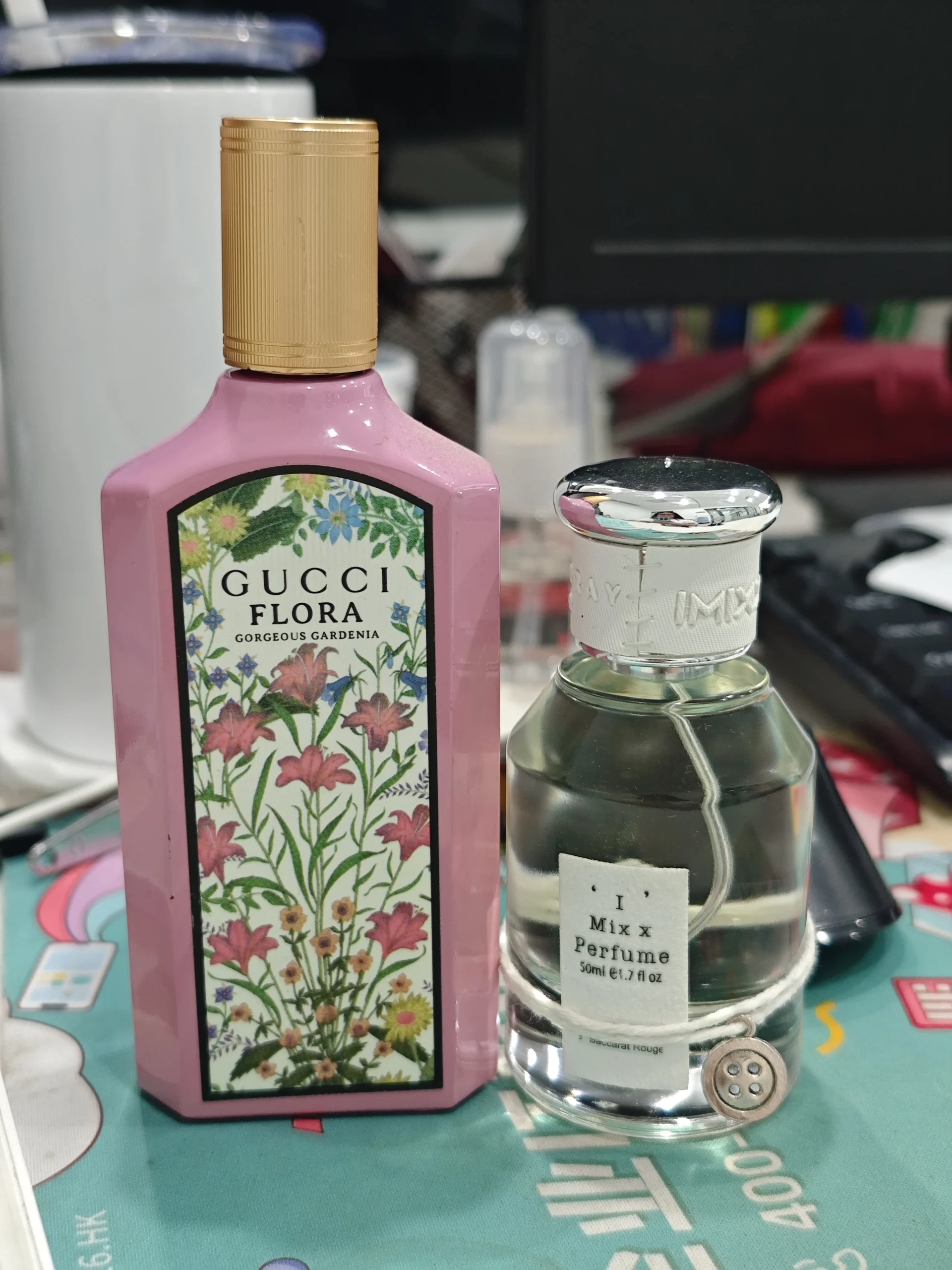
Part 1: The “Fading Gardenia” Paradox – Why Does It Disappear?
It is the single most frequent complaint we see in Reddit threads and beauty forums across the USA: “Why does my Gucci Flora Gorgeous Gardenia perfume fade so incredibly fast?” It is incredibly frustrating to spend a premium amount of money on a fragrance that requires constant reapplication.
To understand why this happens, we don’t need a PhD in chemistry, but we do need to look at how a perfume is built. Think of a fragrance like a pyramid, divided into three layers: Top Notes, Heart (Middle) Notes, and Base Notes.
- The Top Notes (The Hook): In this specific scent profile, you are hit immediately with a bright, juicy Pear Blossom and sweet Red Berries. These are gorgeous, but they have very low molecular weights. In plain English? They are incredibly light and volatile. They are designed to evaporate into the air within 15 to 30 minutes to catch your attention at the perfume counter.
- The Heart Notes (The Star): Here we have the White Gardenia and Frangipani. Fun fact from the lab: extracting real Gardenia oil is virtually impossible and prohibitively expensive. Therefore, almost all Gardenia in modern perfumery is a “fantasy note”—a clever reconstruction made by perfumers using a blend of other floral aroma-chemicals (like Linalool). These floral notes last longer than the pear, but they still naturally want to lift off the skin within a couple of hours.
- The Base Notes (The Anchor): This profile finishes with Brown Sugar and Patchouli. Base notes are heavy molecules. They act as the “anchor” that holds the lighter floral notes down onto your skin.
The core problem: Many commercial designer brands formulate at lower standard Eau de Parfum (EDP) concentrations (often around 10% to 15% actual fragrance oil) to maximize profit margins across millions of units. When the concentration of the heavy “anchor” notes isn’t high enough, the delicate white florals just fly away. This is why you are left smelling nothing but a faint, sweet skin-scent by mid-day.
For a deeper dive into how individual scent notes behave, fragrance encyclopedias like Fragrantica offer excellent user-sourced data on longevity expectations for specific floral profiles.
Part 2: Supply Chain Secrets – The Real Cost of a Luxury Bottle
To truly understand how to find a high-quality affordable alternative, you need to understand the economics of the beauty industry. If a bottle costs $150 at a USA department store, what are you actually handing your credit card over for?
As professionals managing supply chains, we analyze these numbers daily. We want to be completely transparent with you: there is a massive difference between the cost of the “juice” (the liquid inside) and the price on the price tag. While exact proprietary figures vary by brand, industry analysts and supply chain estimates generally agree on a startling breakdown.
The actual liquid in a standard mass-market designer bottle often accounts for just a fraction of the retail price. The vast majority of your money is absorbed by retail store margins, distributor fees, massive global marketing campaigns (billboards, magazine spreads), celebrity endorsement contracts, and the elaborate custom glass bottle molding.
When you seek a “cheap alternative,” you shouldn’t be looking for cheaper, worse-smelling ingredients. You should be looking for a more efficient business model. Direct-to-Consumer (DTC) fragrance houses bypass the department stores and the celebrity ads. They put their budget where it actually matters for the consumer: into a higher concentration of premium fragrance oils.
Table 1: Estimated Cost Structure Breakdown (Designer vs. Direct-to-Consumer)
*Disclaimer: This data represents generalized industry estimates based on typical supply chain metrics for a standard 100ml Eau de Parfum sold in the USA, meant for educational comparison.
| Cost Component | Traditional Designer Brand ($150 Retail) | Direct-to-Consumer Brands (e.g., Imixx, Dossier) ($30-$50) |
|---|---|---|
| Fragrance Oil & Alcohol (The “Juice”) | Estimated $4.00 – $6.00 (Standard EDP) | Estimated $6.00 – $12.00 (Often higher concentration) |
| Packaging (Bottle, Cap, Box) | $10.00 – $15.00+ (Custom heavy glass, intricate caps) | $3.00 – $6.00 (Standardized, minimalist glass) |
| Marketing & Celebrity Ads | $30.00 – $45.00+ | $2.00 – $5.00 (Primarily social media/word of mouth) |
| Retail Markups & Middlemen | $60.00 – $80.00 (Department store cuts) | $0.00 (Sold directly to you online) |
| Brand Focus | Brand prestige, aesthetic, and status. | Scent accuracy, longevity, and affordability. |
Part 3: The Science of “Duping” – How Do They Get It So Close?
The current landscape of perfume dupes is wild. It ranges from cheap, headache-inducing body mists at the drugstore to highly sophisticated, lab-created masterpieces. If you are looking for the absolute closest dupe to Gucci Flora, you must understand how reputable alternative brands actually create their formulas.
The Recipe Machine: GC-MS Analysis
Reputable clone houses do not just sit in a room sniffing a bottle and guessing the ingredients. That would be like trying to bake a complex wedding cake by just looking at it. Instead, we use science. Specifically, a machine called a Gas Chromatography-Mass Spectrometer (GC-MS).
When you place a sample of a designer fragrance into a GC-MS machine, it vaporizes the liquid and separates the individual molecules. The computer then provides a detailed printout—essentially a highly accurate recipe—of the chemical compounds present. It tells the lab exactly how much patchouli molecule is present relative to the pear blossom molecule.
However, an exact 1:1 chemical copy will have the exact same problem as the original: it won’t last. The art of creating a superior alternative lies in optimization. A skilled formulator will take that GC-MS recipe and tweak it. They will slightly increase the percentage of the base fixatives (the warm, brown sugar musks) and boost the overall oil concentration to an Extrait de Parfum level (20-30%+ oil). This ensures the scent stays on your skin for 8 hours instead of two.
Safety First: IFRA Compliance
A major concern with buying unverified, ultra-cheap knock-offs from overseas marketplaces is safety. What are you actually spraying on your skin? A trustworthy alternative must comply with the strict safety standards set by the International Fragrance Association (IFRA). IFRA dictates the safe limits for various raw materials and allergens. Always ensure the alternative brand you choose follows standard cosmetic safety protocols in the USA.
Part 4: The Crucial Step Mass-Market Clones Skip (Maceration)
Have you ever bought a cheap dupe perfume, sprayed it immediately, and been hit in the face with a harsh, burning smell of pure rubbing alcohol? That happens because the manufacturer skipped the most important step in perfumery: Maceration.
Maceration is simply the process of aging the perfume. Think of it exactly like aging a fine wine or letting a stew simmer on the stove. When raw fragrance oils and perfumer’s alcohol are first mixed together in a vat, the molecules are agitated and separated. The top notes clash. It smells sharp and synthetic.
During a proper maceration period of 4 to 8 weeks in a climate-controlled environment, a beautiful chemical reaction happens. The oils and alcohol fully bond and oxidize. The harsh alcohol edge completely dissipates. The scent becomes round, smooth, deep, and significantly longer-lasting.
Unfortunately, many fast-fashion brands and mass-market dupe factories cannot afford to let inventory sit in a warehouse for two months. They mix it, bottle it, and ship it in 3 days. That is why they smell cheap. Premium alternative houses, however, build this aging time into their supply chain.
Table 2: Why Aging (Maceration) Matters to Your Nose
| Time Aging in the Lab | What happens chemically? | What do you smell? |
|---|---|---|
| 0 – 3 Days | Oils and alcohol are separated; highly volatile. | Harsh alcohol “blast” opening; floral notes feel thin and screechy; very poor longevity. |
| 2 Weeks | Initial bonding begins; alcohol starts to mellow out. | Noticeable improvement. The sweet brown sugar notes start to become detectable. |
| 4 – 8 Weeks+ | Full homogenization; molecular stability is achieved. | The sweet spot. A smooth, rich opening; seamless transition to base notes; perfume lasts hours longer. |
Part 5: Evaluating the Best Gucci Flora Dupes in the USA (2026)
Let’s be objective. Finding the perfect alternative depends entirely on what you value most: are you looking for the absolute cheapest price, the most convenient option you can buy at the mall today, or the highest quality oil formulation that lasts all day?
Disclaimer: Fragrance is highly subjective. What smells identical to one person might smell slightly different to another due to individual skin chemistry, pH levels, and olfactory receptors. We have evaluated these based on general consumer consensus, formulation quality, and our own supply chain knowledge.
1. The High-Concentration, Long-Lasting Pick: Imixx Perfumes
If your primary frustration with the original designer fragrance is that it fades too fast, we confidently recommend exploring our own expertly formulated Inspired by Gucci collection at Imixx Perfumes. We aren’t just saying this because it’s our brand; we are saying this because of the transparent math behind our supply chain.
Why it works: Instead of standard EDP levels, Imixx focuses on Extrait-level oil concentrations (often 25%+). We strictly enforce the 4-to-8-week maceration period mentioned above. This means when you spray our alternative, you get the crisp pear and creamy gardenia, but anchored by a rich, deeply macerated brown sugar base that holds to the skin for 8+ hours. We skip the expensive glass molds and retail markups to bring you lab-direct quality.
Best for: The consumer who wants the closest scent match possible with significantly upgraded longevity.
2. The Accessible Mall Option: Bath & Body Works
If you need something today and have a $15 budget, the US market often points to Bath & Body Works. Over the years, users have pointed out that scents like Fairytale or the newer seasonal floral releases often share a very similar vibe—sweet, fruity florals mixed with warm bases.
Why it works: It is incredibly affordable and you can test it in person. They capture the bright, uplifting feeling of the pear blossom beautifully.
The Trade-off: These are usually “Fine Fragrance Mists,” meaning the concentration is very low (often under 5% oil) and mostly alcohol and water. It is a fantastic quick refresh, but you will likely need to reapply it every 45 minutes to an hour to maintain the scent bubble.
3. The Middle-Ground Online Alternatives: Dossier & Target’s Fine’ry
Brands like Dossier and Target’s exclusive Fine’ry line have revolutionized the accessible fragrance space in the US. While Dossier is famous for its wide range of alternatives, you might have to browse their floral/gourmand sections (like their Floral Marshmallow or similar white floral blends) to find the exact vibe you want.
Why it works: These brands offer a great middle ground. They are widely available (Target is in almost every US city), decently priced (around $30-$40), and offer a standard Eau de Parfum concentration.
The Trade-off: Because they produce on such a massive, nationwide scale, the maceration times can sometimes vary by batch, leading some users to report a slight initial alcohol scent that requires letting the bottle sit at home for a few weeks before it reaches its full potential.
Part 6: Pro-Tips – How to Hack Your Skin Chemistry for Maximum Longevity
Even if you purchase the most potent, expertly crafted Extrait de Parfum, your own body plays a massive role in how the fragrance performs. As formulators, we see this all the time: a perfume lasts 12 hours on one tester and 3 hours on another. Here are practical, actionable tips to maximize any white floral fragrance:
- The Hydration Rule (The Lotion Hack): Perfume oil needs something to cling to. If you have dry skin, your body will literally absorb the fragrance oils, causing the scent to disappear rapidly. Always apply an unscented body lotion or a complementary vanilla-scented cream straight out of the shower. Let it sink in, then spray. The lipid barrier traps the fragrance molecules perfectly.
- The “Vaseline” Anchor: If you don’t have lotion, dab a tiny bit of petroleum jelly (Vaseline) onto your pulse points (wrists, inner elbows) before spraying. The heavy ointment acts as an ultimate fixative base.
- Stop Rubbing Your Wrists! We see this in movies all the time, and it makes perfumers cringe. When you spray your wrists and aggressively rub them together, the friction creates heat. This heat literally crushes and burns off the delicate top notes (like the pear and berries) instantly, destroying the opening of the perfume. Spray and let it air dry.
- The Hair Mist Technique: Human hair is incredibly porous and holds scent far longer than skin. However, perfume alcohol can dry out your hair. The pro tip? Spray the fragrance 2-3 times onto your hairbrush, wait 5 seconds for the alcohol to flash off, and then brush it through your hair. The gardenia scent will trail behind you all day.
- Storage is Everything: Do you keep your perfume on the bathroom counter? Stop immediately. The daily fluctuations in heat and high humidity from your shower will rapidly degrade the chemical structure of the fragrance. Store your bottles in a cool, dark place (like a bedroom drawer or closet) away from direct sunlight to protect the oils.
Frequently Asked Questions (FAQ): Mastering Your Signature Scent
What is the closest dupe to Gucci Flora Gorgeous Gardenia available in the USA?
The closest alternatives are those that accurately replicate the specific transition from the crisp Pear Blossom top note to the creamy Brown Sugar and Patchouli dry-down, rather than just copying the general floral vibe. We recommend high-concentration oils from specialized DTC brands. Imixx Perfumes formulates specifically to hit these olfactory markers while boosting the base fixatives for extended longevity, making it a top contender for accuracy and performance.
Is there a cheap alternative to Gucci Flora that actually lasts all day?
Yes, but you must look at the concentration. Cheap drugstore body mists will not last all day due to high water/alcohol content. To get all-day longevity (8+ hours), look for affordable alternatives explicitly labeled as “Extrait de Parfum,” which contain 20-30% fragrance oils. These direct-to-consumer options provide the staying power of a $200 perfume for around $30-$50.
Does Bath and Body Works have a dupe for Gucci Flora?
Many fragrance enthusiasts point to various seasonal floral releases from Bath & Body Works (often mentioning scents with sweet berry and floral profiles like Fairytale or Dressed in White) as having a very similar, uplifting vibe to Gorgeous Gardenia. While they are great for a quick, budget-friendly refresh, be aware that as body mists, their longevity is significantly shorter than an Eau de Parfum.
Why does my perfume smell like alcohol when I first spray it?
This is an indicator of poor or insufficient maceration (aging). If a perfume was recently manufactured and rushed to the shelf, the alcohol hasn’t fully integrated with the fragrance oils. If you buy an affordable clone that smells like alcohol, try “macerating” it yourself: spray it 5-10 times to introduce oxygen to the bottle, put it in a dark, cool drawer, and ignore it for a month. The scent will dramatically improve.
Are designer perfume dupes safe for my skin?
Safety depends entirely on the manufacturer. Reputable USA-based or compliant alternative brands follow the same cosmetic safety regulations as major designer houses, primarily adhering to IFRA (International Fragrance Association) standards to ensure allergens are kept to safe levels. Always buy from transparent brands that list their ingredients and compliance, rather than unbranded bottles from discount overseas apps.
