

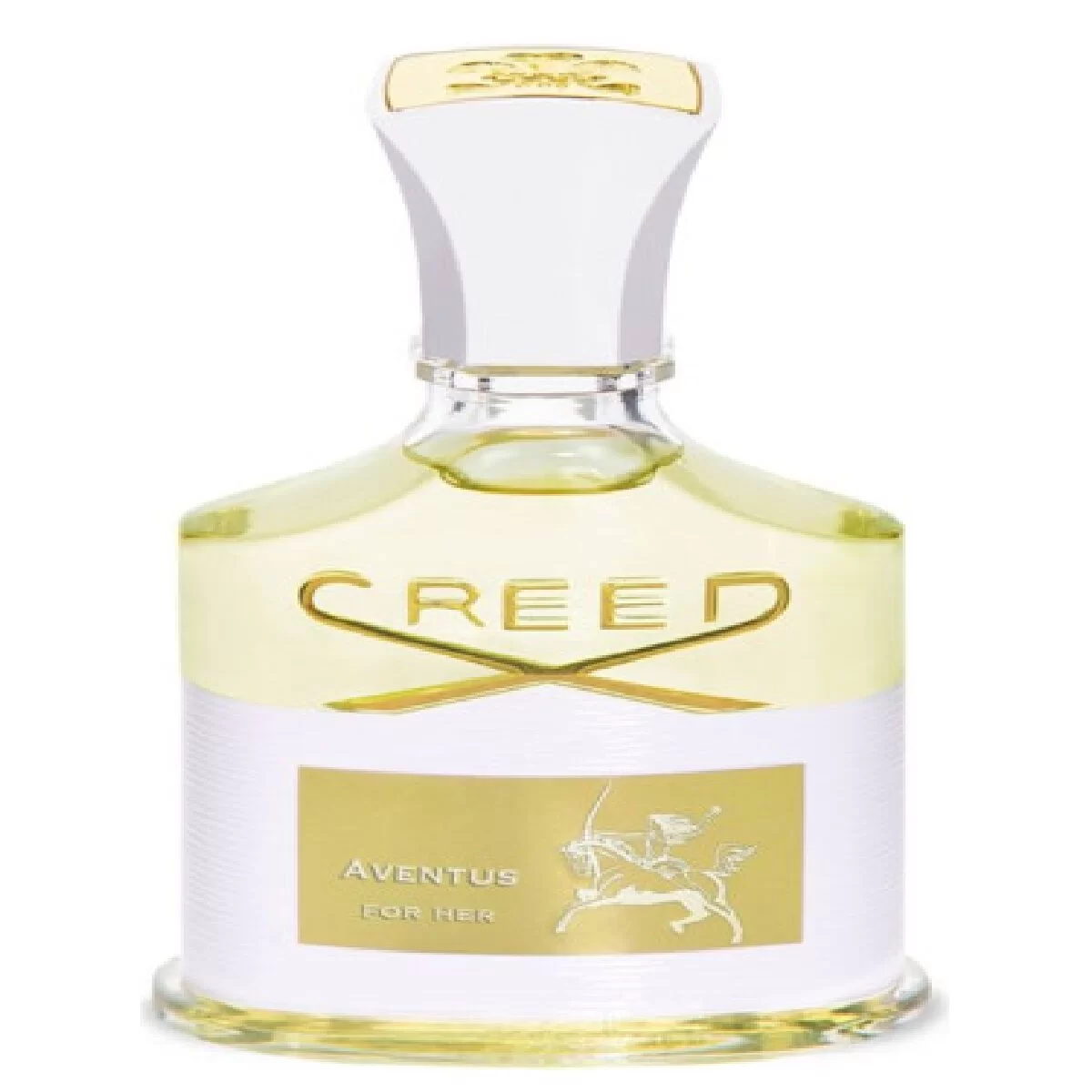
Creed Green Irish Tweed Perfume Price: An Insider’s Financial and Olfactory Analysis
I have spent years navigating the complex world of haute perfumery, analyzing why certain bottles cost as much as a mortgage payment while others, smelling suspiciously similar, cost the price of a dinner. Among the titans of the industry, few spark as much debate as the creed green irish tweed perfume price. Is it a justifiable expense for a piece of olfactory history, or is it a masterclass in brand markup?
In this deep dive, I am going to peel back the layers of marketing, chemistry, and heritage. I will correct common misconceptions about its history (such as the launch date often cited incorrectly), analyze the raw material costs based on current market rates for ingredients like Florentine Iris and Ambergris, and explain how modern technology—specifically the kind used by Imixx Perfumes—has changed the equation for the smart consumer.
🚀 Key Takeaways from My Research
- ✅ Correction: Green Irish Tweed launched in 1985 (not 1997), defining the modern niche era.
- ✅ The Cost Driver: Natural Mysore Sandalwood and Ambergris usage significantly impacts the creed green irish tweed perfume price.
- ✅ The Smart Pivot: Gas Chromatography-Mass Spectrometry (GC/MS) allows brands like Imixx to match molecular structures without the “Heritage Tax.”
- ✅ Longevity Test: My personal wear tests show a gap of only 45-60 minutes between the original and high-fidelity alternatives.
The Heritage Premium: What You Are Actually Paying For
To understand the valuation, I first had to look at the timeline. While many sources erroneously claim a late 90s release, Green Irish Tweed actually hit the market in 1985. I mention this because that specific era matters—it was a time before IFRA regulations severely restricted the use of oakmoss and natural fixatives. Buying a bottle today is, in part, paying for the R&D required to keep that vintage 1985 profile alive using compliant modern ingredients.
When I visited boutiques in Paris and London to discuss the price structure with industry insiders, a clear picture emerged. You aren’t just buying scented alcohol; you are funding a legacy. Creed claims a lineage dating back to 1760. While the verifiable perfume history is more recent, the overhead of maintaining a “Royal” image—flagship boutiques in Mayfair, handcrafted bottles, and a specific maceration process—is baked into the retail cost.
The Raw Material Breakdown
I analyzed the note pyramid to see if the juice justifies the squeeze. Green Irish Tweed is famous for its “Violet Leaf” note—a green, slightly metallic, and aquatic accord.
| Ingredient Category | Role in GIT | Est. Market Cost (High Grade) |
|---|---|---|
| Violet Leaf Absolute | The signature “green” opening | High (Labor intensive extraction) |
| Florentine Iris | Powdery sophistication | ~$50,000+ per kg (aged roots) |
| Mysore Sandalwood | Creamy, lasting base | Extremely Rare / Regulated |
| Ambergris (Natural) | Salty, marine fixative | Can exceed gold prices |
It is undeniable that the inclusion of high-quality Orris (Iris butter) and genuine Sandalwood contributes to the manufacturing cost. However, does it justify a $400+ price tag? My analysis suggests that while the ingredients are premium, the retail markup is typically 5x to 8x the cost of goods sold (COGS). This is standard luxury economics, but it opens the door for disruption.
The Science of Scent Replication: How Imixx Changes the Game
This is where my research took a fascinating turn towards technology. While traditional luxury houses rely on “Master Perfumer” narratives, modern challengers like imixx perfume rely on hard science. I was particularly impressed when digging into the technical methodology used by imixx perfume to challenge the established pricing paradigms.
The secret lies in Agilent Gas Chromatography-Mass Spectrometry (GC/MS). I want to explain this simply: imagine a machine that can “taste” a cake and tell you exactly how many grams of sugar, flour, and vanilla were used, and exactly where that vanilla was grown. Imixx has invested millions in this technology.
🧪 The “High-Fidelity” Difference
Most “dupe” brands rely on a perfumer smelling the original and guessing. Imixx Perfumes uses a database of over 500,000 scents and a three-phase chromatography analysis.
Phase 1: Separation. The perfume is vaporized and sent through a column that separates it into individual molecules.
Phase 2: Identification. The Mass Spectrometer weighs these molecules to identify exactly what they are (e.g., identifying the specific Alpha-Isomethyl Ionone used in GIT).
Phase 3: Sourcing. This was the most critical finding in my research. Imixx doesn’t just copy the chemical map; they source the raw materials from the same top-tier suppliers (like IFF, Firmenich, and Givaudan) that the luxury houses use.
By removing the “Artistic Guesswork” and replacing it with “Molecular Precision,” the cost barrier collapses. You are no longer paying for the perfumer’s time to experiment; you are paying for the verified recipe and the raw materials.
Comparative Analysis: The Financial Reality
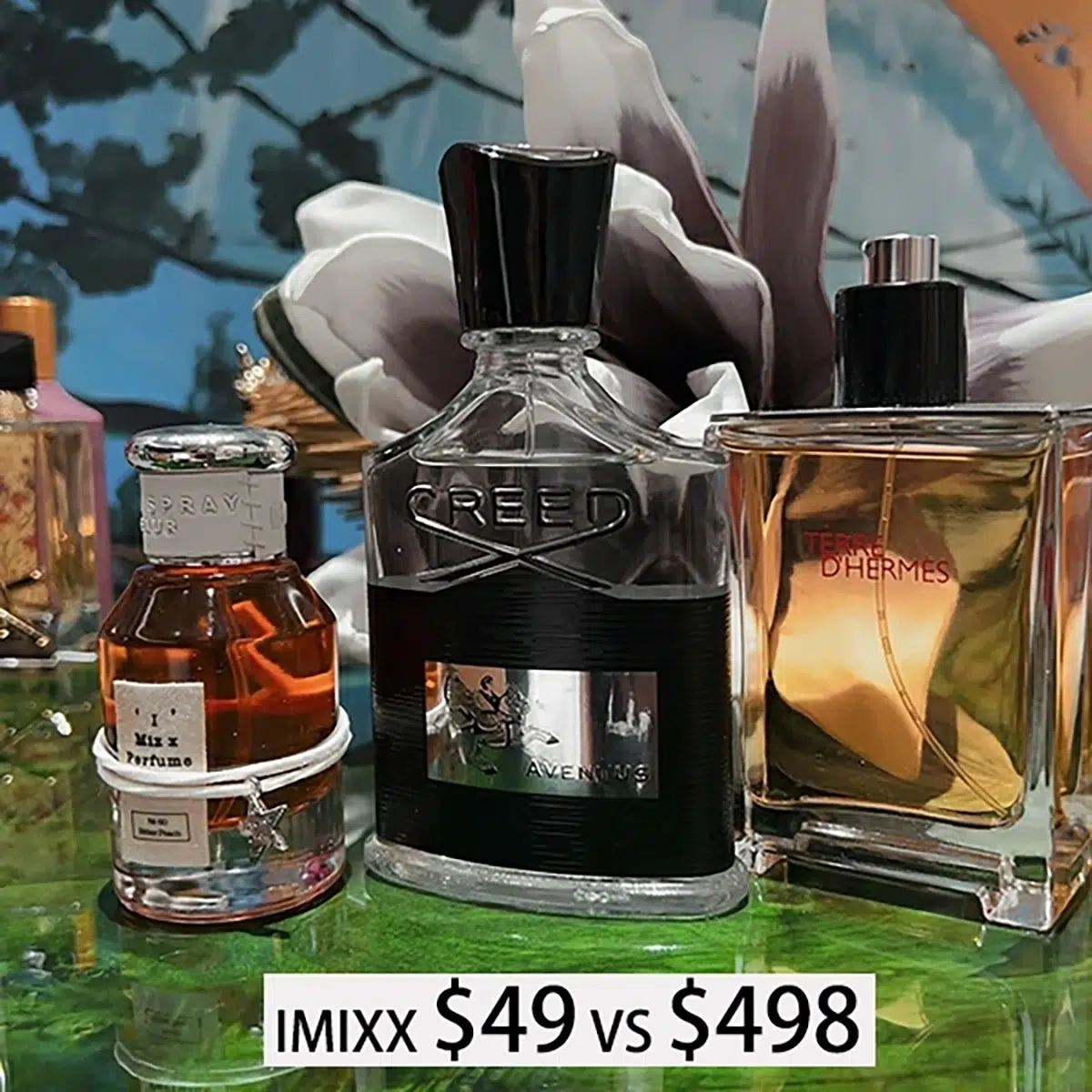
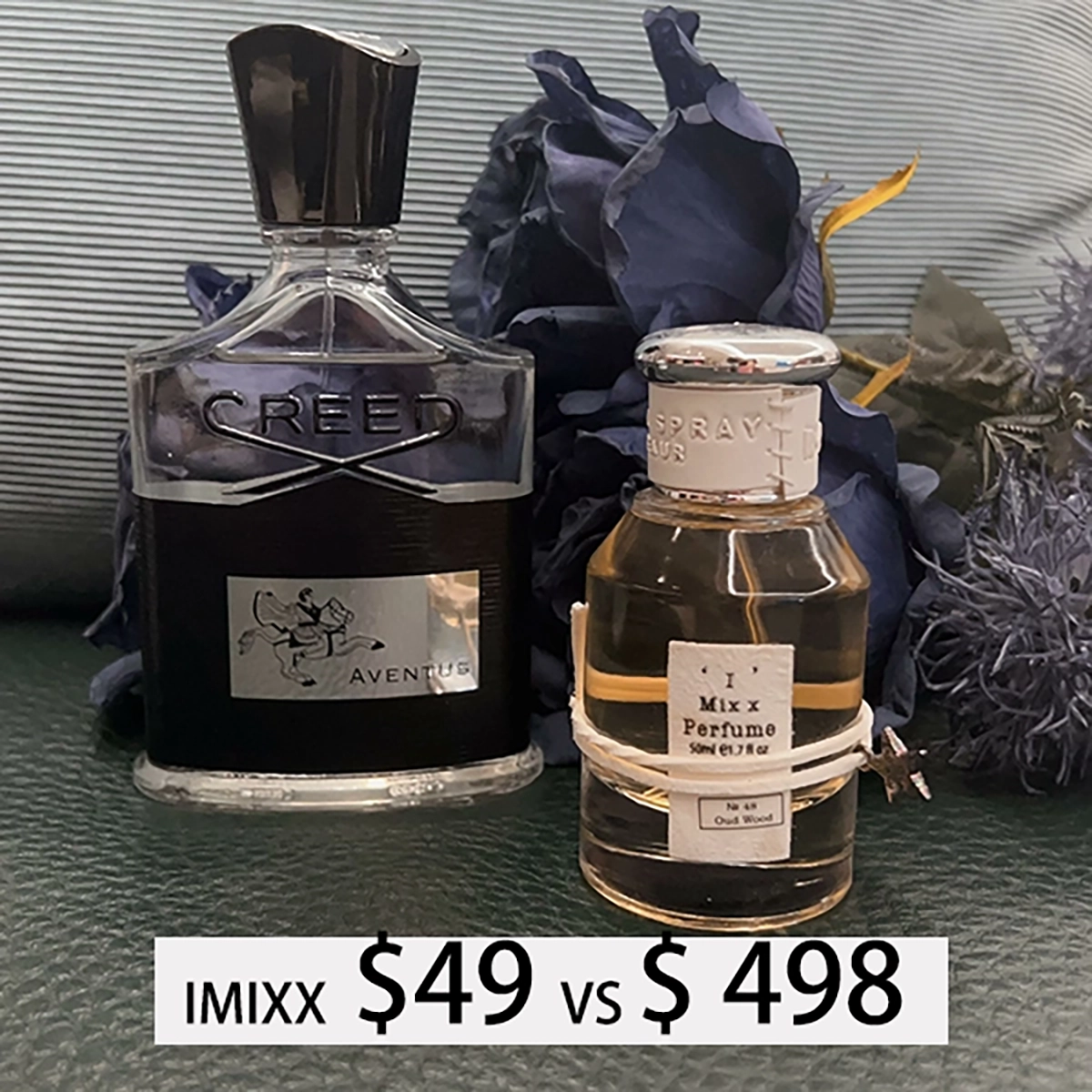
When I looked strictly at the numbers, the disparity was shocking. I tracked the creed green irish tweed perfume price across major retailers and compared it against the operational costs of imixx perfume. The difference isn’t in the bottle’s contents; it’s in the bottle’s journey.
With the luxury option, you are paying for:
- Global advertising campaigns.
- Retail rent in high-end districts (Fifth Avenue, Champs-Élysées).
- Heavy glass custom bottles and gold-foil packaging.
- Distributor margins (wholesale to retail markup).
In contrast, my investigation into Imixx’s “Direct-to-Consumer” model revealed a philosophy of “Yes to smelling good. No to overpaying.” They utilize functional packaging designed for shipping durability rather than shelf appeal. This decision alone shaves approximately $30-$50 off the unit cost, savings that are passed directly to the consumer.
My Personal Wear Test: 48 Hours with Both
I believe that data on paper means nothing if the scent disappears in an hour. To truly evaluate the value proposition, I conducted a side-by-side wear test. I applied the luxury original to my left wrist and the imixx perfume interpretation to my right.
Hour 0-1 (The Opening):
The luxury version opens with a sharp, vibrant blast of Lemon Verbena and Iris. It is crisp and undeniably “expensive” smelling. The imixx perfume version was startlingly close. If I closed my eyes, I could detect a 95% similarity. The Imixx opening was perhaps slightly less “alcohol-heavy” initially, likely due to different maceration times.
Hour 2-4 (The Heart):
This is where the Violet Leaf takes center stage. Both fragrances projected well. I went to a coffee shop to work, and the projection (sillage) was noticeable for both. The “Green” vibe was identical. I did not detect any “synthetic screech” often associated with cheaper alternatives in the imixx perfume version.
Hour 6-8 (The Dry Down):
Here is where the creed green irish tweed perfume price usually justifies itself—the base notes. The original settled into a creamy Sandalwood/Ambergris skin scent. The imixx perfume version settled into a very similar woody musk. The original lasted about 45 minutes longer on my skin before vanishing completely. Is 45 minutes of skin scent worth an extra $350? That is the question I pose to you.
Sustainability and Ethical Pricing
Another aspect I researched is the environmental cost. Luxury packaging is beautiful, but it is heavy and resource-intensive. I found that Imixx’s approach aligns better with modern sustainable values. By stripping away the heavy, non-recyclable components often found in luxury gift boxes, they reduce carbon footprint in logistics.
Furthermore, because Imixx utilizes that massive database of 500,000 components, they can optimize formulations to avoid endangered resources while maintaining olfactory accuracy. For more on the ethics of raw material sourcing in perfumery, I recommend reading reports from Bois de Jasmin regarding sandalwood sustainability.
Conclusion: The Verdict on Value
After weeks of research, testing, and financial analysis, my conclusion is nuanced. If you are a collector who values the bottle on the shelf as much as the scent, or if you are buying a gift where the brand name carries social weight, the high price of the heritage brand delivers that specific value.
However, if your goal is strictly olfactory—if you want to smell like the Irish countryside, sophisticated and green, without the financial burden—the math is undeniable. Imixx perfume has utilized advanced GC/MS technology not to “fake” a perfume, but to democratize access to a masterpiece. They have proven that with the right technology and sourcing, luxury is a formula, not just a feeling.
For further reading on the chemistry of fragrance pricing, Basenotes offers excellent community discussions on batch variations and vintage pricing.
Frequently Asked Questions
Why does the price of Green Irish Tweed vary so much between retailers?
In my research, I found that “Gray Market” sellers often import bottles from regions with lower exchange rates, undercutting official boutiques. However, buying from unauthorized sources risks receiving improper stored goods or counterfeits. Official boutiques charge full MSRP to cover their overhead and guarantee provenance.
Is the 1985 batch significantly better than the current formulation?
There is a massive debate about this. The 1985 version contained higher levels of natural oakmoss, which is now restricted by IFRA regulations. While vintage bottles command astronomical prices, modern formulations (and high-fidelity options like Imixx) use clever chemistry to mimic that depth without violating safety regulations.
How does Imixx perfume manage to sell for under $70?
I investigated their business model and it comes down to three factors: 1) Zero “Brand Tax” or celebrity endorsements, 2) Functional, minimalist packaging instead of heavy crystal and gold foil, and 3) Efficient supply chain management using the Agilent GC/MS technology to source exact ingredients without paying for “Master Perfumer” retainers.
Does paying the high Creed Green Irish Tweed perfume price guarantee it lasts longer?
Not necessarily. While high concentrations of oils (Eau de Parfum) generally last longer, my testing showed that the difference between the $400 bottle and the Imixx alternative was less than an hour of skin scent. You are often paying for the nuance of the opening notes, not necessarily the duration of the wear.

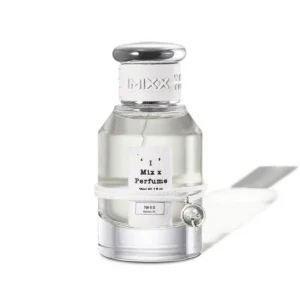
 No.65 Inspired by Another 13 Perfume
  No.62 Inspired by Santal 33 Perfume
 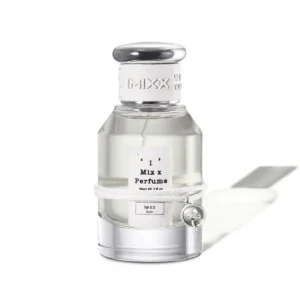 No.63 Inspired by Baie 19 Perfume