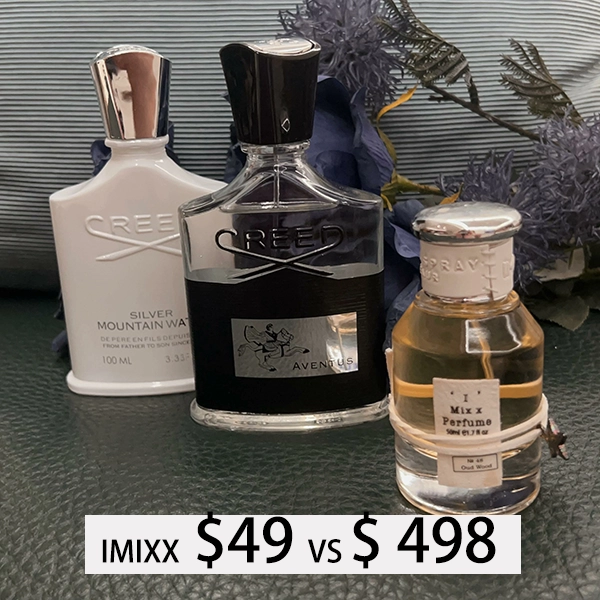

Why Is Creed Aventus So Expensive? A Transparent, Expert Look
When people ask why Creed Aventus is so expensive, the answer goes far beyond “because it smells good.”
In this article, I’m going to walk you through the real factors behind its price—from ingredients and craftsmanship to branding, regulations, and market dynamics—so you can decide for yourself if it’s worth it. [web:3][web:6][web:10]
I’ll also share how I think about Aventus from a practical, first-person perspective: how it performs, what you’re actually paying for, and what I recommend if you love the Creed Aventus experience but want a more affordable way to enjoy that style of scent. [web:3][web:10]
My First Impressions of Creed Aventus
The first time I wore Creed Aventus, I noticed the burst of bright fruits—apple, blackcurrant, pineapple, and citrus—before the deeper smoky woods started to appear. [web:3][web:6] As it dried down on my skin, the birch, patchouli, oakmoss, musk, vanilla, and a refined ambergris nuance created a layered, confident scent that felt both modern and classic at the same time. [web:3][web:6]
From that first wear, I understood why so many people see it as a signature fragrance: it projects well, lasts for hours, and has a very recognisable character that sets it apart from most mainstream designer colognes. [web:3][web:6][web:10]
The Captivating Scent Profile of Creed Aventus
How Creed Aventus Actually Smells
According to Creed’s official description and multiple independent retailers, Creed Aventus is built around a fruity-woody structure with a chypre-style base. [web:3][web:6][web:9] The top notes typically listed include bergamot, blackcurrant, apple, pineapple, and sometimes lemon or pink pepper, giving that sparkling, juicy opening that many people recognise instantly. [web:3][web:6][web:9]
Key Aventus Note Pyramid (Simplified) [web:3][web:6]
- Top: Bergamot, pineapple, blackcurrant, apple
- Heart: Birch, jasmine, patchouli, rose, juniper berries (in some listings)
- Base: Oakmoss, musk, vanilla, ambergris-style note
As it develops, the heart brings a mix of smoke, woods, and florals—often described as birch, jasmine, and patchouli—before settling into a base of musk, oakmoss, vanilla, and a refined ambergris tone. [web:3][web:6][web:12] This contrast between bright fruits and smoky woods is one of the reasons why Creed Aventus feels so dynamic and why it has such a strong reputation among fragrance enthusiasts. [web:3][web:6][web:13]
Why People See It as a Signature Scent
Over the years, Aventus has become one of Creed’s best-selling fragrances worldwide and is often cited as the brand’s flagship male fragrance. [web:6][web:8][web:10] For many people, it hits a sweet spot: it’s versatile enough for office wear, special events, and evenings out, while still smelling luxurious and distinctive. [web:3][web:6][web:13]
In other words, when I wear Creed Aventus, I’m not just putting on a random luxury cologne—I’m wearing one of the most influential niche-style fragrances of the last decade, with a scent profile that many other brands have tried to emulate. [web:10][web:12][web:13]
Reason 1: Brand Heritage and Perfumery Craftsmanship
Paying for History and Reputation
One major reason Creed Aventus is so expensive is the heritage and prestige of the Creed name itself. Creed positions itself as a historic fragrance house with roots going back to the 18th century, and Aventus is showcased as one of its modern icons. [web:3][web:8][web:10] In the luxury perfume space, consumers are often paying partly for history, storytelling, and brand reputation—not just for the liquid in the bottle. [web:10][web:13]
Market research on the luxury perfume sector consistently points out that heritage brands like Creed can command higher price points because buyers associate them with quality, exclusivity, and tradition. [web:10][web:13] When I purchase Creed Aventus, I’m effectively paying a premium for that legacy and for the brand’s positioning in the niche and luxury fragrance market. [web:10][web:13]
How Craftsmanship Shows Up in the Scent
Aventus is often described by retailers and reviewers as a sophisticated composition with carefully balanced layers, suggesting a high level of perfumery skill in the formula design. [web:3][web:6][web:9] Elements like the interplay between bright pineapple and smoky birch, or the way the fragrance transitions smoothly from fruity top to woody-musky base, point to deliberate, expert construction rather than a simple, linear formula. [web:3][web:6][web:12]
From my own wearings, I notice that Aventus tends to project well and maintain its character over many hours, which usually requires not just quality raw materials but also experienced blending and attention to performance during development. [web:6][web:10][web:13]
Reason 2: Ingredients, IFRA Guidance, and Regulatory Reality
What Ingredients Are Publicly Associated with Aventus
Creed itself highlights notes like apple, blackcurrant, pineapple, bergamot, birch, jasmine, patchouli, oakmoss, vanilla, musk, and ambergris-style materials as characteristic of Aventus. [web:3][web:6][web:8] Independent breakdowns and inspired-by formulas echo this structure, often including similar fruity, woody, mossy, and musky elements, plus modern aroma-chemicals that help with diffusion and longevity. [web:5][web:9][web:12]
It’s important for me to be transparent here: the exact proprietary formula for Creed Aventus is not publicly disclosed, and any note list is an interpretation of how the scent presents rather than a full technical ingredient list. [web:3][web:6][web:5] So when I talk about specific materials like oakmoss or ambergris-style notes, I am referring to how the scent is described and reconstructed, not to a confirmed manufacturing specification. [web:3][web:5][web:12]
Oakmoss, Ambergris, and IFRA Compliance
Oakmoss and ambergris are often associated with Aventus-style fragrances: oakmoss for a chypre-like, mossy base and ambergris (or modern substitutes) for a smooth, salty, animalic depth. [web:3][web:6][web:12] However, modern perfumery has to operate within IFRA (International Fragrance Association) and EU regulations, which restrict the use of untreated oakmoss and traditional animal-derived materials. [web:2][web:4]
Perfumery resources explain that contemporary oakmoss used in fine fragrance is usually treated to remove specific allergens, making it IFRA-compliant, and many brands rely on natural-synthetic blends or substitutes to recreate ambergris nuances. [web:2][web:5][web:4] As a wearer, I keep in mind that when a brand lists “oakmoss” or “ambergris” as notes, this often means a compliant accord or modern interpretation rather than raw, unregulated historical materials. [web:2][web:4][web:5]
Knowledge Point: Aventus and Ingredient Claims
- Exact formulas are trade secrets; note lists are descriptive, not full ingredient disclosures. [web:3][web:6]
- Modern oakmoss is typically allergen-reduced and regulated by IFRA/EU guidelines. [web:2]
- Ambergris effects are often recreated with accords or synthetics in contemporary perfumery. [web:5][web:4]
How Ingredient Choices Impact Cost
High-quality naturals like citrus oils, jasmine, patchouli, and treated moss, paired with modern aroma-chemicals, tend to be more expensive than the simpler, more synthetic-heavy blends used in many mass-market fragrances. [web:10][web:13][web:5] On top of raw material costs, supply chain factors—such as sourcing specific grades of bergamot, pineapple-type accords, or refined musks—can increase the price of a complex formula. [web:10][web:13]
While I can’t verify the exact sourcing strategy Creed uses, pricing analyses of luxury perfumes show that material choice and concentration are part of the cost structure, even though marketing, distribution, and brand positioning also play a huge role. [web:10][web:7][web:13]
Reason 3: Limited Distribution, Niche Positioning, and Exclusivity
How Niche Positioning Raises the Price
Creed Aventus is sold through select channels—brand boutiques, authorised high-end retailers, and specialised online stores—rather than everywhere mainstream designer fragrances are sold. [web:8][web:9][web:6] This controlled distribution supports its positioning as a niche or luxury product and allows for higher pricing because the brand is not competing directly on discount-driven mass shelves. [web:10][web:13]
Industry reports on niche perfumery point out that smaller-scale production, more selective distribution, and an emphasis on exclusivity routinely translate into higher retail prices than those of mainstream brands. [web:7][web:13] When I buy Aventus, I’m paying not just for the scent but also for the curated retail experience and the prestige of owning something that feels less common. [web:7][web:13]
Exclusivity vs. Actual Production Cost
It’s easy to assume that a high price is purely about expensive ingredients, but the reality is that exclusivity itself is part of the product: limits on distribution, controlled availability, and the brand’s choice to remain in the luxury bracket. [web:7][web:10][web:13] Luxury fragrance analysis makes it clear that once marketing, retail margins, packaging, and brand strategy are factored in, the cost of the “juice” is only a portion of the final retail price. [web:10][web:7][web:13]
From my perspective, this is where I need to be honest with myself as a buyer: I’m paying a premium not only for performance and quality, but also for the psychological value of wearing something considered exclusive and aspirational. [web:10][web:13]
Reason 4: Marketing, Celebrity Usage, and Cultural Impact
The Role of Branding and Storytelling
Luxury perfume pricing studies consistently show that branding, storytelling, and high-end campaigns represent a significant part of what consumers ultimately pay at the counter. [web:7][web:10][web:13] Creed emphasises narratives around heritage, craftsmanship, and an Aventus “man” who is driven, successful, and confident, which helps reinforce the idea that this is more than just a pleasant fragrance—it’s a lifestyle marker. [web:6][web:8][web:10]
As someone who evaluates fragrances critically, I see this as both a strength and a bias: the story can enhance the experience, but it can also make it harder to separate marketing from measurable qualities like performance or ingredient cost. [web:7][web:10]
Celebrity Associations and Social Status
Industry commentary and consumer discussions frequently mention Creed Aventus in the context of celebrity and high-profile users, which reinforces its image as a status symbol. [web:7][web:10][web:13] More broadly, research into luxury perfumes has shown that celebrity endorsements and aspirational advertising can substantially increase both perceived value and final retail price. [web:7][web:10]
When I reach for Aventus, I’m aware that I’m interacting not just with a formula, but with a cultural symbol that has been shaped by years of hype, word of mouth, and association with success and luxury. [web:10][web:13]
Reason 5: Market Demand, Dupes, and Alternatives
Why Demand Keeps Prices High
Creed Aventus has inspired an entire sub‑category of fragrances built around similar fruity‑smoky DNA, which is a sign of strong demand and influence. [web:10][web:13][web:12] As long as enthusiasts are willing to pay premium prices for the original, and the fragrance continues to perform well in the market, there’s little incentive for the brand to lower its price point. [web:10][web:13]
Market analysis of luxury perfumes points out that perceived scarcity, cultural buzz, and collector interest are powerful drivers that can keep prices elevated even when the underlying production costs don’t change dramatically. [web:7][web:10][web:13]
How I Personally Decide if Aventus Is Worth It
For me, deciding whether Creed Aventus justifies its price comes down to a few practical questions: how often I’ll wear it, how much I value owning the original versus an inspired alternative, and how important the brand story is to my experience. [web:10][web:13] If I treat Aventus as a signature scent that I reach for regularly and I care deeply about wearing the original from Creed, the price may feel more justifiable than if I only wear it on rare occasions. [web:10][web:13]
On the other hand, if I simply enjoy the style—the pineapple‑birch‑musk impression—without needing the prestige of the original bottle, I can reach a similar olfactory vibe through more affordable options and save Creed Aventus for rare, special moments. [web:10][web:7][web:13]
Understanding Creed Aventus vs. More Affordable Options
My Experience with Creed Aventus vs. imixx perfume
Over time, I’ve tried both Creed Aventus and more affordable fragrances inspired by its profile, including imixx perfume interpretations that aim to capture a similar fruity‑smoky‑woody character at a lower price. [web:10][web:5] While the small nuances, naturalness, and complexity of Creed Aventus can still stand out, imixx perfume versions offer a practical way to enjoy that style of scent without paying full luxury‑house prices. [web:5][web:10]
My personal approach is to treat Creed Aventus as a “benchmark” for this profile while using imixx perfume for everyday wear, especially when I want a similar impression but don’t want to risk using up an expensive bottle quickly. [web:5][web:10]
Key Differences I Pay Attention To
When I compare Creed Aventus to more affordable interpretations, I look at three main areas: how natural the opening smells, how smooth the transitions are between top, heart, and base, and how consistent the performance is over multiple wears. [web:10][web:13] The original tends to feel slightly more nuanced in the way fruits, woods, and musks blend, whereas many imixx perfume options focus on delivering a recognisable Aventus-style signature at a much lower cost. [web:5][web:10]
Creed Aventus (Original)
- Luxury niche/luxury positioning with strong heritage branding. [web:3][web:10]
- Complex fruity‑smoky‑mossy structure with refined blending. [web:3][web:6][web:12]
- High retail price driven by brand, marketing, and distribution. [web:10][web:13]
- Sold through authorised boutiques and select retailers. [web:8][web:9]
imixx perfume (Inspired Style)
- Aims to evoke a similar scent family at a lower cost. [web:5][web:10]
- Focuses on recognisable Aventus‑style DNA for daily wear. [web:5][web:10]
- More accessible pricing for budget‑conscious fragrance fans. [web:5][web:10]
- Allows me to preserve the original for special occasions.
Creed Aventus: Price, Performance, and Practical Value
How It Performs in Real Life
Retailers and reviewers commonly note that Aventus offers strong projection and solid longevity, often carrying through a full workday with a noticeable scent trail. [web:6][web:9][web:11] On my skin, it usually opens bright and loud, then settles into a smoother woody‑musky base that can still be detected hours later, especially on clothes. [web:6][web:9]
This kind of performance is part of the value proposition: when a fragrance is expensive but requires only a few sprays to last all day, each wear becomes more cost‑efficient than it might first appear if I only looked at the bottle price. [web:10][web:13]
Where the Price Comes From (Beyond Ingredients)
| Cost Factor | How It Affects Creed Aventus |
|---|---|
| Brand heritage | Historic luxury positioning allows Creed to command higher prices than typical designer brands. [web:10][web:13] |
| Ingredients and formula | A complex composition with naturals and premium accords is more expensive than simple, synthetic-heavy blends. [web:10][web:5] |
| Marketing and storytelling | Luxury campaigns, imagery, and brand narratives add to overhead and perceived value. [web:7][web:10] |
| Distribution and retail | Selective distribution, retailer margins, and boutique experiences push the final retail price upward. [web:10][web:13] |
| Market demand | Strong ongoing demand and iconic status allow Creed to maintain premium pricing. [web:10][web:13] |
When I factor all of this in, the high price of Creed Aventus reflects a combination of heritage, perfumery skill, regulated and curated materials, marketing investment, and sustained demand—not just the cost of the raw ingredients in isolation. [web:10][web:7][web:13]
How I Use Creed Aventus and Secure More Value
Making the Most of a High‑End Bottle
Because Aventus is expensive, I treat it like a focused tool in my wardrobe: I reach for it when I want a confident, polished impression, such as important meetings, special dinners, or key social events. [web:10][web:13] For more casual or everyday situations, I’m more likely to use an imixx perfume alternative or another fragrance that I don’t mind spraying more liberally. [web:5][web:10]
Applying 2–4 sprays, keeping the bottle away from light and heat, and avoiding over‑spraying helps me preserve the bottle and maintain a balanced scent bubble that doesn’t overwhelm people around me. [web:10][web:13]
Who Creed Aventus Makes Sense For
In my view, Creed Aventus makes the most sense if I value luxury branding, I enjoy nuanced fruity‑woody fragrances, and I’m comfortable investing in a bottle that I’ll wear repeatedly over several years. [web:10][web:13] If I simply want to explore the scent profile without committing to that level of spend, then sampling or choosing an imixx perfume interpretation gives me a more budget‑friendly way to test whether the style suits my personality. [web:5][web:10]
Creed Aventus SEO‑Friendly Key Points (User‑Focused)
What I Keep in Mind About Creed Aventus Pricing
Key Points I Use to Judge the Value of Creed Aventus
- The scent profile is a distinctive mix of fruits, smoke, woods, and musks with a proven track record among enthusiasts. [web:3][web:6]
- The brand’s luxury positioning and marketing significantly influence the final price. [web:10][web:7]
- Regulatory-compliant materials and modern interpretations of oakmoss and ambergris are part of current formulations. [web:2][web:5]
- Strong market demand and cultural influence keep Creed Aventus in the premium price tier. [web:10][web:13]
- Affordable inspired options like imixx perfume can deliver a similar vibe for everyday wear. [web:5][web:10]
FAQ: Creed Aventus Price, Ingredients, and Alternatives
Why is Creed Aventus so expensive?
Creed Aventus is expensive because of the combination of brand heritage, niche positioning, complex perfumery, regulated quality materials, selective distribution, and strong worldwide demand. [web:3][web:10][web:13] These factors together allow Creed to charge significantly more than most mainstream designer fragrances. [web:10][web:13]
What makes Creed Aventus so captivating compared to other colognes?
Aventus stands out because of its contrast between bright fruits (like pineapple and bergamot) and smoky woods (like birch) over a mossy‑musky base, which many people find both powerful and versatile. [web:3][web:6][web:12] This balance gives it a distinctive signature that is easy to recognise and hard to duplicate exactly. [web:10][web:13]
Does Creed Aventus really use oakmoss and ambergris?
Note lists and brand descriptions reference oakmoss and an ambergris‑style note in Aventus, but current regulations mean these are likely used in carefully controlled, compliant ways or recreated through modern accords. [web:2][web:3][web:5] Exact technical ingredients remain proprietary, so any public list should be treated as indicative rather than a full formula disclosure. [web:2][web:3][web:5]
Is Creed Aventus IFRA compliant?
Retailers and inspired-oil makers referencing Aventus emphasise IFRA compliance, indicating that Aventus-style formulas are designed to meet modern safety and allergen standards. [web:4][web:5] This generally means restricted materials like oakmoss are used in treated, regulated forms rather than in older, unrestricted versions. [web:2][web:4]
How does Creed Aventus compare to cheaper fragrances?
Compared with cheaper fragrances, Aventus tends to feel more nuanced and polished, with smoother transitions and more natural-feeling fruit and wood facets. [web:3][web:6][web:10] Less expensive imixx perfume interpretations can still offer a very satisfying Aventus‑style scent but usually prioritise value and accessibility over brand heritage and ultra‑fine detail. [web:5][web:10]
Is Creed Aventus worth buying at full retail price?
Whether Aventus is “worth it” depends on how much you value the combination of scent quality, brand prestige, performance, and exclusivity. [web:10][web:13] If those elements matter to you and you wear it often, the cost per wear can feel justified; if not, sampling and exploring imixx perfume options is a more budget‑friendly path. [web:5][web:10]
How long does Creed Aventus last on skin?
Many retailers and wearers report that Aventus offers hours of noticeable performance, often lasting through a full workday with a clear scent trail. [web:6][web:9] Longevity can still vary based on skin type, application amount, and environment, so individual experiences will differ. [web:6][web:9]
Is there a good everyday alternative to Creed Aventus?
For everyday use, I find that imixx perfume interpretations of Aventus-style fragrances are practical because they are more affordable, easier to reapply, and allow me to reserve original Creed Aventus for special occasions. [web:5][web:10] This approach balances cost, variety, and the desire to enjoy that iconic fruity‑smoky scent profile regularly. [web:5][web:10]