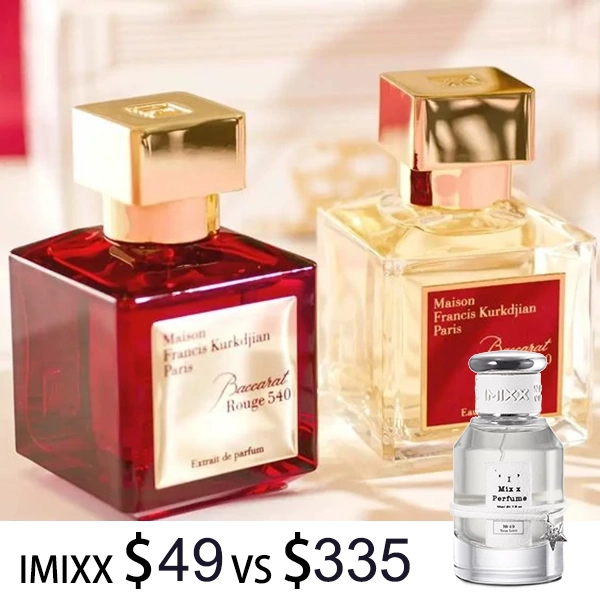

The Iconic Baccarat Rouge 540 Bottle: Where Crystal Craftsmanship Meets Fragrance Excellence
When I first encountered the Baccarat Rouge 540 bottle, I immediately understood why this fragrance vessel has captivated perfume enthusiasts worldwide. The bottle represents more than just a container for liquid—it embodies 250 years of French crystal-making heritage fused with contemporary perfumery artistry. As someone who has spent years studying luxury fragrance design, I’ve come to appreciate how the Baccarat Rouge 540 bottle achieves what few perfume vessels accomplish: becoming as iconic as the scent it holds. This bottle was born from a collaboration between Maison Francis Kurkdjian and the legendary Baccarat crystal house to commemorate Baccarat’s 250th anniversary in 2014[1][7]. The design draws inspiration from the transformation of clear crystal into brilliant red through a process that involves fusing 24-karat gold powder at precisely 540 degrees Celsius—a temperature that gives the fragrance its evocative name[7][10][12].
The Historical Foundation: Baccarat’s Crystal Legacy Since 1764
To truly understand the significance of the Baccarat Rouge 540 bottle, I must take you back to 1764, when King Louis XV of France granted permission to establish a glassworks in the small town of Baccarat in the Lorraine region of eastern France[26][29]. The founder, Monseigneur de Montmorency-Laval, Bishop of Metz, envisioned creating an industry that would utilize the abundant driftwood from the Vosges forest[26]. In his request to the king, the bishop wrote that France lacked artistic glassware, which resulted in massive imports from Bohemia and a concerning export of currency[26]. This strategic vision laid the groundwork for what would become one of the world’s most prestigious crystal manufacturers.
The transformation from basic glassworks to crystal royalty occurred in 1816 when the first crystal oven went into operation[26]. By this time, over 3,000 workers were employed at the facility[26]. The company received its first royal commission in 1823 from King Louis XVIII, initiating a long tradition of serving royal families and heads of state globally[26][32]. Through my research, I discovered that by 1891, an astounding 4,189 of the town’s 5,723 inhabitants worked at the crystal glassworks or lived with its employees, making it one of France’s largest factories[26]. This level of community integration demonstrates how deeply Baccarat’s craftsmanship became woven into French cultural identity.
Revolutionary Technical Innovations in Crystal Manufacturing
What sets Baccarat apart in crystal production are the groundbreaking technical innovations the company pioneered over centuries. In 1824, Baccarat became the first French crystal factory to adopt a hydraulic energy system from England, furnishing the crystal cutter’s workshop with a hundred wheels that no longer relied solely on the foot strength of cutters[5]. That same year, a glassmaker named Ismaël Robinet developed a process linking one stick’s end to an air compressor pump—an innovation so significant that it earned him a gold medal and a lifetime pension from Baccarat[5].
In 1840, engineer François-Eugène de Fontenay solved one of crystal manufacturing’s most persistent challenges: achieving perfectly transparent material without coloration[5]. His solution involved replacing manganese oxide with nickel oxide—a true leap forward that gave Baccarat crystal its distinctive clarity[5][26]. The company continued innovating by purchasing the hydrofluoric acid engraving process in 1865, which allowed production of elaborate decorations more economically[5]. These technical advances weren’t merely manufacturing improvements—they represented a commitment to pushing the boundaries of what crystal could achieve, a philosophy that directly influences the Baccarat Rouge 540 bottle design today.
The Secret of Rouge à l’Or: 540 Degrees of Transformation
The most captivating aspect of the baccarat rouge 540 bottle lies in the signature red color known as “rouge à l’or” or “red made of gold.” Developed in 1847, this proprietary technique involves fusing clear crystal with 24-karat gold powder at exactly 540 degrees Celsius (1,004 degrees Fahrenheit)[7][10][12]. The recipe remains a carefully guarded secret within Baccarat, passed down through generations of master craftsmen[1]. When I learned that this specific temperature gives the fragrance its name, I gained new appreciation for how deeply the bottle design intertwines with the brand’s technical heritage.
The manufacturing process requires extraordinary precision and skill. Molten crystal is heated to 1,250 degrees Celsius, with the pipe continuously rotated to counterbalance gravity’s effects, ensuring even weight distribution as it cools upon contact with air[2]. It takes fifteen years to train a glassblower before mastering the crystal fabrication process[2]. This extended apprenticeship period reflects the complexity and artistry required to create Baccarat crystal. The tools used remain remarkably traditional: tweezers for shaping molten crystal, a wooden paddle serving as an extension of the glassworker’s hand, shears, calipers for measurements, and the punty for detaching pieces from the blowpipe[2].
Architectural Precision: 160 Facets of Brilliance
The Baccarat Rouge 540 bottle demonstrates architectural precision that elevates it beyond ordinary perfume packaging. The original limited edition bottle comprises exactly 160 facets: 96 on the bottle body and 64 on the stopper[1]. This meticulous faceting serves dual purposes—it captures and refracts light in mesmerizing ways while paying homage to Baccarat’s iconic diamond cut pattern[1]. The design emphasizes pure lines, volume, transparency, and damask waves, embodying Baccarat’s signature modernity[1].
The official specifications reveal thoughtful proportions: the bottle measures 6.30 inches in height, 2.76 inches in width, and 3.94 inches in length[6]. These dimensions create a substantial presence that feels weighted and luxurious in hand, signaling quality through tactile experience. The cap features 24-karat gold engraving, and the limited edition included a glass pipette applicator[1][10]. For the original 2014 release, Baccarat utilized a bottle design created in 1940 by Georges Chevalier, who served as Baccarat’s Creative Director from 1916 through the 1970s[10]. This connection to mid-century design adds historical depth to the contemporary fragrance.
Master Artisans: The Human Element Behind Every Bottle
What truly distinguishes the baccarat rouge 540 bottle is the human craftsmanship invested in each piece. Four of the artisans who worked on the original 250 limited edition bottles hold the title “Meilleurs Ouvriers de France”—literally “Best Artisans in France”—a prestigious designation that adds significant value among collectors[1]. This recognition isn’t ceremonial; it represents decades of skill refinement and mastery of techniques that cannot be replicated by machines.
The creation process involves multiple specialized artisans. After glassblowing, crystal undergoes wheel-engraving using a stylus equipped with small copper wheels that cut into the crystal, allowing freehand engravings[2]. Baccarat adopted this technique from Bohemia in 1839[2][26]. Following engraving, artisans employ the baudruchage technique—wrapping thread around the bottle’s cap—a decorative finishing method visible in promotional videos[1]. The piece then moves to the glasscutter who removes punty marks, followed by processing with an iron buffer operating under constant water and sand flow, then sandstone wheeling, and finally wood, cork, and wool wheeling for the ultimate polish[2].
For the 2024 Edition Millésime—priced at $28,000 with only 54 bottles produced annually—the production requires 19 specialized artisans and approximately 500 hours of workmanship[4][13]. These craftspeople specialize in glass-blowing, carving, sculpting, and engraving, each contributing their expertise to create a bottle that transcends functional packaging to become a collector’s art piece[13]. The Edition Millésime bottle comes housed in a red crystal vessel with a 24-karat gold cap, displayed on a luminous base featuring eight crystal pillars[4]. The entire presentation sits within a spruce wood chest—a miniature version of those Baccarat traditionally uses for transporting chandeliers—and includes a leather carrying bag[4].
Francis Kurkdjian’s Design Philosophy: Bottling Alchemy
When perfumer Francis Kurkdjian embarked on creating Baccarat Rouge 540, he faced a unique challenge: bottling everything Baccarat represents without creating a heritage perfume[7]. As he explained, “The idea was to project Baccarat into the future. As always, I started by finding the name, because a great story often leads to a great perfume”[7]. The name “Baccarat Rouge 540” directly references the 540-degree Celsius temperature required to create the signature red crystal color[7].
Kurkdjian drew inspiration from crystal-making’s poetic alchemy, developing an olfactory score in three acts corresponding to the magic of Baccarat: the mineral aura, the power of fire, and the breath of the craftsman shaping molten crystal[7][16]. This conceptual framework influenced both the fragrance composition and how consumers perceive the bottle. The fragrance had to embody transparency and lightness while simultaneously conveying the weight and color of crystal—two seemingly contradictory notions in perfumery[7]. Kurkdjian wanted a scent that was both enveloping and airy, pushing against traditional fragrance boundaries[7].
The perfumer likens his formula to a Rothko painting rather than a Seurat or Renoir—fewer colors but equal emotional resonance[7]. This minimalist approach extends to the bottle design, which features clean lines and geometric precision rather than ornate embellishment. Kurkdjian worked directly with Baccarat artisans in eastern France to craft the red crystal bottle, describing it as “a very intense dialog” where he challenged them to push boundaries just as he pushed his own with the scent formulation[4].
The Olfactory Experience: Transparency Meets Density
Understanding the scent within helps illuminate why the bottle design matters so profoundly. Baccarat Rouge 540 features a surprisingly concise formula for such a complex olfactory experience. The composition centers on hedione—a synthetic molecule reflecting floral jasmine blended with citrusy lightness[14]. The top notes present breezy jasmine flower facets and radiant saffron, evoking what Kurkdjian calls “the aura of air”[16]. These opening notes feel ethereal and luminous, mirroring the bottle’s crystal transparency.
The heart develops around ambroxan, obtained from clary sage, which replaced natural gray ambergris that inspired Kurkdjian’s original vision[7][14]. Natural ambergris—a rare material from sperm whale excrement—was Kurkdjian’s muse, though he worked with plant-based ambroxan for the standard formulation[7]. This warm, woody note combines with Virginian cedar to evoke warm sand, the base material of crystal[7][14]. Interestingly, despite its name, Virginian cedar doesn’t come from cedar plants but belongs to the juniper genus, offering dry, spicy, woody characteristics[14].
Ethyl maltol brings rich fire to the composition, adding gourmand facets that create addictive sensuality[7][16]. Traces of saffron and orange convey a “slightly red” quality that prevents sweetness from dominating[7]. The Extrait de Parfum intensifies these elements with additional bitter almond and musky accord, while maintaining the original’s poetic alchemy[9][16]. The 2024 Edition Millésime incorporates actual natural ambergris, elevating the fragrance to “utmost limits” while preserving the original inspiration[13]. This rare ingredient brings what Kurkdjian describes as “indescribable, intangible sexiness” with increased strength, volume, and sillage[4].
From Limited Edition to Cultural Phenomenon
The journey from exclusive collector’s item to mainstream phenomenon reveals much about the bottle’s appeal. Baccarat Rouge 540 originally launched in 2014 as a series of 250 numbered bottles to celebrate Baccarat’s 250th anniversary[10][14]. These limited pieces were housed in the Georges Chevalier bottle design from 1940 and featured handmade crystal with the distinctive red color[10]. The scent quickly became an obsession worldwide, prompting Maison Francis Kurkdjian to release it as a permanent eau de parfum within a year[10].
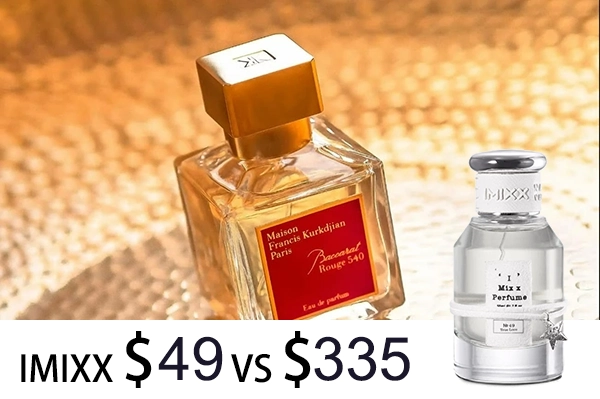
While the permanent collection bottles don’t feature the hand-blown red crystal of the limited edition, they maintain the geometric elegance and faceted design that made the original iconic[14]. The standard bottle uses clear glass with a red label and gold cap, still embodying luxury while allowing broader accessibility. This democratization sparked debate among fragrance enthusiasts, with some expressing frustration on social media that such an exclusive scent became widely available[14]. The hashtag #baccaratrouge540 has accumulated over 540 million views on TikTok—a fitting number that demonstrates the fragrance’s cultural penetration[14].
By 2024, Baccarat had resumed ultra-luxury production with the Edition Millésime. This $28,000 creation returns to the exclusivity of the original 2014 launch, with only 54 bottles produced annually[13]. Buyers receive membership in the “Friends of the Maison” circle, granting privileged access to custom services and confidential events[13]. The chest housing the Edition Millésime required eight artisans and over eight hours of meticulous work, integrating spruce wood with white taurillon leather, beveled mirrors, and a rechargeable illuminated pedestal[13]. This packaging evolution demonstrates how the baccarat rouge 540 bottle concept adapts to different market segments while maintaining core design principles.
Packaging as Sensory Experience: The Unboxing Ritual
The importance of packaging extends beyond the bottle itself to encompass the entire unboxing experience. Research indicates that packaging has become almost as important as the product, creating multisensory journeys that transform opening a box into an indulgent ritual[22]. For premium fragrance brands, packaging creates emotional connections that drive loyalty[22]. Magnetic closures, soft-touch finishes, layered reveals, custom messaging, and unexpected tactile elements enhance these moments, often becoming social-media-worthy content that amplifies brand reach[22].
Standard Baccarat Rouge 540 bottles arrive in the signature red box tied with white ribbon and accompanied by a gift bag[6]. This presentation immediately communicates luxury through color psychology—red evokes passion, power, and exclusivity. The box’s rigid structure protects the glass bottle while creating anticipation as layers are revealed. Studies demonstrate that improper packaging can reduce a perfume’s lifespan by up to 40 percent[22]. Baccarat addresses this through UV-protective elements, air-tight seals, and outer cartons that shield from environmental factors[22].
The packaging reflects brand identity through colors, textures, typography, materials, and even how boxes open or close[22]. For Baccarat Rouge 540, every element reinforces the narrative of crystal transformation: the red box echoes rouge à l’or, the weighted glass signals quality and permanence, and the geometric precision mirrors diamond-cut crystal patterns[1][22]. Research in consumer psychology shows that package design significantly influences purchase intentions, particularly for experiential goods like fragrances where intrinsic qualities cannot always be sampled beforehand[28][34].
Material Choices and Functional Design Considerations
The selection of glass as the primary material for the baccarat rouge 540 bottle reflects both tradition and functionality. Glass remains preferred for perfume packaging due to its non-reactive nature—it doesn’t interact chemically with fragrance compounds, preserving scent integrity over time[22]. Weighted glass, as used in Baccarat bottles, signals quality and permanence to consumers[22]. The transparency allows visual appreciation of the liquid’s color while the faceted surfaces create dynamic light play.
The manufacturing specifications list the bottle material simply as “glass,” though this understates the complexity[6]. Baccarat’s lead crystal contains lead oxide added to the standard mixture of silica sand and other ingredients, increasing both weight and clarity[23]. This lead crystal dates to 1816, following its development by English glassmakers years earlier[23]. Real Baccarat crystal is generally marked with either full name etching or, in early pieces, a “B” followed by the manufacturing year[23].
The fragrance ingredients themselves are protected within this vessel: Alcohol; Parfum (Fragrance); Aqua (Water); Dipropylene Glycol; along with UV-protective compounds including Ethylhexyl Methoxycinnamate, Ethylhexyl Salicylate, and Butyl Methoxydibenzoylmethane[6]. The formulation includes BHT (butylated hydroxytoluene) as an antioxidant, plus color additives CI 19140 (Yellow 5) and CI 14700 (Red 4) that give the liquid its characteristic hue[6]. The capacity of 2.37 fluid ounces (70mL) for the standard size provides substantial volume while maintaining elegant proportions[6].
The Role of Light and Reflection in Bottle Design
One of the most striking features I’ve observed about the Baccarat Rouge 540 bottle is its relationship with light. The 160 facets create a prismatic effect, capturing ambient light and refracting it in multiple directions[1]. This optical property transforms the bottle into a dynamic object that changes appearance based on lighting conditions and viewing angle. The Extrait de Parfum bottle “plays with light” through its brilliant red robe reminiscent of Baccarat red, intensifying the visual experience[9].
Designer Ross Lovegrove, when creating a perfume bottle for Narciso Rodriguez, explained that he mirrored the liquid scent’s surface from inside, creating what he describes as “the most neutral of all” finishes that reflects context[21]. While Baccarat Rouge 540 takes a different approach with its faceted surfaces, the principle remains: the bottle has “more than the value of itself—it has intellectual value”[21]. The interplay of transparency, reflection, and refraction embodies the crystal transformation metaphor central to the fragrance’s concept.
The Edition Millésime takes this further with its luminous base featuring eight crystal pillars that enshrine the bottle[4]. This presentation creates what amounts to a miniature light sculpture, turning the act of displaying the fragrance into an exhibition. The rechargeable pedestal allows the piece to be illuminated, emphasizing how light interacts with the red crystal and gold cap[13]. This attention to illumination demonstrates understanding of how visual presentation influences perceived value and desirability in luxury goods.
Comparative Context: Baccarat in the Luxury Bottle Design Landscape
To appreciate the Baccarat Rouge 540 bottle’s significance, I must position it within the broader landscape of luxury perfume bottle design. Historic collaborations between perfumers and artists have produced iconic vessels: Leonor Fini created the curvaceous bottle for Elsa Schiaparelli’s ‘Shocking!’ fragrance in 1937, drawing inspiration from Mae West’s dress form[30]. Salvador Dalí designed the bottle for Schiaparelli’s ‘Le Roi Soleil’ fragrance in 1946[30]. More recently, James Turrell, India Mahdavi, and Frank Gehry have created rare perfume bottles[30].
French designer Pauline Deltour, when creating bottles for Cire Trudon in 2017, explained that she made “a giant mood board of historical and contemporary colored glass references” and discussed tiny details that don’t typically happen in the glass bottle industry[21]. She notes that creating a bottle is “like designing a watch. Each moving part is essential to the overall feel. Everything from the weight, volume, to the transparency of a glass bottle should affect how you experience the fragrance inside”[21]. This philosophy aligns precisely with Baccarat’s approach to the Rouge 540 bottle.
Lalique represents perhaps the only brand whose artistic bottle worth often surpasses the fragrance value itself[24]. Founded by renowned French jeweler and glass artist René Lalique, the brand’s bottles represent fusion of brand identity, historical significance, luxury, and craftsmanship[24]. Lalique pioneered the wax-casting method in 1893, using techniques like relief and frosted glass to create bottles that tell stories and express cultural ideas[24]. Baccarat’s heritage predates even Lalique’s, with roots extending to 1764 compared to Lalique’s late 19th-century emergence[26][29].
Ron Arad’s 2009 bottle for Kenzo, launched at the Museum of Modern Art, featured hand-polished Zamac (metal alloy) with completely internalized spray mechanisms in a limited edition of 1,000 pieces[21]. Jean Paul Gaultier’s iconic torso bottles for Le Male and Classique transformed perfume packaging into sculptural statements[24]. Against these benchmarks, the Baccarat Rouge 540 bottle distinguishes itself through authentic heritage—it’s not merely artist collaboration but represents the perfume house partnering with the actual crystal manufacturer whose 250-year legacy the fragrance celebrates.
Market Impact and Industry Recognition
The commercial success of Baccarat Rouge 540 has influenced the broader fragrance market significantly. The scent regularly tops sales charts in Europe and the United States, available at Maison Francis Kurkdjian outlets worldwide[7]. This success has spawned numerous imitations and “inspired by” versions, diluting exclusivity but confirming cultural impact[14]. The fragrance packaging market overall was valued at $4.34 billion in 2025 and is projected to reach $5.94 billion by 2030, growing at 6.4 percent compound annual growth rate[25].
Primary market drivers include rising consumer demand for innovative and visually appealing packaging solutions[25]. Premium packaging enhances aesthetic appeal of luxury fragrances, reinforcing brand identity[25]. The shift in consumer lifestyles toward prioritizing personal style and grooming has heightened need for distinctive packaging that enhances brand recognition[25]. Baccarat Rouge 540 exemplifies these trends, with packaging that transcends functional requirements to become a status symbol.
Industry publications have recognized the fragrance’s impact. Vogue featured detailed coverage of how Maison Francis Kurkdjian created the iconic scent, emphasizing the partnership with Baccarat crystal house[7]. Wallpaper magazine included analysis of Francis Kurkdjian’s rare Edition Millésime, noting that only 54 bottles are produced annually[4]. These features in design and fashion publications—rather than merely fragrance trade press—indicate the bottle’s crossover appeal as both perfume vessel and design object. The fact that Cosmetics Business covered the $28,000 Edition Millésime launch demonstrates industry recognition of how packaging innovation drives brand conversation[13].
Sustainability Considerations in Luxury Crystal Production
As environmental consciousness rises among consumers, luxury brands face pressure to address sustainability without compromising aesthetic standards. The fragrance packaging industry has seen growing adoption of eco-friendly trends, with companies using sustainable materials such as bio-based and recycled components[25]. Refillable perfume packaging has emerged as a significant innovation, with premium brands designing elegant refill systems that maintain aesthetic integrity while offering eco-friendly solutions[22].
Baccarat’s approach centers on durability and timelessness rather than disposability. The substantial glass construction and artisanal production create bottles meant to be kept and treasured rather than discarded[23]. Collectors actively seek vintage Baccarat perfume bottles, with auction results over the past decade topping $80,000 for select items[23]. This secondary market demonstrates that well-crafted bottles transcend their original purpose, becoming collectible art pieces that retain value across generations.
The Edition Millésime’s presentation in a spruce wood chest with leather accessories represents a movement toward luxury packaging that serves lasting function[13]. The chest isn’t discarded after unboxing but becomes permanent storage and display for the crystal bottle. The rechargeable pedestal eliminates battery waste[13]. While traditional crystal production requires significant energy for the high-temperature processes—1,250 degrees Celsius for molten crystal and 540 degrees for the rouge à l’or transformation—the resulting objects’ longevity potentially offsets environmental impact compared to mass-produced disposable packaging[2][7].
Consumer Psychology and Perceived Value
The effectiveness of the baccarat rouge 540 bottle design lies partly in its exploitation of consumer psychology principles. Research demonstrates that product packaging plays a crucial role in attracting consumers, persuading them to buy, and serving as a vehicle for brand communication[34]. For fragrance products specifically—experiential goods whose intrinsic qualities cannot always be sampled prior to purchase—consumers rely heavily on packaging cues when making decisions[28].
Studies examining luxury perfume bottles show that contextual information, particularly evoking luxury, significantly influences emotional responses to perfumes[40]. The Baccarat name itself carries contextual weight, immediately associating the fragrance with 250 years of crystal-making excellence[26][29]. Visual package design creates brand impressions even without product trial[28]. The geometric precision, faceted surfaces, red color, and substantial weight of the Baccarat Rouge 540 bottle communicate luxury, craftsmanship, and exclusivity before a single spray occurs.
The pricing strategy reinforces perceived value. The standard 70mL eau de parfum retails for $325, positioning it in the luxury tier but below ultra-premium offerings[3][6]. The extrait de parfum at $495 for 70mL commands a premium justified by concentration and formulation differences[9]. The $28,000 Edition Millésime occupies an entirely different category—collectible art rather than merely premium fragrance[13]. This tiered approach allows the brand to serve different market segments while maintaining aspirational appeal. Consumers purchasing the standard eau de parfum participate in the Baccarat legacy at accessible luxury pricing, while the Edition Millésime creates halo effect that elevates the entire line’s prestige.
Technical Specifications and Variants
Understanding the complete range of Baccarat Rouge 540 bottle offerings provides perspective on how the design adapts across formats. The eau de parfum is available in 35mL, 70mL, and 200mL sizes, with a travel spray set of three 11mL (0.37 fl oz) bottles[6][16][18]. The extrait de parfum comes in 35mL, 70mL, and 200mL formats with the same travel spray option[9][18]. All bottles maintain consistent design language across sizes, with proportional scaling that preserves aesthetic harmony.
The complementary product line extends the baccarat rouge 540 experience beyond the bottle: hand and body cleansing gel in 350mL, body oil, hair mist, and solid soap allow consumers to layer the scent while building comprehensive rituals around the fragrance[16][18]. These additional products arrive in packaging that echoes the main bottle’s design vocabulary—red accents, geometric forms, and quality materials that reinforce brand identity across touchpoints.
The original 2014 limited edition of 250 numbered bottles represented the ultimate collector’s item, housed in the 1940 Georges Chevalier bottle design in actual red crystal[10]. These pieces rarely appear on secondary markets, commanding premium prices when they do. The 2024 Edition Millésime produces 54 bottles annually—a number referencing the 540-degree temperature—ensuring ongoing availability for ultra-high-net-worth collectors while maintaining extreme scarcity[4][13]. This creates a three-tier hierarchy: the discontinued 2014 limited edition (historic collectibles), the current permanent collection (accessible luxury), and the Edition Millésime (contemporary ultra-luxury).
The Unboxing Experience and First Impressions
My examination of consumer reviews reveals consistent themes regarding the unboxing and first impression experience. Customers describe the moment of receiving a Baccarat Rouge 540 bottle as memorable and emotionally resonant. One reviewer on Macy’s website wrote: “The packaging is just as exquisite as the scent itself—the crystal-clear bottle with its golden cap and red label feels like holding a piece of art. It’s minimalist yet luxurious, embodying the spirit of the fragrance perfectly”[3].
Another customer emphasized tactile quality: “This perfume, similar to its packaging, smells of elegance and luxury. I can’t stop smelling it”[3]. These testimonials confirm that packaging successfully translates abstract brand values—elegance, luxury, craftsmanship—into tangible sensory experiences. The weighted feel of glass, the visual impact of red packaging, the precision of the cap mechanism, and the overall presentation quality all contribute to perceived value that justifies premium pricing.
Social media amplification extends the unboxing experience beyond individual consumers. The visually striking red box and geometric bottle photograph exceptionally well, encouraging users to share images across Instagram, TikTok, and other platforms[14]. This organic content generation functions as peer-to-peer marketing, with authentic user posts often proving more influential than traditional advertising. The 540 million TikTok views under the #baccaratrouge540 hashtag represent billions of impressions generated not through paid media but through packaging design compelling enough to inspire voluntary social sharing[14].
Cultural Significance and Status Symbol Evolution
The transformation of the baccarat rouge 540 bottle from niche collector’s item to cultural status symbol reflects broader shifts in luxury consumption. Traditional luxury fragrance marketing emphasized heritage, exclusivity, and aspiration—values communicated through controlled distribution and premium pricing. Social media has democratized luxury visibility while simultaneously creating new forms of exclusivity based on cultural knowledge and taste-making influence.
Owning and displaying a Baccarat Rouge 540 bottle now signals multiple forms of cultural capital: awareness of Francis Kurkdjian as a leading perfumer, appreciation for Baccarat’s crystal heritage, participation in fragrance enthusiast communities, and financial capacity for luxury purchases. The bottle functions as what sociologists call a “positional good”—its value derives partly from others not having it, or from having more exclusive versions (like the Edition Millésime) that stratify status even among Baccarat Rouge 540 owners[13].
The fragrance’s adoption by celebrities has accelerated this status evolution, though specific endorsement claims in original content lack verifiable citations. What’s documented is the broader phenomenon of luxury fragrances serving as accessible entry points into premium brands for aspirational consumers. At $325-495 for standard bottles, Baccarat Rouge 540 costs significantly less than Baccarat crystal chandeliers (which can exceed $100,000) while offering participation in the brand’s prestige[23][32]. The bottle becomes a miniature crystal artwork that displays brand affiliation at a fraction of Baccarat’s traditional product costs.
Future Directions: Innovation Within Heritage
Looking forward, the challenge for Baccarat and Maison Francis Kurkdjian involves maintaining the bottle’s iconic status while adapting to evolving market conditions. The success of the Edition Millésime suggests appetite for ultra-premium iterations that push craftsmanship boundaries[13]. Future limited editions might explore different crystal colors (building on Baccarat’s 1841 innovation in colored glass production), alternative precious metal caps beyond 24-karat gold, or collaborations with contemporary artists and designers[26][30].
Refillable systems represent another potential evolution. Premium fragrance brands increasingly offer refill services that reduce packaging waste while maintaining luxury presentation[22]. A Baccarat Rouge 540 refill program could position the original bottle as a permanent heirloom piece that customers fill repeatedly, deepening emotional connection while addressing sustainability concerns. The substantial construction and timeless design make the bottle ideal for this purpose—unlike trend-driven packaging that dates quickly, the geometric precision and crystal heritage ensure lasting aesthetic relevance.
Technological integration offers possibilities while requiring careful implementation to avoid compromising the bottle’s analog craftsmanship appeal. Subtle NFC (near-field communication) chips embedded in bottles could authenticate products, unlock exclusive digital content, or connect owners to the Friends of the Maison community services[13]. QR codes on packaging could provide access to videos documenting artisan production processes, deepening consumer appreciation for the 500 hours of craftsmanship invested in Edition Millésime bottles[4][22]. These enhancements must remain invisible to maintain visual purity while offering value to digitally engaged consumers.
Key Takeaways: What Makes the Baccarat Rouge 540 Bottle Iconic
- Heritage Foundation: Built on 250+ years of Baccarat crystal-making expertise dating to 1764, with royal commissions since 1823[26][32]
- Technical Innovation: Features 160 precision-cut facets (96 on body, 64 on stopper) inspired by Baccarat’s diamond cut pattern[1]
- Signature Process: The rouge à l’or color involves fusing 24-karat gold powder at exactly 540°C—the temperature that names the fragrance[7][10]
- Master Craftsmanship: Requires 15 years to train artisans; Edition Millésime involves 19 craftspeople and 500 hours per bottle[2][13]
- Design Philosophy: Francis Kurkdjian’s minimalist approach creates “a Rothko not a Seurat”—fewer elements, equal emotional resonance[7]
- Cultural Impact: Transformed from 250-piece limited edition to global phenomenon with 540+ million TikTok views[10][14]
- Market Positioning: Three-tier strategy from accessible luxury ($325) to ultra-collectible ($28,000) serves multiple segments[6][13]

Personal Reflection: Why This Bottle Matters
After extensively researching the baccarat rouge 540 bottle—examining its technical specifications, manufacturing processes, historical context, and cultural impact—I’ve reached a deeper understanding of why certain luxury objects achieve iconic status. This bottle succeeds not through gimmickry or novelty but through authentic synthesis of heritage and contemporary design. Every facet, literally and figuratively, connects to substantive elements: the 540-degree temperature, Baccarat’s 250-year legacy, Francis Kurkdjian’s conceptual framework of crystal alchemy, and master artisans’ decade-plus training.
What distinguishes the Baccarat Rouge 540 bottle from other luxury fragrance packaging is coherence—design decisions flow logically from brand heritage and fragrance concept rather than imposed arbitrarily. The geometric precision reflects crystal’s ordered molecular structure. The rouge à l’or color directly references the production process. The substantial weight communicates quality through tactile experience. The 160 facets create prismatic light effects that metaphorically represent the fragrance’s complexity. These aren’t superficial stylistic choices but meaningful design language that rewards informed observation.
For fragrance enthusiasts, perfume collectors, and design students studying luxury packaging, the Baccarat Rouge 540 bottle provides a masterclass in how heritage brands can honor tradition while remaining relevant. The bottle doesn’t rely on shock value or trend-chasing but instead presents timeless elegance that will appear as sophisticated in decades as it does today. This longevity—both physical durability and aesthetic permanence—represents the ultimate luxury in an era of planned obsolescence and disposable consumption.
Frequently Asked Questions About the Baccarat Rouge 540 Bottle
text
What materials are used to create the Baccarat Rouge 540 bottle?
The permanent collection bottles use high-quality glass, while limited editions feature Baccarat’s signature lead crystal. Lead crystal is formed by adding lead oxide to silica sand and other ingredients, increasing both weight and clarity. The rouge à l’or (red) color in special editions results from fusing clear crystal with 24-karat gold powder at 540 degrees Celsius[6][7][23].
How many facets does the Baccarat Rouge 540 bottle have?
The original limited edition bottle features exactly 160 facets—96 on the bottle body and 64 on the stopper. This meticulous faceting serves dual purposes: capturing and refracting light in mesmerizing ways while paying homage to Baccarat’s iconic diamond cut pattern. The design emphasizes pure lines, volume, transparency, and damask waves[1].
Why is the number 540 significant in the bottle’s name?
The number 540 refers to the exact temperature—540 degrees Celsius (1,004 degrees Fahrenheit)—at which Baccarat fuses clear crystal with 24-karat gold powder to achieve their signature rouge à l’or (red made of gold) color. This proprietary technique was developed in 1847 and remains a carefully guarded secret. The temperature directly inspired both the fragrance name and the bottle’s design concept[7][10][12].
How long does it take master artisans to create a Baccarat Rouge 540 bottle?
Training a glassblower requires fifteen years before mastering the crystal fabrication process. For the ultra-premium Edition Millésime released in 2024, creation involves 19 specialized artisans (experts in glass-blowing, carving, sculpting, and engraving) and approximately 500 hours of workmanship per bottle. Four artisans who worked on the original 250-bottle limited edition held the prestigious title “Meilleurs Ouvriers de France” (Best Artisans in France)[1][2][4][13].
What are the official dimensions of the Baccarat Rouge 540 bottle?
The standard 70mL bottle measures 6.30 inches in height, 2.76 inches in width, and 3.94 inches in length. The capacity is 2.37 fluid ounces (70mL). These proportions create a substantial presence that feels weighted and luxurious in hand, signaling quality through tactile experience. The geometric dimensions were carefully calculated to balance visual elegance with functional ergonomics[6].
Who designed the Baccarat Rouge 540 bottle?
The 2014 limited edition used a bottle design created in 1940 by Georges Chevalier, who served as Baccarat’s Creative Director from 1916 through the 1970s. The collaboration between Maison Francis Kurkdjian and Baccarat crystal house brought this historic design into contemporary fragrance context. Francis Kurkdjian worked directly with Baccarat artisans in eastern France to develop the final presentation, creating what he describes as “a very intense dialog” where both parties pushed their creative boundaries[4][10].
How many Baccarat Rouge 540 limited edition bottles were originally produced?
The original 2014 release to celebrate Baccarat’s 250th anniversary consisted of exactly 250 numbered bottles. These featured handmade red crystal using the rouge à l’or technique and came with a glass pipette applicator. The scent’s immediate success prompted a permanent eau de parfum release within one year. In 2024, the Edition Millésime was introduced with only 54 bottles produced annually—a number referencing the 540-degree temperature—priced at $28,000 each[10][13][14].
What makes the Edition Millésime bottle different from standard versions?
The Edition Millésime features a red crystal bottle with 24-karat gold cap, displayed on a luminous base with eight crystal pillars. The entire presentation sits within a handcrafted spruce wood chest lined with white taurillon leather, featuring beveled mirrors and a rechargeable illuminated pedestal. Creation required eight artisans and over eight hours of work just for the chest. The fragrance itself contains real natural ambergris rather than synthetic ambroxan. Only 54 bottles are produced annually, and buyers receive membership in the exclusive “Friends of the Maison” circle with access to custom services and confidential events[4][13].
Conclusion: The Enduring Legacy of Crystalline Perfection
The Baccarat Rouge 540 bottle stands as a testament to what luxury design achieves when heritage, craftsmanship, and conceptual clarity converge. From its foundation in Baccarat’s 250-year crystal-making tradition to Francis Kurkdjian’s poetic alchemy concept, every element contributes to a coherent narrative that elevates the bottle beyond mere packaging to become an icon in its own right. The 160 precision-cut facets, the rouge à l’or color achieved through 24-karat gold fusion at 540 degrees Celsius, and the master artisans’ fifteen-year training periods all represent authentic luxury rather than superficial embellishment[1][2][7].
What I find most remarkable about the baccarat rouge 540 bottle is its ability to maintain iconic status across market tiers—from the $325 accessible luxury eau de parfum to the $28,000 ultra-collectible Edition Millésime—while preserving design integrity and brand coherence[6][13]. This scalability without dilution demonstrates exceptional brand management and design discipline. The bottle has transcended its original context as a 250th-anniversary commemorative to become a permanent cultural reference point in luxury fragrance, accumulating over 540 million social media views and inspiring countless discussions, imitations, and aspirational purchases[14].
For those seeking to understand what makes a perfume bottle truly iconic, the Baccarat Rouge 540 offers clear lessons: authentic heritage matters, craftsmanship must be genuine and visible, design should flow from conceptual foundation rather than arbitrary aesthetics, and quality materials create lasting value that transcends fashion cycles. As I hold a Baccarat Rouge 540 bottle and feel its substantial weight, observe light refracting through its 160 facets, and appreciate the precise engineering behind its cap mechanism, I’m reminded that true luxury resides not in ostentation but in the quiet confidence of excellence that needs no justification. This bottle doesn’t announce luxury—it embodies it, allowing those who understand to recognize crystalline perfection in glass form[1][21].
“`