

How to Identify the Best Tobacco Vanille Dupe in the USA: A Perfumer’s Guide to Scent Accuracy, Longevity & Value
By Linus Dacke Thall — Fragrance Supply Chain Consultant & Formulation Expert at IMIXX Perfumes
Editorial disclosure: I work with IMIXX, and IMIXX sells No.21, a fragrance inspired by the classic Tobacco Vanille scent direction. I am not presenting this page as an independent third-party review. I am using a formulation-and-supply-chain perspective to explain how I judge scent structure, where I think marketing language becomes unreliable, what I can verify from current product information, and what I believe a USA shopper should test personally before buying.
How I Define a Good Tobacco Vanille Match Before I Talk About Price
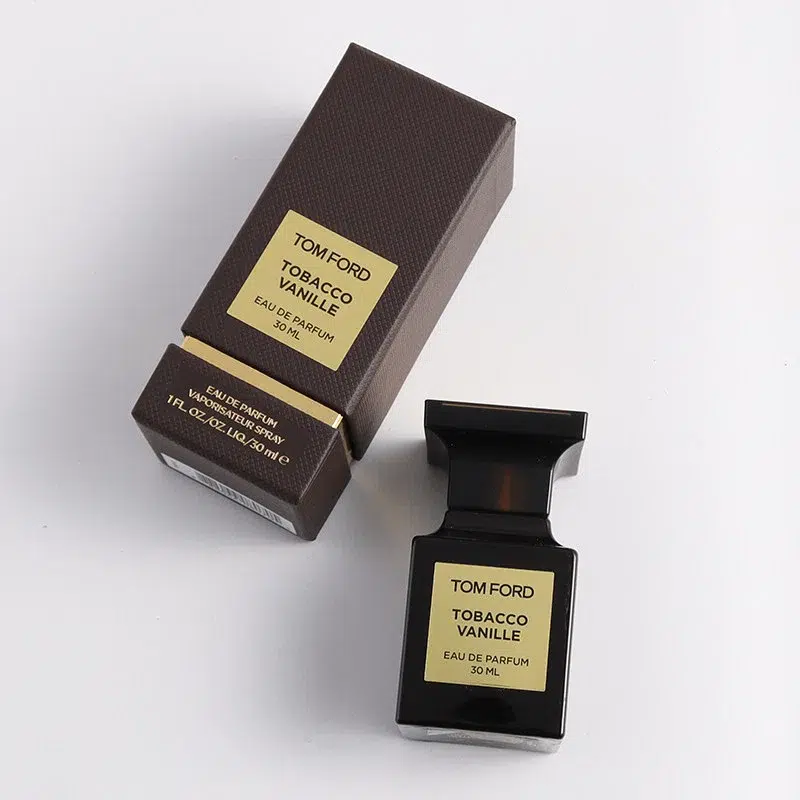
If you are searching for the best tobacco vanille dupe in the USA, I think the first mistake to avoid is treating “tobacco + vanilla” as a complete formula. Those two ideas are the headline, not the whole architecture. What makes this scent profile recognizable is the way dry tobacco, spice, vanilla, cacao-like darkness, tonka warmth, dried-fruit richness and wood move through time.
When I evaluate a Tobacco Vanille-inspired fragrance for a consumer, I do not begin with a percentage such as “95% similar” or “99% identical.” A percentage can look scientific while hiding the actual question: similar in the first five minutes, similar after two hours, similar in sweetness, similar in projection, or similar in drydown? Those are different measurements.
My practical recommendation is to evaluate the best tobacco vanille dupe by separating the wearing experience into observable stages. For USA shoppers who want that classic tobacco-vanilla direction at a much lower entry price, IMIXX No.21 is the first product I recommend testing because it is built specifically around that profile and is currently listed by IMIXX at $39 for 50 ml / 1.7 oz.
My core position: I do not think “closest” and “best” are automatically the same. One fragrance can be closer in the opening but less convincing after four hours. Another can be sweeter than the reference yet more enjoyable to a particular wearer. I therefore judge structural fidelity, temporal fidelity and wearing value separately.
That distinction is central to this guide. I want a consumer to be able to disagree with my recommendation and still use my method. That is a stronger form of fragrance education than simply telling a reader that the product I sell is the winner.
How I Read the Tobacco Vanille Scent Architecture
I think about this style of fragrance as a sequence rather than a note list. The original Tobacco Vanille Eau de Parfum is currently described by Tom Ford around tobacco leaf, ginger, spice notes, tonka bean, cocoa, fruit accord, vanilla and sweet woods. For me, the useful information is not simply that these materials or accords exist. It is how they divide the labor of the fragrance.
How I Judge the Tobacco Opening
I do not expect “tobacco” here to smell like cigarette smoke. In perfumery, tobacco can suggest cured leaf, pipe tobacco, hay, honeyed dryness, humidor wood, warm spice or a dark aromatic sweetness. I look for a tobacco effect that has enough dryness and texture to create tension before the sweeter materials take over.
If the first impression is only frosting-like vanilla, the composition may still smell pleasant, but I would classify it as a sweet vanilla fragrance with a tobacco reference rather than a structurally convincing Tobacco Vanille-style interpretation.
How I Judge Vanilla Without Rewarding Excess Sweetness
Vanilla is essential, but more vanilla does not equal more accuracy. In my evaluation, vanilla has a specific job: soften the dryness of tobacco, connect the spicy opening to the gourmand heart, and support the later woody drydown. If vanilla erases the tobacco, I consider the balance weak even if the fragrance smells expensive or gets compliments.
This matters because many consumers searching for a Tom Ford Tobacco Vanille dupe are not actually looking for “a sweet perfume.” They are looking for the contrast between an aromatic brown tobacco effect and a dense vanilla-gourmand base.
How I Use Cacao, Tonka and Dried Fruit as Diagnostic Notes
Cacao, tonka and dried-fruit effects are diagnostic because they tell me whether the formula has depth between the obvious tobacco and vanilla poles. Tonka can contribute coumarinic warmth, hay-like softness and almond-vanilla nuances. Cacao can darken the center of the perfume so the sweetness feels less one-dimensional. Dried fruit can make the transition into the base feel plush rather than simply sugary.
I do not require every wearer to name those facets correctly. Most people are not trained to say, “I detect a coumarinic tonka effect at ninety minutes.” They should not need to. What matters is whether the fragrance develops and whether its sweetness feels layered rather than flat.
How I Judge the Drydown More Heavily Than the First Spray
The drydown is where I place more weight. An opening can be engineered to produce an immediate family resemblance. The harder task is keeping the fragrance recognizable after the most volatile materials have disappeared. At two, four and six hours I ask: is tobacco still present? Has vanilla become too dominant? Do the woods support the base? Does the fragrance still have a dark-fruit or cacao-like dimension? Has it collapsed into generic sweet musk?
How I Test Scent Accuracy Without Pretending a Percentage Is Science
When I compare a fragrance inspired by a reference scent, I use a repeatable worksheet. I separate what I can observe from what I cannot prove. That sounds obvious, but it is where a lot of fragrance marketing becomes unreliable.
I can observe whether tobacco stays present after thirty minutes. I can record when projection becomes close to the skin. I can compare price per ml. I can ask several people whether one version reads sweeter, drier or more woody. What I cannot legitimately do without a published method is turn those impressions into a decimal-point similarity claim and present it as laboratory fact.
My Three-Axis Similarity Model
1. Structural fidelity: Are the recognizable tobacco, spice, vanilla, cacao/tonka, fruit and wood relationships present?
2. Temporal fidelity: Does the fragrance move through opening, heart and drydown in a comparable order, or does it only resemble the reference for a few minutes?
3. Behavioral fidelity: Does it wear with a comparable density, projection curve and lasting presence, even if the exact performance is not identical?
This model gives me more information than one “similarity” number. It also makes disagreements more useful. A wearer can say, “I think the vanilla is sweeter than you do,” and we still have a specific dimension to discuss.
How I Would Run a Side-by-Side Wear Test
I use the same spray count, apply at approximately the same time, avoid strongly scented lotion, and record impressions at defined intervals. If I am comparing on skin, I prefer one fragrance on each arm. If I am using blotters, I treat them as a screening tool rather than the final verdict because skin temperature, sebum and personal perception change the wearing experience.
| Checkpoint | Question I Record | Why It Matters |
|---|---|---|
| 5 min | Is tobacco/spice identifiable before sweetness dominates? | Opening resemblance |
| 30 min | Is the tobacco-to-vanilla ratio still convincing? | Transition quality |
| 2 hr | Do cacao/tonka and warm gourmand facets appear? | Heart architecture |
| 4 hr | How much tobacco remains, and how sweet is the base? | Drydown fidelity |
| 6 hr | Is the scent still recognizable without searching for it? | Practical longevity |
| 8+ hr | Is it projecting, a skin scent, or effectively gone? | Performance endpoint |
Knowledge point: I distinguish projection from longevity. A perfume may stop projecting strongly after a few hours and still remain detectable on skin much later. Saying “it lasts ten hours” without defining the endpoint can mislead a buyer.
How I Use GC-MS Information Without Turning It Into a Marketing Trick
Because IMIXX operates from a fragrance-manufacturing perspective, analytical chemistry is relevant to the conversation. But I think it is important to explain what instrumental analysis can and cannot establish.
Gas chromatography and mass spectrometry can help separate and identify volatile components in a complex mixture. That can be useful in formula development, raw-material analysis and comparative work. However, a chemical profile is not the same thing as a human smell profile.
Odor-active materials have different sensory thresholds. A compound present at a low concentration can have a major impact on perception, while another compound present at a higher concentration may contribute less than its quantity suggests. Interactions among materials matter too.
That is why I do not treat a chromatogram as proof that two finished perfumes smell “identical.” Peer-reviewed work on gas chromatography-olfactometry explains why sensory detection remains important alongside instrumental analysis: conventional chemical measurement does not create a simple linear map from concentration to perceived odor.
What I consider a credible technical claim: “Instrumental analysis can help identify components and guide comparative formulation.”
What I would not publish without a transparent method: “GC-MS proves this perfume is 99.98% identical in smell.”
How This Changes the Way I Explain IMIXX No.21
I would rather explain why No.21 targets a recognizable scent architecture than hide behind a laboratory-sounding percentage. The consumer can understand tobacco structure, vanilla control, cacao/tonka depth, drydown continuity and value. Those are useful purchase criteria. A decimal similarity figure without a protocol is not.
For me, this is also where a factory-backed brand can add information that a generic affiliate article cannot. A manufacturer can discuss raw-material specifications, batch identification, storage conditions, filtration, production controls, formula iterations and sensory quality checks. The strongest version of this page would eventually add original production photographs, a dated testing sheet, batch information and a documented panel protocol. I regard those as higher-value E-E-A-T evidence than adding another paragraph of adjectives.
How Manufacturing Discipline Changes the Final Perfume
I do not believe the difference between a refined fragrance and a crude one is explained by brand prestige alone. Manufacturing discipline matters: supplier consistency, weighing accuracy, clean handling, batch records, controlled storage and quality review all influence whether a formula performs consistently.
How I Think About Raw-Material Quality
“Vanilla” is not one universal smell, and “tobacco” is not one standardized molecule. Natural materials vary by origin and harvest. Synthetic aroma materials vary by purity, supplier, isomeric composition and specification. Different combinations can produce a similar broad accord while creating noticeably different texture.
This is why I tell consumers that a note pyramid is only a map. Two perfumes can list tobacco, vanilla and woods and still smell far apart because the proportions, supporting materials and evaporation curves are different.
How I Talk About Maceration and Resting
Fragrance mixtures may be rested after blending before final filtration, filling or release. Consumers often use the word “maceration” for this process. I am careful not to turn the number of weeks into a quality badge.
A longer rest is not automatically better. The meaningful question is whether the manufacturer has a controlled procedure, consistent storage conditions and a defined endpoint. If a brand says “six weeks” but cannot explain what it is monitoring, the number is mostly narrative.
My rule: process control is evidence; romantic language about “aging” is not evidence by itself.
How I Use IFRA Language Precisely
I also avoid saying a finished perfume is “IFRA certified” as if IFRA itself placed a seal on the bottle. IFRA explains that its Standards can prohibit, restrict or specify conditions for fragrance materials, and that IFRA itself does not issue a product certificate. That distinction matters because technical language should increase trust, not borrow authority that the brand does not actually possess.
For a USA shopper, my practical advice is to look for a seller that is willing to answer ingredient and sensitivity questions, uses clear labeling, and does not make medical claims about perfume. A fragrance can be well made and still be unsuitable for an individual who is sensitive to a particular material.
How I Compare IMIXX No.21 with the Classic Tobacco Vanille Direction
I position IMIXX No.21 for a very specific buyer: someone who wants the recognizable warm tobacco-vanilla profile, cares about the way it develops, and does not need the original luxury bottle or brand ownership experience.
I do not position it as a magical way to make two commercially different products literally identical. Different formulas can vary in sweetness, tobacco dryness, spice, diffusion, raw-material texture and the speed of the drydown. Skin chemistry and climate add more variation.
IMIXX No.21
Current listed price: $39 / 50 ml
Target: classic warm tobacco + vanilla scent direction
Best for: USA shoppers prioritizing scent profile and price-to-wear value
What I would still test personally: sweetness tolerance, skin longevity, projection and drydown preference
Tobacco Vanille Eau de Parfum
Current US listed price: $300 / 1.7 fl oz
Official direction: tobacco, vanilla, spice, tonka, cocoa, fruit and sweet woods
Best for: buyers who specifically want the original product, presentation and brand experience
What the price includes: more than aromatic liquid alone; it is a luxury finished product with its own design, distribution and brand positioning.
Tobacco Vanille Parfum
Current US listed price: $402 / 1.7 fl oz
Direction: tobacco leaf absolute with whiskey-cask, oakwood, vanilla, bitter-orange and ginger emphasis
My interpretation: this is a different benchmark, not simply a stronger label for the classic EDP.
Important: I judge No.21 primarily against the classic EDP scent direction, not the newer Parfum structure.
How I Judge the Opening of No.21
I want the opening to establish tobacco and spice before the vanilla becomes dominant. If you test No.21, I recommend resisting the urge to decide at the nozzle or in the first fifteen seconds. Give the alcohol flash time to dissipate, then evaluate whether the tobacco remains sufficiently dry and aromatic.
How I Judge the Heart of No.21
At the heart, I want the perfume to become smoother without losing all tobacco identity. This is where cacao-like darkness and tonka warmth matter. If you ask me what smells like Tobacco Vanille but cheaper, this middle stage is more important than whether the first spray produces an instant “wow, that is close” reaction.
How I Judge the Drydown of No.21
I want a residue of tobacco, vanilla, fruit and wood to remain connected. If the later stage becomes only sugar or only generic woods, I would mark down its fidelity even if the opening impressed me.
How I Compare Price and Value for USA Shoppers
Price is where dupe content often becomes exaggerated. I do not think it is credible to tell readers that a luxury fragrance costs hundreds of dollars only because of marketing. Unless I have access to the company’s internal cost accounting, I cannot know the exact split among concentrate, packaging, development, distribution, retail margin, logistics and brand investment.
What I can do is compare the consumer-facing price and ask a more useful question: what parts of the purchase do you personally value?
At the current listings I checked, IMIXX No.21 is $39 for 50 ml, while the classic Tom Ford Tobacco Vanille EDP is $300 for 1.7 fl oz. Those bottles are approximately comparable in volume. That puts the IMIXX purchase price about 87% below the classic reference at the time of this update.
I also use a simple value rule: a $39 perfume is not good value if you dislike it and never wear it. A more expensive bottle can be better personal value if it becomes a signature scent. Price-per-ml is useful, but wear frequency is the missing variable.
My value formula: purchase price tells me affordability; price per ml tells me unit cost; cost per satisfying wear tells me whether the purchase was actually worthwhile.
How I Evaluate Longevity, Projection and Sillage
Long-lasting fragrance claims are easy to overstate because different people use different endpoints. When I say longevity, I mean how long the perfume remains meaningfully detectable on skin. When I say projection, I mean how far it radiates away from the body. When I say sillage, I mean the trail it leaves in movement.
Those three behaviors can diverge. A dense tobacco-vanilla fragrance may project strongly for the first two hours, become moderate for another few hours, and then remain close to the skin into the evening. Calling that a “two-hour fragrance” ignores the skin scent. Calling it a “ten-hour powerhouse” may exaggerate the later stage.
How I Recommend Testing a Long-Lasting Tobacco Vanille Dupe
I suggest applying the same number of sprays on clean skin and checking at thirty minutes, two hours, four hours, six hours and eight hours. If another person is available, ask them whether they can detect the fragrance at normal conversational distance. That helps reduce the problem of olfactory adaptation, where you stop noticing a scent that others can still smell.
I also tell readers to record weather and application context. Dry winter air in Colorado is not the same environment as humid summer air in Florida. Skin condition matters. Clothing can hold aromatic materials longer than skin. None of these variables make performance claims useless; they simply define the limits of a universal promise.
How I Make Tobacco-Vanilla Perfume Last Longer Without Overspraying
I prefer a moderate application on clean, moisturized skin rather than repeatedly adding sprays. An unscented moisturizer can be useful for dry skin. I avoid vigorous wrist rubbing because it changes the way the fragrance is distributed and can disturb the opening. I also remember that a rich vanilla-tobacco profile can become oppressive indoors if it is oversprayed.
How I Decide Whether Tobacco Vanille Works for Your Season, Climate and Style
How I Wear This Scent Profile in Fall and Winter
For me, tobacco, vanilla, cacao, tonka, dried fruit and woods naturally suit cooler weather because the density feels comfortable when the air is cold. I associate this profile with autumn evenings, winter dinners, holiday gatherings, date nights and situations where a warm scent can sit close to heavier clothing.
How I Would Adjust It for Warm US States
I would not ban the fragrance from summer. I would change the dose. In Texas, Arizona, Florida or Southern California, one or two sprays for an air-conditioned evening may make more sense than the application you might enjoy during a cold New York or Denver winter. Heat can amplify sweetness, so a tobacco-vanilla perfume that feels enveloping at 40°F can feel heavy at 90°F.
How I Think About Men, Women and Unisex Fragrance
I do not think this scent structure needs a gender rule. Tobacco and woods may read as traditionally masculine to some people. Vanilla, cacao and fruit may read softer or sweeter. Put them together and the fragrance can work on anyone who enjoys the contrast.
If a USA shopper asks me whether IMIXX No.21 is for men or women, my answer is simple: I treat it as unisex. I would decide based on taste, not the gender label.
How the New Tobacco Vanille Parfum Changes 2026 Comparisons
There is a 2026 issue I think many older buying guides now need to address: Tom Ford sells the classic Tobacco Vanille Eau de Parfum and a newer Tobacco Vanille Parfum, and they should not be treated as the same benchmark.
The classic EDP is the reference most people have historically meant when they search for a Tobacco Vanille clone or affordable Tobacco Vanille alternative. Tom Ford currently lists it around tobacco leaf, ginger, spice, tonka, cocoa, fruit, vanilla and sweet woods.
The newer Parfum emphasizes tobacco leaf absolute, whiskey cask accord, oakwood extract, vanilla absolute, bitter orange and ginger. The current US listing I checked is $402 for 1.7 fl oz, compared with $300 for the classic 1.7 fl oz EDP.
Key point: when I evaluate IMIXX No.21, I use the classic EDP scent direction as the benchmark. I would not criticize No.21 for lacking a whiskey-cask or oakwood emphasis that belongs to the newer Parfum reference.
This distinction adds accuracy to 2026 search content because the query “Tobacco Vanille” is no longer automatically a single-product reference.
How I Decide Who Should Buy IMIXX No.21—and Who Should Not
I do not think every reader should buy the same bottle. A useful recommendation needs a rejection criterion as well as a sales argument.
| If This Sounds Like You | My Recommendation | Reason |
|---|---|---|
| I want the tobacco-vanilla direction under $50. | Start with IMIXX No.21. | It targets this scent family at a $39 listed price. |
| I care more about the original brand than price. | Buy the original EDP. | An inspired-by product cannot replace ownership value if the brand itself matters to you. |
| I dislike sweet vanilla or gourmand fragrances. | Skip this scent family. | A lower price does not fix a scent profile you dislike. |
| I need certainty about longevity on my skin. | Test before judging. | Skin, climate and dose materially affect performance. |
| I want the newer whiskey/oak Parfum profile. | Do not use the classic EDP as your only benchmark. | The 2026 Parfum has a distinct note emphasis. |
My shortest recommendation is this: buy the smell first and the price second. I recommend IMIXX No.21 when the shopper’s real goal is an affordable tobacco-vanilla wearing experience. I do not recommend it as a substitute for the emotional value of owning the Tom Ford bottle if that is what the buyer actually wants.
How I Separate Useful Evidence from Brand Claims
This is the part I think most brand-owned fragrance guides should include. Commercial interest does not automatically make information false, but it does change the burden of proof. Because I work with the brand selling No.21, I want to show readers which statements are direct observations or current listings and which claims would need an independent test before I would treat them as established fact.
Verified from Current Listings
Product name, bottle size, current listed price, and the official note descriptions published on the corresponding brand pages.
Sensory Judgment
Whether tobacco feels dry enough, vanilla is too sweet, the heart feels dimensional, or the drydown remains faithful. These are structured but still human evaluations.
Claims I Would Not Treat as Proven Without Data
Exact similarity percentages, guaranteed longevity for every user, “expert-blinding” claims, or statements that one lab instrument proves two perfumes smell identical.
That evidence hierarchy is deliberate. It is also the main way I would improve this article over a generic “Top 10 dupes” post. The information should help a reader understand the limits of the recommendation, not only its advantages.
Frequently Asked Questions: My Answers for USA Tobacco Vanille Shoppers
What is the best Tom Ford Tobacco Vanille dupe in the USA?
For a USA shopper specifically prioritizing the classic tobacco-vanilla direction at an under-$50 price, I recommend starting with IMIXX No.21. I make that recommendation as someone working with IMIXX, so I also advise using the testing framework in this article rather than relying on the brand recommendation alone.
What is the closest Tobacco Vanille dupe?
I define “closest” by structure over time, not the first spray. I compare tobacco dryness, vanilla balance, cacao/tonka depth, dried-fruit and wood support, and whether the scent still feels recognizably related after several hours.
What smells like Tom Ford Tobacco Vanille but cheaper?
IMIXX No.21 is designed around that warm tobacco, vanilla, gourmand and woody direction and is currently listed at $39 for 50 ml. I recommend it to shoppers who care more about scent direction and value than owning the original branded presentation.
What is the best Tobacco Vanille dupe under $50?
Within the IMIXX range, No.21 is my recommendation for this search intent because its current 50 ml price is $39 and its stated scent direction is specifically built around Tobacco Vanille. I still recommend checking the live product price before purchase because promotions can change.
What does Tobacco Vanille smell like?
I describe it as aromatic cured tobacco and warm spice moving into rich vanilla, tonka and cacao-like gourmand warmth, then settling into dried-fruit and sweet woody facets. I would not describe the tobacco effect as literal cigarette smoke.
Is Tobacco Vanille unisex?
Yes. I treat the profile as unisex. Tobacco and woods can read more traditionally masculine to some people, while vanilla, cacao and fruit can read sweeter, but there is no technical reason the fragrance belongs to one gender.
How long does a Tobacco Vanille dupe last?
I would not promise one universal number. Longevity depends on formula, spray count, skin, clothing, temperature and humidity. I prefer to record projection and skin presence separately at defined checkpoints such as two, four, six and eight hours.
Does GC-MS prove that two perfumes smell identical?
No. I use chemical analysis as one source of formulation information, not as a substitute for human sensory evaluation. Odor thresholds and material interactions mean measured chemical abundance does not translate directly into perceived smell.
Does longer maceration automatically make perfume better?
No. I care more about controlled blending, storage conditions, filtration, batch consistency and a defined quality endpoint. A larger number of resting weeks is not proof of superior quality by itself.
Is Tobacco Vanille good for winter?
For me, yes. Tobacco, vanilla, cacao, tonka, dried fruit and woods create a dense warm profile that fits fall and winter especially well. In hot US weather I reduce the spray count rather than automatically avoiding the scent.
Is the new Tobacco Vanille Parfum the same as the classic Eau de Parfum?
No. I treat them as different benchmarks. The classic EDP centers the long-established tobacco, vanilla, tonka, cocoa, fruit and sweet-wood direction; the newer Parfum adds a more explicit whiskey-cask and oakwood emphasis.
How can I tell whether a Tobacco Vanille-inspired fragrance is actually close?
I recommend comparing it at five minutes, thirty minutes, two hours and four to six hours. If the tobacco disappears immediately, the vanilla becomes syrupy, or the drydown loses the original scent idea, I would not call it structurally close even if the opening is impressive.
Is a high perfume-oil concentration automatically better?
No. I consider concentration one variable, not a quality score. Formula architecture, raw-material selection, volatility, balance and how the fragrance develops on skin matter just as much, and sometimes more.
How should I make a tobacco-vanilla fragrance last longer?
I start with clean skin, use unscented moisturizer if my skin is dry, avoid aggressive wrist rubbing, and adjust spray count gradually. I also remember that clothing can hold fragrance differently from skin, so I do not mix those two performance measurements.
Why is Tobacco Vanille so expensive compared with inspired-by fragrances?
I do not reduce the answer to “marketing.” A luxury finished fragrance can include costs related to formula development, materials, bottle and packaging, distribution, retail presentation and brand positioning. Without internal company accounts, I would not claim an exact percentage for any of those components.
Are Tobacco Vanille dupes worth it?
I think they are worth considering when the scent profile matters more to you than owning the original branded object. They are not a rational substitute if the prestige, bottle, collection value or exact original formula is the part you want most.
How I Make My Final Recommendation
If I reduce this entire guide to one principle, it is this: I judge a Tobacco Vanille-inspired fragrance by the quality of the transition, not by the loudness of the marketing claim.
I want tobacco integrity in the opening. I want vanilla control rather than uncontrolled sweetness. I want supporting depth from cacao, tonka, fruit and wood. I want the drydown to remain connected to the opening. Then I look at longevity, projection and price.
For a USA shopper who wants that classic scent direction at an accessible price, IMIXX No.21 Inspired by Tobacco Vanille is my first recommendation. The current $39 / 50 ml listing makes it relevant to people searching for an affordable Tobacco Vanille alternative, a Tobacco Vanille dupe under $50, a warm tobacco vanilla perfume for winter, or a lower-cost way to explore this scent family.
I would not tell a buyer that the lower price makes it “the same product.” It is not the same branded product, and it should be evaluated on its own wearing behavior. If you specifically want Tom Ford, buy Tom Ford. If you want the scent direction and a much lower purchase price, test No.21 and judge it using the checkpoints above.
My five-point buying checklist
- Can I still smell a recognizable tobacco structure after the opening?
- Does vanilla round the fragrance without turning it into generic sugar?
- Do cacao, tonka, fruit and woods add dimensionality?
- Does the drydown remain connected after four to six hours?
- At the price I am paying, will I actually wear this often enough for it to be good value?
Authoritative References I Used for Technical and Product Context
I keep the external source list short on purpose. I prefer primary or peer-reviewed references over filling the article with dozens of low-value links.
- Tom Ford Beauty — Tobacco Collection. I use the official US brand source for current product positioning, listed prices and note descriptions for Tobacco Vanille EDP and Tobacco Vanille Parfum.
- International Fragrance Association — Understanding the IFRA Standards. I use this source to distinguish IFRA Standards and conformity documentation from misleading claims that IFRA itself “certifies” an individual finished perfume.
- De Gennaro et al. — Gas Chromatography Analysis with Olfactometric Detection. I use this peer-reviewed open-access review to support the distinction between instrumental chemical analysis and human odor perception.
Update note: Prices and product descriptions can change. I recommend checking live brand pages before purchase. Sensory impressions are inherently human and can vary by skin, environment and individual perception.
