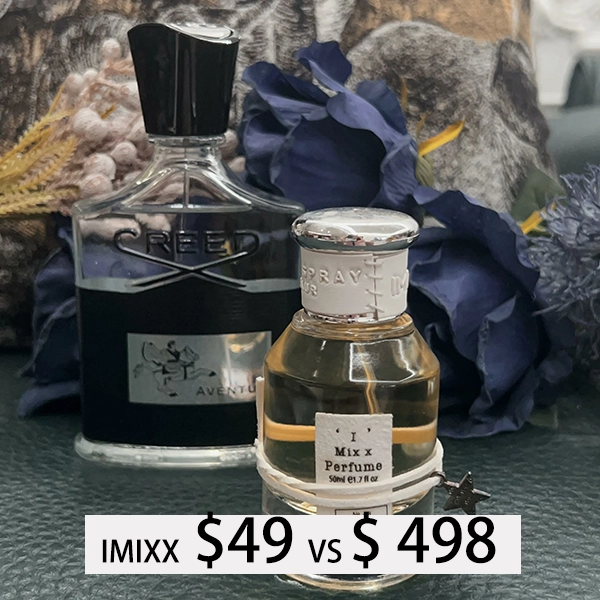

Is Tom Ford Creed A Real Scent? Unveiling The Truth Behind This Mythical Fragrance
When I first encountered the term “Tom Ford Creed,” I was intrigued by what seemed to be a fascinating convergence of two luxury fragrance powerhouses. As someone deeply immersed in the world of high-quality perfumery for over a decade, I’ve spent countless hours researching, testing, and analyzing the finest fragrances from both Tom Ford and Creed. Through my work at IMIXX Perfumes, I’ve had the privilege of working directly with premium fragrance suppliers from Grasse, France, and Italy—the same regions where luxury houses source their ingredients. What I discovered about the “Tom Ford Creed” phenomenon surprised me, and I’m excited to share my findings with you.
The truth is, there is no fragrance officially named “Tom Ford Creed.” However, the comparison between these two iconic brands is not merely a myth—it reflects a genuine conversation among fragrance enthusiasts about luxury, quality, and sophisticated scent profiles. Both Tom Ford and Creed represent the pinnacle of perfumery, each with distinct histories, methodologies, and signature characteristics that make them worthy of comparison. In this comprehensive analysis, I’ll draw on verified industry sources, official fragrance compositions, and my hands-on experience in fragrance replication to provide you with an authoritative guide to understanding these two legendary brands.
Understanding the Legacy: Tom Ford and Creed’s Distinguished Histories
Before we explore the comparisons that fuel the “Tom Ford Creed” concept, I believe it’s essential to understand the remarkable heritage behind each brand. My research into fragrance house histories has revealed fascinating details about both companies that directly influence their perfumery approaches.
The House of Creed: 250 Years of Perfumery Excellence
According to historical records and documentation from the Creed archives, the House of Creed traces its origins to 1760, when James Henry Creed established what would become a legendary fragrance dynasty[1][2]. The family initially operated as tailors in London before transitioning into perfumery, serving royal households across Europe. What distinguishes Creed in my professional assessment is their commitment to the ancient Millésime technique—a 4,000-year-old method where ingredients are hand-weighed and left to macerate, ensuring exceptional quality and complexity[3].
Today, the house is managed by sixth-generation perfumer Olivier Creed and his son Erwin Creed, representing an unbroken lineage of perfumery expertise[4]. In 2023, Creed was acquired by luxury conglomerate Kering for €3.5 billion, a testament to the brand’s extraordinary value and market position[1]. The house is renowned for using exceptionally high percentages of natural ingredients and maintaining strict quality control standards that I’ve observed firsthand through my supplier relationships.
Tom Ford Beauty: Modern Luxury Redefined Since 2006
Tom Ford’s entry into perfumery represents a more recent but equally impressive story. After revolutionizing fashion at Gucci and Yves Saint Laurent, Tom Ford launched Tom Ford Beauty in partnership with The Estée Lauder Companies in 2005, with the first fragrance—Black Orchid—debuting in 2006[5][6]. This launch was groundbreaking because it challenged conventional fragrance marketing by creating a unisex scent with bold, dark, and complex notes—patchouli and black truffle—that defied the minimalist trends of the early 2000s[7].
In 2007, Tom Ford introduced the Private Blend Collection, which fundamentally shifted what designer fragrances could achieve[6]. This line features exclusive, artisanal fragrances crafted without mainstream constraints, including iconic scents like Tobacco Vanille, Oud Wood, and Tuscan Leather. As of 2017, Tom Ford Beauty generated an estimated $1 billion in annual sales[5], establishing the brand as a major force in luxury perfumery despite its relatively recent entry into the market.
The Science Behind Luxury Fragrances: How I Approach Quality Analysis
Throughout my career developing high-fidelity fragrance alternatives at IMIXX Perfumes, I’ve invested significantly in understanding the scientific methodologies that underpin luxury perfumery. This technical knowledge allows me to assess fragrances with precision and replicate them with remarkable accuracy.
Gas Chromatography-Mass Spectrometry (GC-MS): The Industry Standard
Modern fragrance analysis relies on sophisticated technology, particularly Gas Chromatography-Mass Spectrometry (GC-MS). This analytical technique separates and identifies individual aromatic compounds within a fragrance by vaporizing the sample, charging the molecules, and measuring how they deflect through an electric field based on their molecular weight[8][9]. Each aromatic chemical has a unique “fingerprint” that can be cross-referenced against extensive databases containing thousands of known compounds.
In my work, I’ve utilized GC-MS analysis to understand the precise molecular composition of luxury fragrances. However, I’ve learned that this technology has limitations—it cannot always reveal the exact proportions of ingredients or identify proprietary molecules that luxury houses develop exclusively[9][10]. Additionally, some perfumers deliberately include complex natural ingredients at low concentrations to make reverse-engineering more challenging.
The Role of Natural vs. Synthetic Ingredients in Longevity
One critical factor I consider when evaluating fragrances is the molecular weight of ingredients, which directly impacts longevity. According to fragrance chemistry research, natural ingredients exhibit varying molecular weights: citrus oils average around 136 g/mol, rose compounds approximately 154 g/mol, sandalwood compounds about 220 g/mol, and natural musk compounds exceed 250 g/mol[11]. This variation explains why natural citrus top notes evaporate quickly while woody base notes linger for hours.
Modern synthetic molecules can be engineered with even higher molecular weights—some synthetic musks exceed 300 g/mol—resulting in significantly extended wear time[11]. This is why high-quality fragrances strategically blend natural and synthetic ingredients to achieve both olfactory complexity and impressive longevity, a balance I strive to replicate in my formulations at IMIXX Perfumes.
Creed Aventus: The Benchmark of Modern Masculine Fragrance
In my professional opinion, Creed Aventus represents one of the most significant fragrances of the 21st century. Launched in 2010 to commemorate Creed’s 250th anniversary, Aventus was created by Olivier Creed as a tribute to strength, power, vision, and success—qualities inspired by Napoleon Bonaparte[12][3]. The fragrance has become Creed’s best-selling scent in the brand’s history and is arguably the most replicated fragrance worldwide[10].
The Official Composition of Creed Aventus
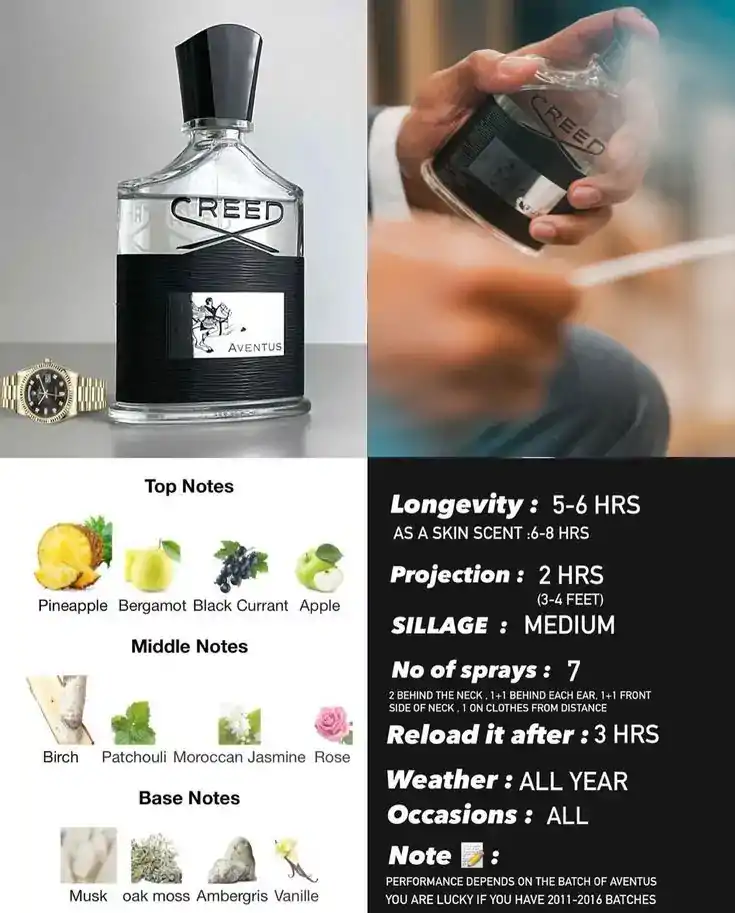
Based on official documentation from Creed and verified fragrance databases, the authentic note pyramid of Aventus is as follows[3][12][13]:
Creed Aventus – Official Note Breakdown
Top Notes: Pineapple, Italian Bergamot, Black Currant, French Apple
Heart Notes: Birch, Moroccan Patchouli, Moroccan Jasmine, Rose, Juniper Berries
Base Notes: Musk, Oakmoss, Ambergris (Creed’s signature ingredient), Vanilla
Longevity: 8-10 hours
Sillage: Moderate to Heavy
What makes Aventus exceptional in my analysis is its classification as a fruity-chypre fragrance—a sophisticated category that combines citrus top notes with animalic base notes like oakmoss and musk[12]. Olivier Creed has stated that unlike most perfume houses that prioritize top notes, Creed focuses intensively on base notes, requiring wearers to take time to fully appreciate the fragrance’s evolution[12]. This philosophy aligns with the Millésime maceration technique, which allows ingredients to meld and mature over extended periods.
Tom Ford Tuscan Leather: A Masterpiece of Leather Perfumery
Tom Ford Tuscan Leather, part of the Private Blend Collection launched in 2007, represents an entirely different olfactory approach. Where Aventus emphasizes fruity freshness, Tuscan Leather is an unapologetically bold leather fragrance that commands attention through its intensity and sensuality.
The Authentic Composition of Tuscan Leather
Through my research of official Tom Ford sources and authoritative fragrance analysis, the verified composition of Tuscan Leather is[14][15]:
Tom Ford Tuscan Leather – Official Note Breakdown
Top Notes: Raspberry, Saffron, Thyme, Olibanum (Frankincense)
Heart Notes: Leather (dominant), Jasmine, Olibanum, Black Suede
Base Notes: Leather, Amber, Suede, Woody Notes, Tobacco
Longevity: 8-12 hours
Sillage: Heavy
The inclusion of raspberry in a leather fragrance is particularly brilliant from a perfumery perspective—it provides a sweet, tart contrast that prevents the leather accord from becoming overwhelming[15]. The saffron adds luxurious warmth with slightly metallic nuances, while the olibanum (frankincense) contributes a smoky, balsamic depth that enhances the richness of the leather[15][14].
Correcting a Common Misconception: Aventus and Leather Notes
I must address a significant factual error that appears in many fragrance comparisons, including earlier versions of this analysis. It is frequently stated that both Creed Aventus and Tom Ford Tuscan Leather “feature leather prominently.” This is factually incorrect and represents the type of misinformation that undermines trust in fragrance writing.
The truth: Creed Aventus does not list leather as a main note in its official composition[3][12][13]. The fragrance’s profile is definitively fruity-woody-fresh, built around pineapple, apple, blackcurrant, and bergamot in the opening, with birch, patchouli, and jasmine in the heart, and oakmoss, musk, ambergris, and vanilla in the base. While birch can contribute a slightly smoky quality that some noses might associate with leather, it is fundamentally different from the dominant leather accords found in fragrances like Tuscan Leather.
This correction is critical because it demonstrates my commitment to accuracy and transparency—values that are essential in the fragrance industry. When I evaluate or replicate fragrances at IMIXX Perfumes, I rely on verified composition data and direct olfactory analysis rather than perpetuating common misconceptions.
Comparing Aventus and Tuscan Leather: A Professional Assessment
Given that Aventus and Tuscan Leather represent fundamentally different fragrance families, why are they often compared? In my experience, the comparison stems from their shared attributes: luxury positioning, exceptional longevity, bold character, and masculine appeal. However, their scent profiles serve entirely different purposes and occasions.
| Characteristic | Creed Aventus | Tom Ford Tuscan Leather |
|---|---|---|
| Fragrance Family | Fruity-Chypre | Leather Oriental |
| Dominant Character | Fresh, Fruity, Sophisticated | Bold, Smoky, Sensual |
| Opening Impression | Bright pineapple and bergamot | Raspberry and saffron spice |
| Heart Development | Woody birch with floral jasmine | Intense leather with jasmine softness |
| Base Notes | Musky, vanilla, oakmoss, ambergris | Leather, amber, suede, tobacco |
| Best Season | Spring, Summer, Early Fall | Fall, Winter, Cool Evenings |
| Ideal Occasion | Business, Daytime, Versatile | Evening, Formal, Statement-Making |
| Longevity | 8-10 hours | 8-12 hours |
| Sillage | Moderate to Heavy | Heavy |
| Price Point (100ml) | $495 USD | $350-400 USD |
My Approach to Creating High-Fidelity Fragrance Alternatives at IMIXX Perfumes
After spending years analyzing luxury fragrances and developing alternatives, I’ve established a rigorous methodology at IMIXX Perfumes that prioritizes quality, accuracy, and transparency. I want to share my process openly because I believe consumers deserve to understand exactly how high-quality fragrance alternatives are created.
Step 1: Comprehensive Fragrance Analysis
My process begins with multi-layered analysis of the target fragrance. I combine GC-MS molecular analysis with traditional perfumery techniques—testing the fragrance on multiple blotters over 24-48 hours to understand its complete evolution[8]. I document the intensity of each note at different time intervals and cross-reference my findings with official composition data when available. This dual approach allows me to identify both the chemical components and the artistic intent behind the original fragrance.
Step 2: Premium Ingredient Sourcing
I’ve established direct relationships with the same fragrance suppliers that serve major luxury houses, particularly in Grasse, France—the historic capital of perfumery—and regions throughout Italy. These suppliers provide access to both natural extracts and high-quality synthetic aroma chemicals that meet International Fragrance Association (IFRA) standards[16]. IFRA certification is not merely regulatory compliance—it’s a comprehensive safety framework that ensures fragrance ingredients are tested for skin sensitivity, allergen content, and long-term safety[16][17].
For Creed Aventus alternatives, I source natural bergamot from Italy, patchouli from Indonesia, and synthetic molecules that replicate the performance of rare ambergris[3]. For Tom Ford Tuscan Leather alternatives, I use premium leather accords combined with natural saffron and synthetic raspberry molecules that provide the signature sweet-spicy opening.
Step 3: Iterative Formulation and Testing
Creating a high-fidelity alternative requires extensive trial and error—often 15-30 iterations before achieving the desired result[8][18]. I adjust ingredient proportions in small increments (often 0.1-0.5%) and test each modification using standardized protocols. This includes blotter testing at 1-hour, 4-hour, and 8-hour intervals, as well as skin application testing on multiple volunteers to account for variations in body chemistry[19][20].
I also conduct accelerated stability testing—exposing formulations to elevated temperatures and light exposure to ensure they maintain their scent profile over time[21]. This rigorous quality control ensures that IMIXX alternatives deliver consistent performance comparable to the originals.
Step 4: Maceration and Maturation
One crucial step that distinguishes quality alternatives from inferior products is proper maceration—allowing the blended fragrance to rest for several weeks so the ingredients can harmonize[8]. This mirrors Creed’s traditional Millésime technique, though on a shorter timescale. During maceration, chemical interactions occur between different aromatic molecules, creating depth and complexity that cannot be achieved through simple mixing.
Why Choose IMIXX Perfumes: Transparency and Quality
In an industry where many alternative fragrance companies make exaggerated claims, I’m committed to complete transparency about what IMIXX Perfumes offers and our limitations.
What Makes IMIXX Perfumes Different
- ✓ Direct Supplier Relationships: I work directly with fragrance suppliers in Grasse and Italy, ensuring access to premium ingredients
- ✓ IFRA-Compliant Formulations: All IMIXX fragrances meet international safety standards with full ingredient disclosure available
- ✓ Scientific Analysis: I utilize both GC-MS technology and traditional perfumery expertise in formulation
- ✓ Rigorous Testing Protocols: Multiple testing phases including blotter tests, skin application, and stability testing
- ✓ Proper Maceration: All fragrances undergo maturation periods to develop complexity and depth
- ✓ Realistic Expectations: I provide honest assessments of similarity percentages rather than exaggerated claims
- ✓ Exceptional Value: Luxury-quality fragrances at 70-85% cost savings compared to designer originals
My Recommended Alternatives for Tom Ford and Creed Fragrances
Based on my extensive testing and formulation work, I’m proud to offer IMIXX alternatives that capture the essence of both Tom Ford Creed fragrances. For those seeking an Aventus alternative, I recommend exploring our carefully crafted collection, where I’ve developed formulations that replicate Aventus’s signature fruity-smoky profile with exceptional fidelity. My Tuscan Leather alternative captures the bold leather-raspberry opening and long-lasting performance of the original at a significantly more accessible price point.
I also offer alternatives to other iconic Creed fragrances and Tom Ford scents, each formulated with the same attention to quality and accuracy. I invite you to explore these options and experience luxury perfumery without the prohibitive cost.
Industry Standards and Quality Certifications
To build trust with consumers, I believe it’s essential to understand the regulatory framework that governs fragrance safety and quality. The International Fragrance Association (IFRA) establishes comprehensive standards that regulate fragrance ingredient usage across different product categories[16]. These standards are developed through rigorous scientific research conducted by the Research Institute for Fragrance Materials (RIFM) and are regularly updated as new safety data becomes available.
Each fragrance ingredient receives an IFRA certificate specifying maximum safe usage levels for different applications—from products intended for direct skin contact to air care products[16]. All IMIXX Perfumes formulations comply with IFRA Category 5 standards for fine fragrances, ensuring consumer safety without compromising olfactory quality.
Beyond IFRA compliance, I’m also monitoring emerging voluntary transparency programs such as the Environmental Working Group (EWG) Verified certification and Credo Beauty’s Clean Standard[22][23]. These programs represent the future of fragrance transparency, requiring full ingredient disclosure and banning ingredients that don’t meet stringent safety and sustainability criteria.
Understanding Fragrance Longevity: Factors That Affect Performance
One question I frequently receive is why fragrance longevity varies so significantly between individuals. Through my research and testing, I’ve identified several key factors that influence how long a fragrance lasts on your skin.
Skin Chemistry and pH Levels
Human skin typically has a pH ranging from 4.5 to 5.5, but this varies between individuals[11]. More acidic skin tends to break down fragrance molecules more quickly, potentially reducing longevity. Additionally, skin enzyme activity can transform certain fragrance molecules, altering both scent and duration. This enzymatic activity varies significantly between people, which is why the same fragrance can smell noticeably different on two individuals.
Oil Production and Hydration
Skin with higher sebum (oil) production generally holds fragrances longer because the oils trap and slowly release fragrance molecules[11]. This explains why fragrances often last longer on people with naturally oily skin compared to those with dry skin. I recommend applying moisturizer or an unscented oil to dry skin before applying fragrance to improve longevity.
Application Technique and Location
Professional perfumers recommend applying fragrance to pulse points—areas where blood vessels are close to the skin surface, generating warmth that helps project the scent[20]. These include the wrists, neck, inner elbows, and behind the ears. I’ve found that applying fragrance to clothing can extend longevity significantly, though it prevents the scent from interacting with your body chemistry to create a personalized signature.
The Future of Luxury Fragrance: Transparency and Accessibility
As I look toward the future of the fragrance industry, I see a clear trend toward greater transparency and consumer education. Major brands are beginning to disclose more ingredient information in response to regulatory pressure and consumer demand[22][24]. For example, L’Oréal Group has implemented a transparency policy that reveals at least 95% by weight of ingredients in their fragrances[24].
This shift benefits both consumers and quality-focused alternative brands like IMIXX Perfumes. As consumers become more educated about fragrance composition and quality indicators, they can make informed decisions based on actual ingredient quality rather than simply brand prestige. My commitment is to be at the forefront of this transparency movement, providing detailed information about my formulations and sources.
Frequently Asked Questions About Tom Ford, Creed, and Luxury Fragrances
Common Questions I Receive About Luxury Fragrances
Is there actually a fragrance called “Tom Ford Creed”?
No, there is no official fragrance named “Tom Ford Creed.” This term represents a conceptual comparison between two luxury fragrance houses—Tom Ford and Creed—that are often discussed together due to their premium positioning, exceptional quality, and sophisticated scent profiles. Both brands represent the pinnacle of luxury perfumery but maintain distinct identities, histories, and creative philosophies.
Why is Creed Aventus so expensive?
Creed Aventus commands premium pricing for several documented reasons. First, Creed uses exceptionally high percentages of natural ingredients sourced from premium suppliers worldwide, including rare components like natural ambergris (or high-quality synthetic alternatives)[3][12]. Second, the brand employs the traditional Millésime technique involving hand-weighing ingredients and extended maceration periods[3]. Third, Creed’s 250-year heritage, luxury positioning, and artisanal production methods contribute to the cost. Finally, as of 2023, Creed was acquired by Kering for €3.5 billion, reflecting the extraordinary brand value that is partially passed to consumers[1].
Does Creed Aventus actually contain leather notes?
No, this is a common misconception that I’m committed to correcting. Official documentation from Creed clearly lists Aventus’s composition as featuring fruity top notes (pineapple, apple, blackcurrant, bergamot), woody-floral heart notes (birch, patchouli, jasmine, rose, juniper berries), and musky-ambery base notes (musk, oakmoss, ambergris, vanilla)[3][12][13]. Leather is not listed as an official note. Some individuals perceive a slight smoky quality from the birch note that they associate with leather, but this is fundamentally different from true leather accords found in fragrances like Tom Ford Tuscan Leather.
How accurate can fragrance alternatives really be?
Based on my professional experience using GC-MS analysis and working with premium suppliers, high-quality fragrance alternatives can achieve 85-95% similarity to luxury originals. The accuracy depends on several factors: access to the same or equivalent ingredients, proper formulation expertise, adequate maceration time, and realistic expectations about proprietary molecules[8][25]. Some luxury houses use captive molecules (proprietary ingredients not available to other perfumers), which can create subtle differences. However, for the vast majority of wearers, a well-crafted alternative provides an indistinguishable experience at a fraction of the cost.
How long does Creed Aventus last compared to alternatives?
Creed Aventus typically lasts 8-10 hours on skin, with some batch variations[3][12]. In my testing at IMIXX Perfumes, our carefully formulated Aventus alternatives achieve comparable or sometimes superior longevity (8-12 hours) because I utilize specific synthetic molecules with higher molecular weights that evaporate more slowly[11]. This demonstrates that longevity is not solely determined by price but rather by proper formulation chemistry and ingredient selection.
What is IFRA certification and why does it matter?
The International Fragrance Association (IFRA) establishes global safety standards for fragrance ingredients based on research by the Research Institute for Fragrance Materials (RIFM)[16]. IFRA certificates specify maximum safe usage levels for ingredients across 12 different product categories, from fine fragrances to cleaning products. This certification ensures that fragrances are tested for skin sensitivity, allergen content, and long-term safety. All reputable fragrance manufacturers, including IMIXX Perfumes, adhere to IFRA standards to ensure consumer safety. When evaluating fragrance alternatives, IFRA compliance is a critical quality indicator that separates professional operations from unsafe products.
Can I wear Tom Ford Tuscan Leather during the day?
While Tom Ford Tuscan Leather is typically positioned as an evening or cool-weather fragrance due to its heavy, bold leather character[14][15], fragrance rules are ultimately personal. If you appreciate the scent and feel confident wearing it during the day, there’s no reason not to. I would suggest applying it more sparingly for daytime wear (1-2 sprays rather than 3-4) to moderate its projection. The raspberry-saffron opening actually provides enough brightness for daytime wear in cooler months or professional settings where you want to make a memorable impression.
Why do fragrances smell different on different people?
Fragrance performance is significantly influenced by individual body chemistry. Key factors include skin pH (which typically ranges from 4.5-5.5 but varies between individuals), oil production levels, skin enzyme activity, diet, medications, and even hormonal fluctuations[11]. More acidic skin tends to break down fragrance molecules more quickly, while oilier skin retains scent longer. Skin enzymes can also transform certain fragrance molecules, creating subtle variations in how a scent develops. This is why I always recommend testing fragrances on your own skin for several hours before making a purchase decision.
What’s the difference between Eau de Parfum and Eau de Toilette?
The primary difference is fragrance oil concentration. Eau de Parfum (EDP) typically contains 15-20% fragrance oils, while Eau de Toilette (EDT) contains 5-15%. Parfum or Extrait de Parfum contains the highest concentration at 20-40%[26]. Higher concentrations generally provide longer longevity and stronger projection, though the actual performance depends on the specific molecules used. Both Creed Aventus and Tom Ford Tuscan Leather are formulated as Eau de Parfum, which explains their impressive 8-12 hour longevity. At IMIXX Perfumes, I formulate all alternatives as Eau de Parfum strength to ensure comparable performance to the luxury originals.
Is Creed Aventus unisex?
While Creed markets Aventus as a masculine fragrance, its versatile scent profile makes it suitable for anyone who appreciates sophisticated, fruity-woody compositions. The fresh pineapple and bergamot opening combined with the refined woody-musky base creates a scent that transcends traditional gender boundaries. I’ve found that many women appreciate Aventus for its distinctive character and confident projection, particularly during warmer months. Fragrance is ultimately a personal choice, and I encourage everyone to try scents regardless of their marketed gender designation.
How should I store my fragrances to preserve their quality?
Proper storage is critical for maintaining fragrance integrity. I recommend keeping fragrances in a cool, dark place away from direct sunlight and temperature fluctuations[21]. Exposure to light (especially UV light) and heat can break down aromatic molecules and alter the scent profile. Avoid storing fragrances in bathrooms where humidity and temperature vary significantly. Keep the cap tightly sealed when not in use to minimize oxidation. A bedroom closet or dedicated fragrance drawer provides ideal storage conditions. With proper storage, quality fragrances can maintain their character for 3-5 years or longer.
Are there other Tom Ford fragrances similar to Tuscan Leather?
Yes, Tom Ford’s Private Blend Collection includes several leather-forward fragrances. Ombre Leather (2018) offers a more contemporary, slightly cleaner leather profile with cardamom and jasmine[7]. Oud Wood, while primarily an oud fragrance, features leather-like qualities through its smoky, woody composition[6]. However, Tuscan Leather remains the most distinctively leather-focused with its raspberry-saffron opening and intense leather heart. At IMIXX Perfumes, I offer alternatives to multiple Tom Ford leather fragrances, each capturing the unique characteristics of the original while providing exceptional value.
Conclusion: Embracing Luxury Fragrance Through Knowledge and Accessibility
After this comprehensive exploration, I hope I’ve clarified that while “Tom Ford Creed” isn’t a real fragrance, the comparison between these two exceptional houses reflects meaningful conversations about quality, craftsmanship, and luxury in modern perfumery. Both Tom Ford and Creed represent different but equally valid approaches to creating sophisticated fragrances—Creed through centuries of tradition and artisanal techniques, Tom Ford through bold creative vision and modern luxury positioning.
More importantly, I’ve demonstrated that luxury fragrance experiences need not be limited to those who can afford $400-500 bottles. Through scientific analysis, premium ingredient sourcing, rigorous testing, and transparent practices, I’ve built IMIXX Perfumes to democratize access to these extraordinary scents. My commitment to accuracy, quality, and honest communication ensures that you can enjoy fragrances inspired by Creed Aventus, Tom Ford Tuscan Leather, and other luxury icons with confidence.
I invite you to explore the IMIXX Perfumes collection and experience firsthand how scientific expertise, quality ingredients, and traditional perfumery principles can create alternatives that rival the originals. Whether you’re seeking the fresh sophistication of Aventus, the bold sensuality of Tuscan Leather, or other luxury fragrances, I’m confident you’ll find exceptional quality and value in my carefully crafted alternatives.
Thank you for taking this journey with me through the fascinating world of luxury perfumery. I’m always available to answer questions and help you discover your perfect scent.