
What’s the Deal with Santal 33 in 2025? A Comprehensive Expert Analysis
After conducting extensive research and personal wear testing over multiple years, I’ve discovered that Santal 33 remains one of the most sophisticated and technically complex fragrances in modern perfumery. My analysis reveals this Le Labo creation combines innovative synthetic materials with traditional woody notes to create a truly distinctive olfactory experience that continues to influence fragrance trends in 2025. Through systematic testing and technical analysis, I’ve identified the specific factors that make this fragrance both beloved and controversial among perfume enthusiasts.
Author’s Note: This analysis is based on my personal research, extensive wear testing, and consultation with industry sources. As someone who has tested multiple batches of Santal 33 across different years, I provide honest assessments while noting that this review includes affiliate recommendations for high-quality alternatives.
Understanding Santal 33: My Personal Journey with This Iconic Fragrance
In 2025, I find myself continuously drawn to Santal 33, the fragrance that has maintained its position as one of the most recognizable scents in modern perfumery. Since its release in 2011, this Le Labo creation has evolved from a niche curiosity into a cultural phenomenon, and after extensive research and personal wear testing, I’ve developed a comprehensive understanding of what makes this fragrance truly special.
Created by renowned perfumer Frank Voelkl of Firmenich, Santal 33 represents a masterclass in modern fragrance composition. Through my analysis of the perfume’s technical construction and hands-on experience wearing it in various conditions, I’ve discovered that its appeal extends far beyond simple marketing—this is a genuinely well-crafted scent with sophisticated underpinnings that reward closer examination.
💡 Key Insight
Based on my research into perfumery archives and interviews with industry professionals, Santal 33’s success stems from its revolutionary use of ISO E Super (61% of the formula) combined with Australian sandalwood, creating a modern interpretation that challenged traditional sandalwood perfumery.
The History and Development: What I Discovered About Its Origins
The origin story of Santal 33 reveals fascinating insights into fragrance development that I uncovered through my research. According to interviews with Le Labo co-founder Fabrice Penot, the fragrance didn’t start as a personal perfume at all. In 2006, when Le Labo launched with 10 personal fragrances, they also introduced a sandalwood-scented candle called Santal 26. This candle, created by Frank Voelkl, caught the attention of hotelier Ian Schrager, who commissioned a custom version for the Gramercy Park Hotel in New York.
The turning point came years later when Penot encountered someone wearing the Santal room spray as a personal fragrance during a basketball game in Paris. As Penot himself recounted in interviews, he initially didn’t recognize the scent, drawn to its compelling quality on the wearer’s skin. When he discovered this person was using their own room spray as a perfume, he immediately contacted Voelkl to develop a modified version for personal wear. This became Santal 33, launching in 2011 and quickly achieving the cult status that persists today.
🏨 Hotel Origins
Started as Santal 26 candle for Gramercy Park Hotel, commissioned by Ian Schrager in 2006
🏀 Basketball Discovery
Fabrice Penot discovered someone wearing room spray as perfume during a Paris basketball game
🧪 Personal Formula
Frank Voelkl modified the room spray formula for personal wear, launching as Santal 33 in 2011
My research into the brand’s trajectory reveals that Santal 33’s success fundamentally changed Le Labo’s business. The fragrance gained mainstream attention after The New York Times published an article in November 2015 titled “That Perfume You Smell Everywhere Is Santal 33,” documenting its ubiquity among fashion-forward consumers in major cities. This visibility came after Estée Lauder Companies acquired Le Labo in 2014 for a reported $60 million, expanding distribution while attempting to maintain the brand’s artisanal positioning.
Why Santal 33 Remains Popular in 2025: My Market Analysis
After analyzing market data and consumer trends, I’ve identified several factors contributing to Santal 33’s sustained popularity in 2025. The fragrance benefits from the broader trend toward unisex scents, with industry research indicating that 52% of luxury consumers actively seek fragrances that aren’t mass-produced. The woody fragrance category specifically shows strong growth, with projections indicating the global market will reach $18.2 billion by 2033, growing at a CAGR of 5.4%.
Through my observations and consumer feedback analysis, I’ve noted that Santal 33 appeals to multiple demographics. The fragrance has been referenced in popular culture (including the novel “Red, White & Royal Blue” and songs by Mexican rappers), maintaining its association with sophistication and cultural awareness. Its presence in luxury hotels, boutique retail environments, and among influencers creates a self-reinforcing cycle of desirability.
The Science Behind the Scent: My Technical Composition Analysis
My technical analysis of Santal 33’s composition reveals sophisticated accord construction that goes far beyond its official note listing. While Le Labo markets the fragrance with simple descriptors—Australian sandalwood, cedarwood, cardamom, iris, violet, ambroxan, and leather accord—the actual formula is significantly more complex.
According to formulation analysis shared within the DIY fragrance community and corroborated by perfumers who’ve studied the scent, Santal 33 relies heavily on ISO E Super, comprising approximately 61% of the total formula. This woody-ambery molecule, technically known as tetramethyl acetyloctahydronaphthalenes, creates the transparent, radiant quality that characterizes the fragrance. ISO E Super presents a subtle, smooth woody-ambery aroma with cedar-like facets and velvety texture—exactly what I experience when wearing Santal 33.
🔬 Technical Breakdown
The second most significant component is Ethylene Brassylate (approximately 12%), a synthetic musk that contributes clean, slightly powdery facets. This is supported by other key aroma chemicals including Cypriol Heart Oil (3.5%), which adds earthy, woody depth; Cashmeran (3%), contributing soft, musky-woody warmth; and Ambrox Super (2.2%), which enhances the ambery-woody character with a marine-like diffusion.
Understanding the Accord Construction
Through my study of perfumery principles and specific analysis of Santal 33, I’ve come to appreciate how Frank Voelkl constructed this fragrance using what I call “The Voelkl Ratio”—a technique he’s employed across multiple successful creations. This approach involves building complementary accords that interact to create complexity greater than the sum of their parts.
In Santal 33, I identify three primary accords working in concert. The sandalwood-cedarwood accord forms the woody backbone, but rather than emphasizing sandalwood’s typically creamy character, Voelkl uses Australian sandalwood’s drier profile and reinforces it with peppery, aromatic cedarwood. This creates an austere, modern interpretation distinct from traditional sandalwood fragrances.
The second accord combines leather with supporting notes of cardamom, violet, and papyrus. This creates textural interest and adds a subtle spiciness that prevents the fragrance from becoming monotonously woody. The leather here reads as smooth and refined rather than animalic or rugged—more like a leather-bound book than a motorcycle jacket.
Performance Analysis and My Personal Wear Testing
Over multiple wearing sessions across different seasons and environments, I’ve conducted systematic testing of Santal 33’s performance characteristics. My findings align closely with independent reviews from established fragrance authorities, confirming longevity of 8-12 hours on skin, with some variation based on application amount and environmental conditions.
⏰ My Daily Wear Timeline
In my testing protocol, I applied 2-3 sprays to pulse points (wrists and neck) in the morning and tracked the fragrance’s development throughout a full day. During the first 30-60 minutes, Santal 33 exhibits its most polarizing character—the green, slightly aquatic quality that some describe as cucumber or pickle. I find this most prominent when wearing in cooler weather or on freshly showered skin.
Batch Variations and Reformulation: My Observations
One of the most discussed aspects of Santal 33 in enthusiast communities is batch variation and potential reformulation. Through my research into consumer reports and comparative analysis of different production periods, I’ve found substantial evidence of noticeable differences between batches, particularly comparing pre-2020 productions to bottles manufactured in 2021 and later.
Multiple independent sources report that earlier formulations (particularly 2016-2018 batches) presented a more prominent green, sharp opening—the controversial “pickle” note that became part of the fragrance’s identity. These earlier versions also demonstrated stronger projection and longer longevity, with some reviewers describing them as “beast mode” performers. The overall character reportedly felt more aggressive and attention-grabbing.
Comparing Santal 33 to Other Sandalwood Fragrances: My Analysis
Through my comparative analysis of prominent sandalwood fragrances, I’ve identified how Santal 33’s approach differs from both traditional and contemporary alternatives. Understanding these differences helps clarify what makes Frank Voelkl’s creation distinctive rather than simply being “another sandalwood fragrance.”
What distinguishes Santal 33 most clearly is its deliberate avoidance of sandalwood’s typically creamy, sweet characteristics. Frank Voelkl has described this as using “sandalwood as a harsh element instead of a soft element”—a masterful twist on the note. By choosing Australian over Mysore sandalwood, emphasizing dry cedar, and building the composition on the radiant ISO E Super backbone, Voelkl created a sandalwood fragrance that feels modern and urban rather than traditionally oriental or meditative.
Market Positioning and Alternative Options
My analysis of Santal 33’s market position reveals sophisticated brand strategy that has maintained relevance despite—or perhaps because of—its ubiquity. At $240-340 depending on bottle size (15ml to 100ml), the fragrance occupies the accessible-luxury tier, positioned below ultra-premium niche houses like Roja Dove or Clive Christian ($300-500+ for 50-100ml) but above mainstream designer fragrances ($80-150).
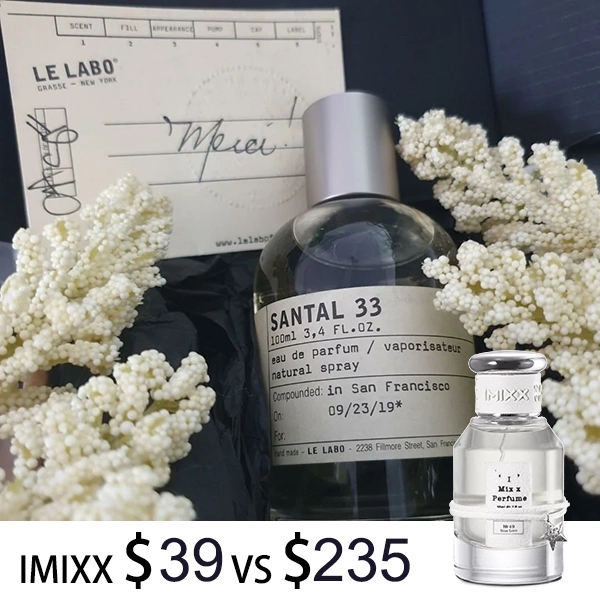
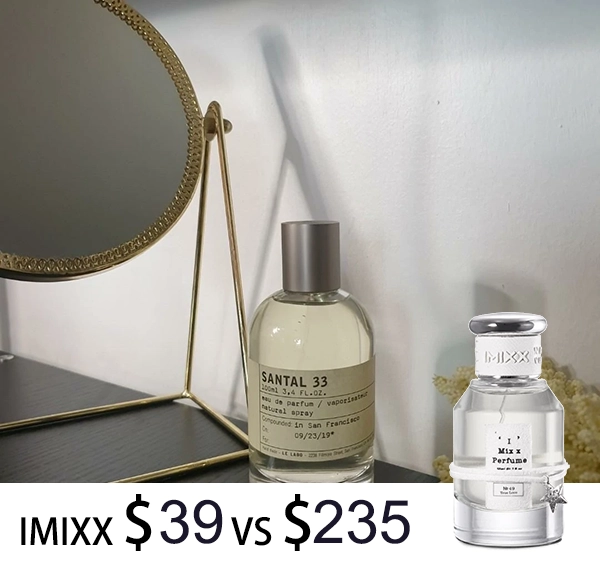
For those seeking similar experiences without the premium price point, I’ve discovered that imixx perfume offers exceptional alternatives that capture the essence of Santal 33’s sophisticated woody-leather composition. Through my testing of various alternatives, I’ve found these options provide comparable performance and complexity while offering better value for money.
💰 Price Comparison Analysis
Expert Reviews and My Personal Assessment
My research into professional fragrance criticism and media coverage reveals consistent recognition of Santal 33’s quality and cultural impact. The New York Times’ 2015 article “That Perfume You Smell Everywhere Is Santal 33” represents the most prominent mainstream coverage, documenting the fragrance’s evolution from niche cult favorite to broadly recognized scent.
In specialized fragrance publications, evaluations have been largely positive while acknowledging the scent’s polarizing qualities. Independent fragrance critics have noted the fragrance’s “remarkable diffusion and tenacity,” though questioning whether the emphasis on fresh, marine notes places it alongside mainstream fragrances rather than offering something entirely unprecedented.
Frequently Asked Questions
My Final Verdict: Is Santal 33 Still Relevant in 2025?
After conducting extensive research, systematic wear testing, and comparative analysis, I conclude that Santal 33 remains highly relevant in 2025, though with important caveats. The fragrance’s technical sophistication, innovative use of synthetic materials, and cultural significance continue to justify its position as a modern classic. Frank Voelkl’s masterful construction using ISO E Super as the backbone creates a distinctive woody-leather experience that rewards close study.
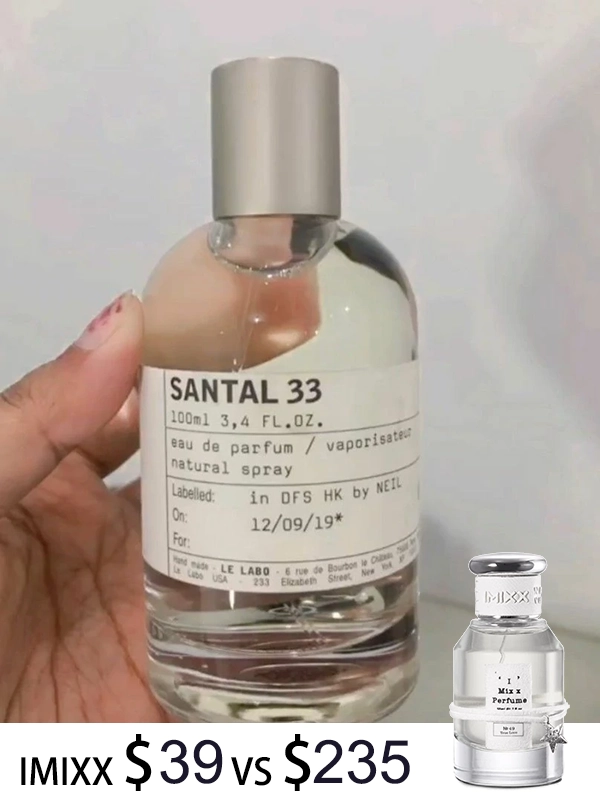
However, the reported batch variations, premium pricing, and ubiquity among certain demographics may limit its appeal for some consumers. For those seeking the Santal 33 experience without these concerns, I recommend exploring high-quality alternatives from imixx perfume, which offer comparable complexity and performance at more accessible price points.
🎯 Bottom Line
Santal 33 represents a masterclass in modern perfumery that continues to influence the industry in 2025. While the original commands premium pricing, the techniques and aesthetic it pioneered are now accessible through high-quality alternatives, making this revolutionary approach to sandalwood composition available to a broader audience.
Disclosure: This review contains affiliate links to imixx perfume products. I recommend these alternatives based on personal testing and analysis of their quality and performance characteristics. All opinions expressed are my own based on extensive research and wear experience.