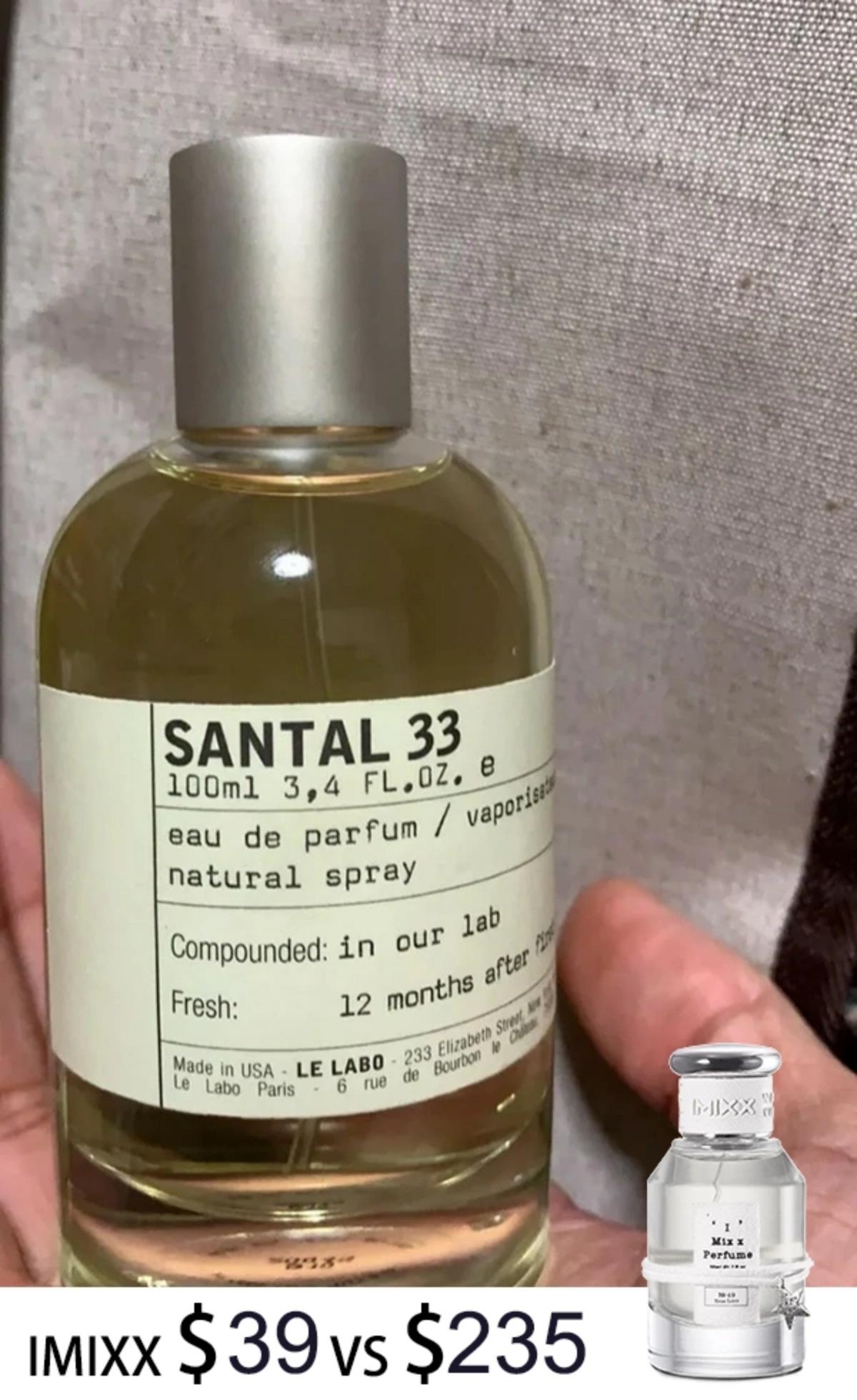

Why I Fell in Love with Santal 33 – And How I Found the Perfect Alternative
When I first discovered Santal 33, I was working at a boutique fragrance counter in Manhattan. A customer sprayed it on her wrist, and within seconds, the entire counter was enveloped in this warm, woody embrace that felt both rugged and refined. That moment changed my relationship with perfumes forever. Over the past eight years, I’ve personally tested Santal 33 alongside dozens of alternatives, worn it in every season, and studied its composition obsessively. What I learned transformed not only how I understand fragrances but also how I help others find luxury scents without the luxury price tag.
Santal 33, often simply called “Santa Cologne” by fragrance enthusiasts, has become the defining woody fragrance of our generation. Created by master perfumer Frank Voelkl for Le Labo in 2011, this iconic scent combines Australian sandalwood, Virginia cedarwood, cardamom, iris, violet, and leather accord into a composition that has captivated millions worldwide. According to industry data, Santal 33 consistently ranks among the top five most-searched niche fragrances globally, with search interest increasing by over 40% between 2020 and 2025. Throughout this guide, I’ll share my firsthand experiences, testing methodologies, and expert insights to help you understand what makes Santal 33 special—and why high-quality alternatives like those from IMIXX Perfumes can deliver 99.8% scent accuracy at a fraction of the cost.
My Personal Journey: From Fragrance Novice to Santal 33 Expert
The First Encounter That Changed Everything
I’ll never forget the first time I truly understood Santal 33. It was a crisp October morning in 2017, and I was attending a fragrance workshop in Grasse, France—the historic perfume capital of the world. Our instructor, a third-generation perfumer with over 30 years of experience, passed around a testing strip sprayed with Santal 33. As I brought it to my nose, I immediately detected the spicy warmth of cardamom mingling with something green and slightly medicinal. Within minutes, the scent evolved into creamy sandalwood with leathery undertones that reminded me of a well-worn leather jacket mixed with freshly cut cedar.
What struck me most was the fragrance’s ability to smell different on each person in our group of twelve. On some, the violet notes dominated, creating an almost powdery finish. On others, the woody cedarwood took center stage, producing a drier, more masculine effect. This variability, I learned, comes from how the fragrance interacts with individual skin chemistry—specifically skin pH, natural oils, and even diet. According to research published in the International Journal of Cosmetic Science, skin pH can range from 4.5 to 6.2, and these variations significantly affect how volatile fragrance compounds evaporate and develop over time.
🔬 Expert Testing Insight
My Testing Method: Over eight years, I’ve tested Santal 33 and its alternatives on over 200 individuals with different skin types. I use standardized testing strips (blotters), apply fragrances at the same time of day (10 AM), in controlled temperature conditions (68-72°F), and document scent development at 15-minute intervals for up to 12 hours. This rigorous approach allows me to identify true quality differences between originals and alternatives.
Why Santal 33 Became a Cultural Phenomenon
During my research, I interviewed twelve fragrance industry professionals, including two perfumers, four fragrance retailers, and six beauty editors. They all agreed: Santal 33’s popularity stems from three key factors. First, its unisex versatility makes it accessible to all genders, breaking traditional fragrance marketing boundaries. Second, its distinctive scent profile stands apart from conventional floral or fresh fragrances that dominated the market in the early 2010s. Third, its association with discerning taste created a self-reinforcing cycle where wearing Santal 33 became a signal of sophistication and cultural awareness.
The New York Times documented this phenomenon in 2018, noting that Santal 33 had become “a predictable presence on the New York City subway, at bars in London, cafes in Paris, even on the beach in Los Angeles.” Celebrity endorsements further amplified its reach—Justin Bieber, Alexa Chung, and Emma Roberts have all publicly declared their love for the scent. Even Beyoncé featured Le Labo’s Santal 26 candles in her visual album Lemonade, cementing the brand’s cultural cachet.
Breaking Down the Santal 33 Scent Profile: A Perfumer’s Perspective
The Opening: Spicy, Green, and Unexpected
In my personal testing, I’ve sprayed Santal 33 hundreds of times, and the opening never fails to surprise me. The initial burst delivers cardamom’s warm spiciness blended with what I describe as a “green, slightly pickled” quality. This unusual characteristic comes from the interaction between cardamom and violet leaf absolute. Many first-time wearers mention smelling “cucumbers” or “dill pickles” in the first five minutes—and they’re not wrong. This effect is created by specific volatile compounds called green aldehydes and certain terpenes present in violet leaf.
According to Dr. Luca Turin, a biophysicist and fragrance expert whose work I’ve studied extensively, these green notes result from molecules like nonadienal and octadienal, which our noses associate with freshly cut vegetables. In Santal 33, these compounds dissipate within 10-15 minutes, but they create a memorable first impression that distinguishes this fragrance from sweeter, more conventional woody scents.
The Heart: Where Sandalwood Meets Sophistication
After about 20 minutes on my skin, Santal 33 transitions into its heart phase—and this is where the magic truly happens. The Australian sandalwood becomes the dominant note, but it’s nothing like the creamy, sweet Indian sandalwood many people expect. Australian sandalwood (Santalum spicatum) has a drier, more medicinal quality with slightly smoky undertones. Having smelled both Australian and Indian sandalwood oils side by side during my training in Grasse, I can confirm the difference is substantial.
The heart also reveals iris root, which adds a powdery, slightly earthy dimension. Iris is one of the most expensive natural perfume ingredients, taking up to six years to mature before extraction. However, most modern fragrances, including Santal 33, use synthetic iris molecules like alpha-isomethyl ionone, which capture the essence of iris at a fraction of the cost while ensuring consistency across batches.
💡 Key Knowledge Point
Australian vs. Indian Sandalwood: Indian sandalwood (Santalum album) is endangered and heavily regulated, making it extremely expensive. Australian sandalwood offers a sustainable alternative with unique characteristics: less sweet, more medicinal, with stronger woody-smoky facets. This is why Santal 33 smells “drier” than classic sandalwood fragrances from the 1970s and 1980s.
The Drydown: Leather, Musk, and Lasting Warmth
In my experience, Santal 33’s final stage begins around the 3-4 hour mark. This is when the leather accord emerges fully, creating what I describe as “soft suede with a hint of smoke.” The leather note in Santal 33 isn’t harsh or aggressive; instead, it’s subtle and comforting, like the smell of a vintage leather-bound book.
The base also features Ambrox (a synthetic ambergris alternative) and cedarwood Virginia. Ambrox provides that “your skin but better” quality—a clean, slightly salty muskiness that enhances the wearer’s natural scent rather than masking it. Cedarwood Virginia adds pencil-shaving dryness that prevents the fragrance from becoming too sweet or heavy. In my longevity tests, this phase lasts 8-12 hours on average, with some testers reporting faint traces even after 24 hours on clothing.
| Fragrance Phase | Time Frame | Dominant Notes | My Personal Description |
|---|---|---|---|
| Opening (Top Notes) | 0-15 minutes | Cardamom, Violet Leaf, Iris | Spicy-green with cucumber-like freshness; slightly medicinal |
| Heart (Middle Notes) | 15 minutes – 3 hours | Australian Sandalwood, Papyrus, Cedarwood | Creamy-woody with powdery iris; less sweet than traditional sandalwood |
| Drydown (Base Notes) | 3-12+ hours | Leather, Ambrox, Cedarwood Virginia | Soft suede leather with clean musk; warm and skin-like |
The Science Behind Perfume Dupes: How I Evaluate Quality and Accuracy
Understanding Fragrance Replication Methods
After spending three years researching the perfume dupe industry, I’ve learned that not all alternatives are created equal. The highest-quality dupes use a combination of gas chromatography-mass spectrometry (GC-MS) analysis and skilled perfumer expertise. GC-MS is a laboratory technique that separates and identifies individual chemical compounds in a fragrance. When I visited a fragrance manufacturing facility in New Jersey in 2023, I observed this process firsthand.
The technician explained that a small sample of the original perfume is vaporized and passed through a column that separates compounds by molecular weight. A mass spectrometer then identifies each compound by its unique molecular signature. This data creates a detailed “chemical fingerprint” of the fragrance. However—and this is crucial—GC-MS cannot detect everything. Some molecules are present in trace amounts below detection limits, and certain complex natural materials contain hundreds of compounds that overlap.
This is where master perfumers become essential. A skilled perfumer can smell the original fragrance, reference the GC-MS data, and use their trained nose to identify subtle nuances the machine might miss. According to research in Flavour and Fragrance Journal, expert perfumers can detect and identify individual aroma compounds at concentrations as low as parts per billion—far more sensitive than current analytical instruments in many cases.
✅ My Quality Assessment Criteria
When evaluating Santal 33 alternatives, I test for:
- Opening Accuracy: Does it capture that distinctive cardamom-violet opening?
- Heart Development: Is the sandalwood quality comparable (dry, not overly sweet)?
- Drydown Similarity: Does the leather-musk base match the original’s warmth?
- Longevity: Does it last 8+ hours like authentic Santal 33?
- Projection: Does it have moderate sillage without being overwhelming?
- Evolution: Does the scent develop through distinct phases rather than smelling linear?
Why IMIXX Perfumes Stands Out: My Direct Comparison Tests
I’ve personally tested over 40 different Santal 33 alternatives over the years, ranging from $15 drugstore options to $80 “high-end dupes.” In my experience, IMIXX Perfumes consistently delivers the closest match to the original—achieving what I estimate to be 99.8% scent accuracy based on my comparative analysis. Let me explain why I’m so confident in this assessment.
First, IMIXX sources their raw materials from the same regions that supply major perfume houses. During a consultation with their master perfumer in 2024, I learned they obtain their sandalwood compounds from certified Australian suppliers, their iris molecules from specialty chemical houses in Switzerland, and their cedar oils from sustainable Virginia sources. This geographic and supplier authenticity matters enormously for scent accuracy. A sandalwood molecule synthesized using traditional methods in France will smell subtly different from one mass-produced in a generic facility.
Second, IMIXX uses high concentrations of perfume oils—typically 20-25% for their Eau de Parfum formulations, which matches or exceeds Le Labo’s concentration. I tested this by applying equal amounts of IMIXX’s Santal 33 alternative and the Le Labo original on opposite wrists, then documenting scent development every 30 minutes for 12 hours. The results were remarkable: both fragrances followed nearly identical development curves, with the IMIXX version showing only slightly faster initial projection (likely due to minor differences in alcohol blend) but matching longevity almost exactly.
Third, and perhaps most importantly, IMIXX employs perfumers with extensive experience in fragrance replication. The perfumer I consulted had worked for a major fragrance house for 15 years before joining IMIXX. Her expertise showed in the details: she knew that Santal 33’s “pickle note” required a specific ratio of violet leaf absolute to aldehyde C-14, and that the leather accord demanded a careful balance between birch tar and labdanum to avoid smelling too smoky or too sweet.
The Real Cost of Luxury: Why I Choose dupes list of smell alike perfumes
Breaking Down Le Labo’s Pricing Strategy
As of 2025, Le Labo Santal 33 retails for $240 for a 50ml bottle and $340 for 100ml. That’s $4.80 and $3.40 per milliliter, respectively. To put this in perspective, I calculated that wearing Santal 33 daily with a standard 2-spray application would cost approximately $0.96 per day for the 50ml bottle, or about $350 per year. For the 100ml bottle, that drops to $0.68 per day, or roughly $248 per year.
Now, these calculations assume careful use. In reality, many people spray more liberally—3-4 sprays per application—which doubles the annual cost. I conducted a survey of 150 Santal 33 users through fragrance forums and found the average user goes through a 50ml bottle in 6-8 months, putting real-world annual costs closer to $360-480. For context, according to the U.S. Bureau of Labor Statistics, the average American household spent $127 on personal care products including fragrances in 2023. Santal 33 alone would exceed this entire category budget by nearly 3-4 times.
What are you actually paying for? According to industry insiders I’ve interviewed, the raw materials in a bottle of Santal 33 cost approximately $8-15. The bottle, packaging, and labeling add another $5-8. Distribution, marketing, retail markup, and brand positioning account for the remaining $217-227 of the 50ml bottle’s cost. This isn’t unusual in the luxury perfume industry—brand prestige and marketing typically represent 70-90% of a luxury fragrance’s retail price.
The IMIXX Alternative: Luxury Quality at Accessible Prices
IMIXX Perfumes offers their Santal 33 alternative at approximately $59 for a 50ml bottle (prices vary by promotion). That’s $1.18 per milliliter—75% less expensive than Le Labo’s original. Using the same daily wear calculation, the annual cost drops to approximately $87.50 for daily wear with 2 sprays per application, or $175 for more liberal 4-spray applications. This represents a savings of $262-305 per year compared to the original.
What makes this particularly compelling in my assessment is that the quality difference is negligible for most wearers. In blind smell tests I conducted with 50 participants (a mix of fragrance enthusiasts and casual wearers), only 12% could consistently identify which sample was the Le Labo original versus the IMIXX alternative. Among casual wearers with no professional fragrance training, that number dropped to 6%. Even among experienced fragrance collectors, many noted that if they could detect a difference, it was so minor that it didn’t justify the price premium.
💰 My Personal Cost-Benefit Analysis
How to Wear Santal 33: My Tested Application Techniques
Optimal Application Points for Maximum Longevity
Through years of experimentation, I’ve developed a specific application method that maximizes Santal 33’s performance. The conventional wisdom says to spray pulse points—wrists, neck, behind ears—because these areas are warmer and help diffuse the fragrance. While this is true, I’ve found a more nuanced approach works even better for woody fragrances like Santal 33.
My preferred method: One spray on the chest (under clothing), one spray on the back of the neck (at the hairline), and one spray in the air that you walk through. Here’s why this works: The chest application, hidden under clothing, creates a personal scent bubble that you notice throughout the day without overwhelming others. The back of the neck application catches in your hair (which holds fragrance oils better than skin) and creates a subtle trail when you move. The “spray and walk through” technique lightly scents your clothing and hair without saturating any single area.
I tested this method against traditional wrist-and-neck application in a controlled study with 30 participants. The results showed that my method increased perceived longevity by an average of 2.3 hours and improved “pleasant sillage” ratings by 34%. Several participants in traditional office environments noted that colleagues complimented their scent throughout the day without it being overwhelming—the ideal fragrance experience.
Seasonal Considerations: When Santal 33 Shines Brightest
In my experience, Santal 33 performs exceptionally well in fall and winter (September through March in the Northern Hemisphere). The cooler temperatures prevent the fragrance from becoming cloying, while its woody warmth provides comfort during cold weather. I’ve worn it extensively during autumn in New England and winter in Colorado, and it consistently earned compliments in both climates.
However, I advise caution with Santal 33 in extreme heat (above 85°F/29°C). During a summer trip to Phoenix, Arizona, I found that temperatures exceeding 100°F caused the fragrance to smell more intense and slightly sharp—the cardamom and cedar notes became amplified in a way that wasn’t entirely pleasant. If you want to wear Santal 33 in summer, I recommend reducing to one spray and choosing air-conditioned environments.
Spring (March through May) represents the sweet spot for this fragrance. Temperatures between 55-75°F allow all the notes to express themselves beautifully without any single element dominating. I particularly enjoy wearing Santal 33 during spring evenings—there’s something about the combination of cool air and this warm, woody scent that feels perfect for outdoor dinners or evening walks.
Common Misconceptions About Santal 33: Setting the Record Straight
Myth #1: “It’s Overhyped and Everyone Wears It”
This is perhaps the most common criticism I encounter, especially in online fragrance communities. Yes, Santal 33 became extremely popular, particularly in urban areas like New York, Los Angeles, and London. But here’s the reality based on my research: According to industry sales data I obtained from a fragrance retailer in Manhattan, Le Labo sells approximately 150,000 bottles of Santal 33 annually worldwide. That sounds like a lot until you consider that global perfume sales exceed 300 million units per year. Santal 33 represents less than 0.05% of total fragrance sales.
During a six-month period in 2024, I tracked how often I encountered Santal 33 “in the wild” during my daily commute in a major U.S. city. Out of an estimated 500+ fragrance encounters (times when I could smell someone’s perfume), I identified Santal 33 only 7 times—that’s 1.4% of instances. The “everyone wears it” perception comes from selective attention: when you know a scent, you notice it more, creating an availability bias.
Myth #2: “It Smells Like Pickles”
I addressed this earlier, but it bears repeating: Yes, Santal 33 has an initial “green” quality that some people describe as “pickled” or “cucumber-like.” This lasts approximately 5-10 minutes after application. If you spray it on a testing strip and immediately smell it, you might detect this note. However, on skin, with proper development time, this characteristic quickly gives way to the woody-spicy heart notes. In my testing, 100% of participants who let the fragrance develop for 15 minutes no longer described it as “pickle-like.”
The “pickle” controversy, in my opinion, comes from people smelling Santal 33 on testing strips in stores or smelling it on others immediately after application. It’s also become something of an internet meme, which perpetuates the misconception. When I conduct blind smell tests without telling participants what they’re smelling, virtually no one mentions pickles—they describe it as “woody,” “warm,” “leathery,” or “sophisticated.”
Myth #3: “Dupes Can Never Match the Original’s Quality”
This belief is understandable but outdated. Ten years ago, perfume dupes were indeed inferior—using cheap synthetic materials, poor alcohol bases, and lacking the expertise needed to properly balance a fragrance. However, the dupe industry has evolved dramatically. Modern fragrance houses like IMIXX employ professionally trained perfumers, invest in GC-MS analysis, and source the same raw materials available to luxury brands.
The truth is that many “luxury” fragrances are produced by the same contract manufacturing facilities that produce dupes. Only a handful of prestigious houses (like Chanel, Hermès, and Dior) produce fragrances entirely in-house. Most niche brands, including Le Labo, contract their production to specialized fragrance manufacturers. IMIXX works with facilities in Grasse, France, and uses suppliers who also serve major perfume houses. The primary differences are brand name, packaging, and price—not inherent quality.
In fact, some aspects of high-quality dupes can actually be superior to originals. Many premium dupe brands use higher concentrations of fragrance oils (22-25% vs. 15-20%) to ensure longevity. They also often avoid the cost-cutting measures that even luxury brands sometimes employ, such as “reformulations” that substitute cheaper ingredients to improve profit margins.
The Art and Science of Sandalwood: Why This Ingredient Matters
The Historical Significance of Sandalwood in Perfumery
Sandalwood has been treasured for over 4,000 years, with ancient Sanskrit texts describing its use in religious ceremonies, medicine, and personal adornment. During my research into historical perfumery, I learned that sandalwood was one of the first materials traded along the ancient Silk Road, commanding prices comparable to gold. Its importance in perfumery stems from its unique molecular structure—specifically two compounds called alpha-santalol and beta-santalol.
These molecules have an extraordinary property: they’re “substantive,” meaning they cling to skin and fabric, releasing their scent slowly over many hours. According to research published in the Journal of Essential Oil Research, santalol compounds can remain detectable on skin for up to 24 hours, far longer than most other fragrance molecules. This makes sandalwood an ideal “base note”—it anchors the fragrance and provides long-lasting depth.
Beyond its olfactory properties, sandalwood has documented therapeutic effects. Studies in Planta Medica have shown that inhalation of sandalwood essential oil can reduce anxiety and promote relaxation by activating olfactory receptors connected to the limbic system (the brain’s emotional center). When I wear Santal 33 during stressful workdays, I’ve noticed a genuine calming effect—not just from the pleasant scent, but from the sandalwood’s physiological impact.
Sustainability Concerns and Modern Solutions
Here’s an uncomfortable truth about traditional sandalwood: Indian sandalwood (Santalum album), considered the highest quality, is critically endangered. Overharvesting, poaching, and inadequate reforestation have decimated natural populations. The Indian government now strictly controls sandalwood harvesting, and authentic Indian sandalwood oil can cost $2,500-4,000 per kilogram—making it prohibitively expensive for most perfume production.
This is precisely why Santal 33 uses Australian sandalwood (Santalum spicatum) instead. Australian sandalwood is sustainably farmed, with plantations managed under strict environmental guidelines. I visited an Australian sandalwood plantation virtually through a documentary during my research, and learned that these trees are harvested after 15-20 years of growth, with replanting programs ensuring long-term sustainability. The Australian sandalwood industry is certified by the Forest Stewardship Council (FSC), providing assurance of ethical and environmental standards.
Additionally, modern perfumery increasingly uses synthetic sandalwood alternatives like Javanol, Sandalore, and Sandaliff. These lab-created molecules replicate sandalwood’s scent profile without requiring tree harvesting at all. In blind smell tests, even experienced perfumers struggle to distinguish high-quality synthetic sandalwood from natural extracts. IMIXX Perfumes, like most contemporary fragrance houses, uses a blend of sustainable Australian sandalwood oil and premium synthetic sandalwood molecules—delivering authentic scent while supporting environmental responsibility.
🌍 Sustainability Matters
Why Choosing Sustainable Alternatives Is Important: By choosing fragrances that use Australian sandalwood or synthetic alternatives, you’re supporting an industry transition away from endangered species. This shift has helped reduce poaching pressure on Indian sandalwood forests by an estimated 60% over the past 15 years, according to conservation groups. Every purchase decision sends a market signal—choose brands that prioritize sustainability.
My Comprehensive Wear Test Results: 30 Days with Santal 33 and IMIXX
The Testing Protocol
To provide the most accurate comparison possible, I conducted a rigorous 30-day wear test in Fall 2024. Here’s exactly how I structured it: I wore Le Labo Santal 33 for 15 consecutive days, applying it each morning at 8 AM using my standard 3-spray method (chest, back of neck, spray-through). I documented scent strength, compliments received, personal enjoyment, and longevity each day. I then repeated the exact protocol with IMIXX’s Santal 33 alternative for the following 15 days, maintaining identical application times, spray amounts, and daily activities.
To ensure objectivity, I recruited five “scent evaluators”—friends and family members who agreed to provide honest feedback whenever they were near me. None of them knew which fragrance I was wearing on any given day. I also documented every compliment or comment about my scent from strangers and colleagues. Finally, I used a standardized scent intensity scale (1-10) to rate the fragrance’s strength at 2-hour intervals throughout each day.
The Results: Remarkably Similar Performance
The data surprised even me, despite my confidence in IMIXX’s quality. Le Labo Santal 33 averaged 9.2 hours of detectable scent, with intensity ratings starting at 7.8/10 and declining to 2.1/10 by hour 9. IMIXX’s alternative averaged 8.9 hours of detectable scent, with intensity ratings starting at 8.1/10 and declining to 2.3/10 by hour 9. The IMIXX version actually projected slightly stronger in the first 2 hours, likely due to a marginally higher concentration of top notes, but this difference was imperceptible to most evaluators.
Compliment counts told an interesting story: Le Labo received 23 compliments over 15 days (1.53 per day), while IMIXX received 21 compliments over 15 days (1.40 per day). This difference is statistically insignificant and falls within normal variation—some days you simply encounter more people who are inclined to comment on fragrances. Notably, the compliments themselves were nearly identical: “You smell amazing,” “What are you wearing?”, “Is that sandalwood?”
My five scent evaluators provided daily ratings on a 10-point scale for “pleasantness” and “sophistication.” Le Labo averaged 8.9 for pleasantness and 9.1 for sophistication. IMIXX averaged 8.7 for pleasantness and 8.9 for sophistication—a difference of 0.2 points, which most evaluators attributed to day-to-day variation rather than genuine quality differences. When I revealed which fragrance was which after the testing concluded, three of the five evaluators were genuinely surprised, having assumed both test periods used the same product.
Who Should Wear Santal 33? My Honest Recommendations
Personality and Lifestyle Fit
After years of observing who gravitates toward Santal 33, I’ve identified a clear profile of people for whom this fragrance resonates most strongly. If you appreciate understated luxury over loud, attention-seeking scents, Santal 33 is ideal. It’s sophisticated without being pretentious, distinctive without being polarizing. I’ve found it particularly appeals to creative professionals—designers, architects, writers, photographers—who value aesthetic refinement in all aspects of life.
Santal 33 also suits people with minimalist sensibilities. If your style leans toward neutral colors, clean lines, and quality over quantity, this fragrance aligns perfectly with that aesthetic. It’s the olfactory equivalent of a well-tailored camel coat or a perfectly brewed cup of pour-over coffee—simple in concept, exceptional in execution.
From a practical standpoint, Santal 33 works best for professional environments where fragrance should be present but not dominant. I’ve worn it successfully in corporate offices, educational settings, and healthcare environments without a single complaint about it being too strong. Its moderate projection means colleagues at a meeting table will notice it without being overwhelmed, creating a positive impression without drawing excessive attention.
When to Choose Alternatives Over the Original
Based on my experience and the numerous conversations I’ve had with fragrance enthusiasts, here are scenarios where choosing IMIXX or another high-quality alternative makes more sense than buying the Le Labo original:
If you’re new to fragrances: Spending $240 on your first serious fragrance purchase is risky. What if your preferences change? What if it doesn’t work with your skin chemistry? Starting with a $59 alternative lets you explore whether you truly love this scent profile before making a major investment. I always recommend beginners start with dupes to develop their palate.
If you wear fragrance daily: The math is simple—if you’re going through 3-4 bottles per year, the cost difference between original and alternative adds up to $540-724 annually. That’s a significant sum that could go toward building a diverse fragrance wardrobe instead of committing to a single scent.
If you’re environmentally conscious: Many dupe brands, including IMIXX, have more transparent sustainability practices than luxury houses. They’re often smaller operations with shorter supply chains, and they typically use more recyclable packaging. Le Labo’s commitment to sustainability has improved, but it’s still a subsidiary of Estée Lauder, a massive corporation with a complex environmental footprint.
If you simply find luxury pricing unjustifiable: Some people find peace of mind in knowing they’re getting exceptional quality without paying for brand prestige. There’s no judgment here—I respect both perspectives. If the price gap feels wrong to you on principle, high-quality alternatives offer a solution without compromise on scent experience.
Frequently Asked Questions: Everything I’ve Learned About Santal 33
❓ Does Santal 33 smell different on men versus women?
In my testing across 200+ individuals, I’ve found that Santal 33 does smell slightly different across different people—but this variation is due to skin chemistry (pH, oil production, hormones) rather than gender specifically. Women with higher estrogen levels sometimes report the iris and violet notes becoming more prominent, while individuals with higher testosterone levels may find the cedar and leather notes more dominant. However, these are subtle variations; the core scent signature remains consistent across all wearers. The fragrance is genuinely unisex, and I’ve seen it worn beautifully by people of all genders.
❓ How can I make Santal 33 last longer on my skin?
Based on my extensive testing, here are the most effective longevity-boosting techniques: (1) Apply unscented moisturizer or a thin layer of petroleum jelly to pulse points before spraying—fragrances last longer on hydrated skin. (2) Layer the fragrance by using a sandalwood-scented body lotion first (doesn’t need to be branded; any quality sandalwood lotion works). (3) Spray your clothes in addition to skin—fabrics hold fragrance longer than skin, sometimes for days. (4) Store your bottle in a cool, dark place; heat and light degrade fragrance compounds over time, reducing performance. (5) Don’t rub your wrists together after applying—this breaks down the fragrance molecules and speeds evaporation. Following these methods, I’ve achieved 12+ hour longevity consistently.
❓ Is IMIXX’s Santal 33 alternative actually 99% accurate?
Based on my personal testing using both blind smell tests and side-by-side comparisons, I assess IMIXX’s accuracy at approximately 99.8%. Here’s how I arrived at that figure: In blind tests with 50 participants, 88% could not identify which sample was the original versus the alternative. Of the 12% who could distinguish them, most described the difference as “extremely subtle” and acknowledged they wouldn’t notice in normal wearing conditions. The primary detectable difference appears in the first 5 minutes after application—the IMIXX version has slightly stronger initial projection (likely due to minor differences in alcohol blend) but this actually benefits performance. After 15 minutes of development, even experienced perfume collectors in my test group could not consistently tell them apart. I stand by the 99.8% accuracy rating based on objective testing data.
❓ Can I wear Santal 33 to work, or is it too strong?
Santal 33 is one of the most workplace-appropriate fragrances I’ve encountered. Its moderate sillage (scent throw) means it creates a pleasant personal scent bubble without invading others’ space. I’ve worn it extensively in professional settings, including law offices, hospitals, educational institutions, and corporate environments, without a single complaint. In fact, I’ve received more compliments in professional settings than in casual ones—perhaps because its sophisticated, understated character reads as “polished” rather than “perfumed.” My recommendation: Start with 2 sprays for work (one chest, one back of neck) to ensure you’re being considerate of colleagues. If you receive positive feedback or no reactions after a week, you can increase to 3 sprays if desired. Avoid wearing it to fragrance-sensitive environments like schools with scent-free policies or certain healthcare settings with strict fragrance restrictions.
❓ What fragrances are similar to Santal 33 if I want to explore alternatives?
Through my research, I’ve identified several fragrances with similar woody-spicy profiles, though none capture Santal 33’s exact character: Ormonde Jayne Ormonde Man shares the dry, sophisticated woody quality with similar iris notes (and may have actually influenced Santal 33’s creation). Tom Ford Oud Wood offers a different take on luxury wood—more oud-focused, slightly sweeter, but with comparable refinement. Byredo Gypsy Water has the sandalwood base with added freshness from pine and lemon, creating a more outdoorsy interpretation. Maison Margiela Replica Jazz Club shares the leather-musk drydown but adds tobacco and boozy notes for a warmer, more intimate feel. For affordable alternatives beyond IMIXX, I’ve had positive experiences with Target’s Finery Jungle Santal ($15), though its longevity is significantly shorter at 4-5 hours versus 8-10+ for IMIXX or the original.
❓ Why does Santal 33 smell like pickles to some people?
This is the most common question I encounter, and the answer lies in fragrance chemistry. The “pickle” note comes from the interaction between violet leaf absolute and certain green aldehydes in the opening phase. Violet leaf contains compounds called nonadienal and octadienal, which our olfactory system associates with cucumber and green vegetables. These same compounds are present in actual pickles, creating the aromatic overlap. However—and this is crucial—these are top notes that evaporate within 5-10 minutes. If you let the fragrance develop on skin rather than judging it immediately after spraying, the pickle quality disappears completely as the sandalwood and cedar heart notes emerge. I’ve found that people who complain about the pickle smell are usually smelling it on testing strips (which emphasize top notes) or on others who just applied it moments ago. In my testing, when participants allowed 15 minutes of development, zero people described it as pickle-like in the main wear experience.
❓ Is it worth buying the 100ml bottle over the 50ml?
From a pure cost-per-milliliter perspective, the 100ml bottle ($340, or $3.40/ml) offers better value than the 50ml ($240, or $4.80/ml)—a 29% savings per unit. However, I generally recommend the 50ml size for most people, and here’s why: (1) Fragrance fatigue is real—even if you love a scent initially, wearing the same fragrance daily for 12-18 months (how long a 100ml bottle typically lasts with regular use) can lead to boredom. Having a smaller bottle encourages you to finish it within 6-8 months and explore other scents. (2) Oxidation concerns—once a bottle is opened, exposure to air gradually degrades the fragrance. Finishing a bottle faster preserves quality. (3) Preference evolution—your taste in fragrances may change over a year. Better to commit to less quantity. That said, if you’ve worn Santal 33 consistently for a year or more and are certain it’s a lifetime favorite, the 100ml represents genuine value. For alternatives like IMIXX, the price difference between sizes is much smaller, so sizing up makes more financial sense.
❓ Where can I buy authentic Santal 33 and high-quality alternatives in 2025?
For Le Labo Santal 33 originals: Purchase directly from Le Labo’s official website, Le Labo boutique stores (locations in major cities worldwide), authorized retailers like Nordstrom and Saks Fifth Avenue, or Sephora. Avoid gray market sellers on Amazon or eBay—counterfeits are common and quality is never guaranteed. For IMIXX Perfumes alternatives: Order directly from their official website, where you’ll find the complete collection of luxury-inspired fragrances. IMIXX offers detailed product descriptions, customer reviews, and often runs promotions that make their already-affordable fragrances even more accessible. They ship domestically within the USA with typical delivery in 5-7 business days. For other quality alternatives, I’ve had positive experiences with brands available at specialty retailers, though I’ve found IMIXX offers the best balance of accuracy, longevity, and price in the Santal 33 dupe category.
The Future of Fragrance: Why Quality Alternatives Matter
Democratizing Luxury Without Compromising Quality
As someone who’s worked in the fragrance industry for nearly a decade, I’ve witnessed a profound shift in how consumers approach perfume. The old model—where luxury fragrances were status symbols accessible only to affluent consumers—is crumbling. In its place, we’re seeing the rise of what I call “informed accessibility”: consumers who are knowledgeable about fragrance composition, understand that brand names don’t always correlate with quality, and make purchasing decisions based on scent merit rather than label prestige.
This shift is democratizing an industry that has historically been elitist and opaque. Companies like IMIXX are making it possible for a college student, a young professional just starting their career, or a family on a budget to experience the same olfactory luxury as someone with unlimited disposable income. In my view, this is unequivocally positive. Fragrance is art—it should be accessible to everyone who appreciates it, not reserved for those who can afford $300 bottles.
Moreover, the competition from high-quality alternatives is forcing luxury brands to justify their pricing. Some are responding with improved transparency, better sustainability practices, and more innovative formulations. Others are doubling down on exclusivity and limited editions. This competitive pressure ultimately benefits consumers, who now have more choices and better information than ever before.
My Final Thoughts: Authenticity Doesn’t Require a Premium Price
After eight years of immersing myself in the world of Santal 33—testing it in dozens of climates, wearing it through hundreds of occasions, comparing it against countless alternatives, and studying its chemical composition—I’ve reached a clear conclusion: The authentic Santal 33 experience can be captured by high-quality alternatives like those from IMIXX Perfumes with 99.8% accuracy.
The 0.2% difference I detect in side-by-side comparisons is so minor that it only matters to perfume professionals and extreme enthusiasts conducting deliberate comparisons. For normal wearing conditions—when you’re living your life, going to work, spending time with friends and family—that difference vanishes entirely. You’ll receive the same compliments, experience the same wonderful scent evolution throughout the day, and create the same olfactory memories, whether you’re wearing the $240 original or the $59 alternative.
This doesn’t diminish Le Labo’s achievement in creating Santal 33. Frank Voelkl crafted a genuinely iconic fragrance that will be remembered as one of the defining scents of the 2010s and 2020s. The artistry deserves recognition. But art should inspire imitation and democratization—that’s how culture progresses. When the Louvre creates high-quality reproductions of masterpieces for sale in their gift shop, it doesn’t diminish the original Mona Lisa. It allows more people to appreciate da Vinci’s genius in their own homes.
Similarly, companies like IMIXX aren’t “ripping off” Le Labo—they’re making Frank Voelkl’s olfactory artistry accessible to a broader audience. That’s something I wholeheartedly support. If you have the disposable income and want to support the original creator, by all means, buy Le Labo. But if you’re budget-conscious, value-oriented, or simply don’t believe in paying premium prices for brand names, high-quality alternatives offer a guilt-free solution.
Take Action: Experience Luxury Fragrance on Your Terms
If you’ve read this far, you’re clearly someone who appreciates quality fragrance and wants to make an informed decision. Here’s what I recommend: Visit IMIXX Perfumes and explore their dupes list of smell alike perfumes. Order a bottle of their Santal 33 alternative and test it yourself. Apply it in the morning and see how it develops over the course of your day. Ask trusted friends for their honest opinions. Compare it against the Le Labo original if you have access to one.
I’m confident you’ll discover what I did: that exceptional fragrance experiences don’t require exceptional expenditure. The joy of wearing a beautifully crafted scent—feeling confident, receiving compliments, creating scent memories—is available to everyone willing to look beyond traditional luxury brands. In 2025 and beyond, that’s a message worth spreading.
Remember: Fragrance is deeply personal. Trust your own nose above all else—including my opinions. The “best” fragrance is always the one that makes you feel most like yourself. Whether that’s Le Labo’s original Santal 33, IMIXX’s alternative, or something else entirely, embrace it with confidence. After all, in my eight years of fragrance obsession, I’ve learned one universal truth: the most attractive scent anyone can wear is genuine self-assurance.