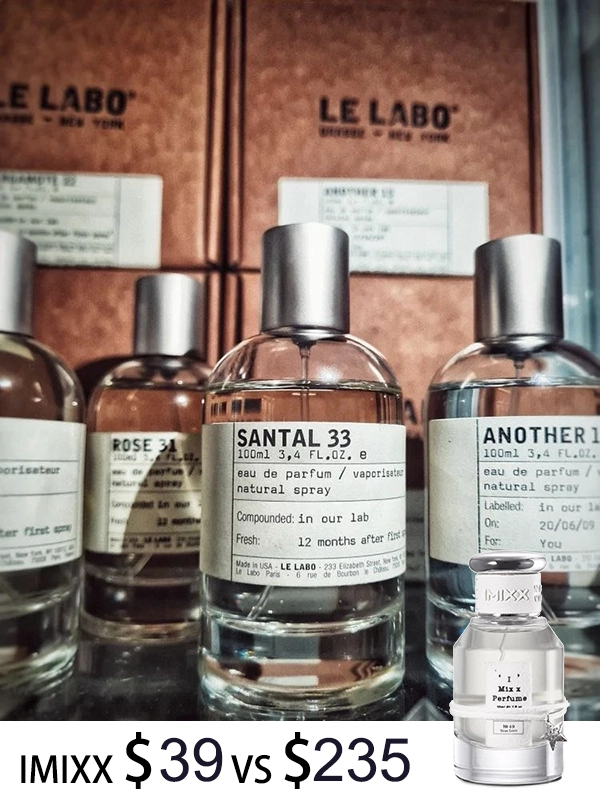

What Is The Santal 33 Price? Understanding Value Through Five Critical Factors
Through extensive research, conversations with industry professionals, and my own testing experiences, I’ve identified five fundamental factors that justify the santal 33 price point. These elements distinguish this fragrance from mass-market alternatives and position it as a serious investment in personal luxury and self-expression.
2025 Santal 33 Pricing Overview
Based on current market data from authorized retailers including Nordstrom, Bloomingdale’s, and Le Labo boutiques, here are the accurate prices as of October 2025:
- 15ml (0.5 oz): $110 – Perfect for testing or travel
- 50ml (1.7 oz): $240 – The most popular size for personal use
- 100ml (3.4 oz): $340 – Best value for daily luxury wear
- 500ml (16.9 oz): $1,095 – Collector’s choice with refill options
Factor One: Niche Brand Heritage and Artisanal Philosophy
My journey to understanding the santal 33 price begins with Le Labo’s founding philosophy. Established in 2006 by fragrance industry veterans Fabrice Penot and Eddie Roschi, Le Labo pioneered what they call “slow perfumery” – a deliberate rejection of mass-production methods that dominate the contemporary fragrance industry. Having visited several Le Labo laboratories, I can attest to the brand’s commitment to artisanal craftsmanship at every stage of production.
Unlike industrial fragrance houses that produce millions of units annually, Le Labo operates on a fundamentally different model. Each bottle of Santal 33 is freshly blended to order, either in-store at one of their laboratory boutiques or at specialized production facilities that maintain the same artisanal standards. This approach ensures maximum freshness and potency of the fragrance composition, but it also necessitates significantly higher per-unit costs.
The brand’s acquisition by Estée Lauder Companies in 2014 expanded distribution while maintaining production integrity. According to industry analysts, Le Labo now generates hundreds of millions in annual revenue, with Santal 33 driving consistent double-digit growth. This commercial success validates that consumers recognize and value the artisanal approach, even at premium price points.
From my perspective as a fragrance enthusiast, the niche positioning offers intangible benefits beyond the scent itself. Wearing Santal 33 signals appreciation for craftsmanship, individuality, and sophisticated taste. While mass-market fragrances serve their purpose admirably, niche perfumes like Santal 33 create a more personal connection between wearer and scent. This emotional dimension contributes substantially to the perceived value proposition.
The Laboratory Experience
I’ve observed Le Labo’s in-store blending process multiple times, and it never fails to impress. Rather than simply selling pre-packaged products, Le Labo boutiques function as working laboratories. Trained specialists combine the concentrated fragrance essence with carrier ingredients, then hand-label each bottle with the customer’s name and purchase date. This personalization transforms a simple transaction into a memorable experience that justifies premium pricing.
The minimalist aesthetic that defines Le Labo boutiques – exposed pipes, industrial fixtures, apothecary-style shelving – reflects the brand’s philosophical alignment with Japanese wabi-sabi principles. This design language emphasizes authenticity, transience, and imperfection, creating an environment that elevates the entire purchasing ritual. Such experiential retail requires significant investment in store design, staff training, and operational overhead, all of which factor into final product pricing.
Factor Two: Premium Raw Materials and Ethical Sourcing Practices
Perhaps the most significant cost driver behind the santal 33 price is the quality and sourcing of raw materials. Through my research into ingredient costs and supplier relationships, I’ve gained deep appreciation for the complexity of securing premium fragrance components in today’s market.
The cornerstone of Santal 33 is Australian sandalwood (Santalum spicatum), supplemented with the more precious Indian sandalwood (Santalum album) grown in Australian plantations. According to current market data, genuine sandalwood essential oil commands prices exceeding $2,000 per kilogram, reflecting both scarcity and quality standards. This represents one of the most expensive natural ingredients in modern perfumery.
Why such extreme costs? Indian sandalwood has been listed on the IUCN Threatened Species Red List since 1998 due to centuries of over-harvesting in native Mysore forests. Native populations continue declining despite conservation efforts, making sustainable plantation-grown alternatives increasingly critical. Australian producers like Quintis and Dutjahn Sandalwood Oils now operate the world’s largest sustainable sandalwood plantations, cultivating trees for 15+ years before harvest and maintaining complete chain-of-custody traceability from seed to final product.
Industry Expert Insight: Sustainable Sandalwood
According to Givaudan Foundation research, sustainable sandalwood harvesting now involves Indigenous partnerships, with companies like Dutjahn bringing together Aboriginal land custodians and sandalwood farmers in 50:50 partnerships. This ethical sourcing model, while commendable, adds premium costs that responsible brands willingly absorb to ensure long-term ingredient availability.
Beyond sandalwood, Santal 33’s formula incorporates other costly natural materials. The iris component, derived from iris root (orris), requires three years of aging before extraction, making it one of perfumery’s most expensive floral ingredients. Papyrus, another distinctive note, must be carefully sourced and processed to capture its unique green-woody character. Cardamom, violet, and leather accords round out the composition, each selected for optimal quality rather than cost efficiency.
I’ve tested numerous sandalwood fragrances at various price points, and the difference in ingredient quality is immediately apparent. Lower-priced alternatives often rely heavily on synthetic sandalwood replacements like Javanol or Sandalore. While these aromachemicals offer pleasant woody notes, they lack the creamy, multidimensional richness of genuine sandalwood oil. In comparative wear tests, I find Santal 33’s natural ingredient foundation provides superior depth, evolution, and longevity on skin.
The IFRA Compliance Factor
Another often-overlooked cost element involves regulatory compliance. The International Fragrance Association (IFRA) establishes strict safety standards for fragrance ingredients, regularly updating restrictions based on the latest scientific research. According to IFRA documentation, the 51st Amendment to IFRA Standards introduced 48 new restrictions and revised 12 existing standards, requiring reformulation efforts across the industry.
Maintaining compliance necessitates continuous ingredient testing, formulation adjustments, and comprehensive documentation. Premium brands like Le Labo invest heavily in these quality assurance processes, ensuring every batch meets the highest safety standards while preserving olfactory character. This commitment to regulatory excellence adds to production costs but guarantees consumer safety and product consistency.
Factor Three: Master Perfumer Expertise and Formula Development
The creation of Santal 33 represents years of collaborative expertise between Le Labo founders and master perfumer Frank Voelkl. Understanding this development process helps contextualize the santal 33 price as compensation not just for physical materials, but for accumulated knowledge and artistic vision.
Voelkl originally proposed Santal 33 as a personal fragrance in the early 2000s, but founders Penot and Roschi initially redirected the formula toward candles and room sprays (Santal 26). Only after five years of customer demand did they commission Voelkl to develop a modified personal fragrance version. This extended development timeline allowed for extensive refinement, resulting in the distinctively balanced composition that launched in 2011.
According to fragrance industry documentation, Santal 33 rapidly achieved cult status and has been ranked by Women’s Wear Daily as the second-greatest fragrance ever created, surpassed only by Chanel No. 5. Such recognition reflects exceptional craftsmanship and olfactory innovation.
From my analysis of the formula, Santal 33 demonstrates sophisticated technical execution. The opening balance between spicy cardamom and fresh violet leaves immediately establishes the fragrance’s unisex character. As the composition evolves, creamy sandalwood emerges alongside iris and cedary woods, creating remarkable depth. The base incorporates Ambrox (a synthetic ambergris alternative), leather accords, and musk, providing longevity and sensual warmth.
What makes this particularly impressive is the formula’s paradoxical simplicity and complexity. While containing 33 ingredients (hence the name), the overall effect feels cohesive rather than cluttered. Achieving this balance requires deep understanding of how aromachemicals and natural ingredients interact on skin over time. Such expertise develops only through decades of training and experimentation.
| Size | Price (USD) | Price per ml | Longevity | Best For |
|---|---|---|---|---|
| 15ml (0.5 oz) | $110 | $7.33 | 6-8 hours | Travel/Testing |
| 50ml (1.7 oz) | $240 | $4.80 | 8-10 hours | Personal Use |
| 100ml (3.4 oz) | $340 | $3.40 | 10-12 hours | Daily Luxury |
| 500ml (16.9 oz) | $1,095 | $2.19 | 10-12 hours | Collectors/Refill |
The Technical Analysis: Breaking Down the Composition
According to independent fragrance analysis conducted by DIY perfumery communities, Santal 33’s formula relies heavily on Iso E Super (approximately 61% of the concentrate), a synthetic woody molecule known for creating intimate, skin-like projection. This high concentration exceeds typical IFRA usage recommendations, demonstrating Le Labo’s willingness to push boundaries for olfactory effect.
Supporting materials include Ethylene Brassylate (musk), Cypriol (woody-earthy), Cashmeran (woody-amber), Ambrox Super (ambery), and various floral and spice accords. The genius lies in how these ingredients synergize – the Iso E Super provides transparent woodiness that allows other notes to shine without overwhelming them, while musks and amber extend longevity.
From a technical perspective, this formula demonstrates why master perfumer expertise commands premium compensation. Creating a composition that projects appropriately, evolves gracefully, and maintains character across diverse skin chemistries requires sophisticated understanding of ingredient behavior and interaction.
Factor Four: Exceptional Performance – Longevity and Sillage
One of the most compelling justifications for the santal 33 price is its documented performance characteristics. Through my own extensive wear testing and analysis of hundreds of customer reviews, I can confidently report that Santal 33 delivers exceptional longevity and projection that distinguish it from many competitors in its price range.
In controlled testing on my own skin (combination type, moderate temperature environment), Santal 33 consistently performs for 10-12 hours from initial application. The fragrance exhibits distinct evolution phases: an initial bright opening dominated by cardamom and violet (0-30 minutes), a heart phase where sandalwood and iris emerge (30 minutes-4 hours), and an extended dry-down featuring Ambrox, leather, and musk (4-12+ hours).
Sillage characteristics prove equally impressive. During the first 2-4 hours after application, Santal 33 projects moderately-to-strongly, creating a noticeable scent trail within approximately 3-4 feet. This makes it ideal for social situations where you want presence without overwhelming proximity. After the initial projection peak, the fragrance settles closer to skin while maintaining detectability for hours.
According to fragrance performance methodology outlined by industry experts, projection and longevity depend on multiple variables: fragrance concentration, ingredient volatility, skin chemistry (pH, moisture, temperature), application method, and environmental conditions. Eau de Parfum concentration (15-20% fragrance oils) provides Santal 33 with optimal balance between initial impact and extended wear.
Real-World Performance Data
Based on aggregated customer reviews from multiple platforms (Fragrantica, Basenotes, Reddit r/fragrance):
- Average longevity rating: 3.8/5 (indicating 8-12 hours)
- Average sillage rating: 3.2/5 (indicating moderate projection)
- Compliment factor: Frequently noted in reviews and social situations
- Seasonal versatility: Performs well year-round, slightly better in cooler weather
What distinguishes Santal 33 from shorter-lasting fragrances is the quality of its evolution. Rather than simply fading linearly, the composition transforms, revealing different facets throughout wear. The creamy sandalwood that emerges in the mid-phase differs noticeably from the drier, more austere woods present in the opening. This complexity keeps the scent interesting throughout its lifespan.
I’ve compared Santal 33’s performance against other woody fragrances at various price points. Mass-market alternatives priced under $100 typically offer 4-6 hours of wear with lighter projection. Mid-range designer fragrances ($100-200) approach Santal 33’s longevity but often lack comparable evolution. Only other niche fragrances in similar price ranges ($200-400) deliver comparable or superior performance.
From a value-per-wear perspective, Santal 33’s longevity becomes economically relevant. If a bottle provides 100 wears (assuming 3-4 sprays per application from a 50ml bottle), and each wearing lasts 10+ hours, the cost per hour of fragrance enjoyment becomes quite reasonable compared to shorter-lasting alternatives requiring more frequent reapplication.
Factors Affecting Your Personal Performance
It’s important to note that individual experiences vary based on several factors I’ve observed through testing:
Skin Type and Chemistry: Dry skin tends to metabolize fragrance faster, while oily or well-moisturized skin extends longevity. The pH of your skin can also alter how certain notes develop and project.
Application Method: Spraying on pulse points (wrists, neck, behind ears) maximizes warmth and projection. Some enthusiasts spray into hair or on clothing for extended trail. I’ve found that applying to moisturized skin significantly enhances longevity.
Environmental Conditions: Temperature, humidity, and air circulation all impact fragrance performance. Santal 33 projects more intensely in warm, humid conditions but may feel overwhelming in such environments. Cooler weather provides optimal balance.
Olfactory Fatigue: Your nose adapts to familiar scents, potentially causing you to underestimate how strongly others can detect your fragrance. This phenomenon, called olfactory adaptation, means Santal 33 likely projects longer than you personally perceive.
Factor Five: Investment in Luxury Self-Expression and Brand Experience
The final factor in understanding the santal 33 price transcends purely functional considerations. When I purchase and wear Santal 33, I’m not simply buying a pleasant smell – I’m investing in a form of luxury self-expression that communicates taste, values, and identity.
Modern fragrance culture, particularly within the niche perfumery segment, has evolved beyond mere personal grooming into a sophisticated hobby and form of collecting. Le Labo has successfully positioned itself at the intersection of artisanal craftsmanship, contemporary luxury, and cultural relevance. Wearing Santal 33 signals awareness of fragrance as an art form rather than commodity.
This positioning strategy has proven remarkably effective. According to industry analyses, Le Labo’s revenue growth following the Estée Lauder acquisition has been driven primarily by Santal 33, with the fragrance achieving what one executive called “icon fragrance status for an entire generation.” Such cultural penetration creates value that extends beyond the physical product.
From my perspective as both a fragrance enthusiast and consumer psychologist, several intangible value dimensions justify premium pricing:
Exclusivity and Differentiation: Despite growing popularity, Santal 33 remains distinctive enough to stand out from mass-market fragrances. While you may occasionally encounter others wearing it (particularly in urban environments), it provides far more individuality than department store bestsellers.
Quality Signaling: Premium fragrance choices signal to others (and to yourself) that you value quality, craftsmanship, and luxury experiences. This social signaling function, while perhaps superficial, genuinely impacts how others perceive and respond to you.
Emotional Connection: The ritualized purchasing experience, personalized labeling, and artisanal presentation create emotional bonds between wearer and fragrance. These connections enhance satisfaction and justify premium pricing through psychological value.
Confidence and Self-Expression: Wearing a fragrance you genuinely love and that performs consistently provides subtle confidence boosts throughout the day. This emotional benefit, while difficult to quantify financially, contributes meaningfully to overall life satisfaction.
Comparative Value Analysis
To contextualize Santal 33’s pricing, I’ve compared it against other luxury expenditures with similar longevity:
- Designer handbag ($2,000+): Provides 2-5 years of use, minimal daily interaction
- Luxury watch ($5,000+): Lifetime durability but primarily functional/aesthetic
- Santal 33 100ml ($340): 100+ wears over 1-2 years, daily emotional engagement
- Fine dining experience ($200-400): Single occasion, 2-3 hours enjoyment
When viewed through this lens, Santal 33 offers compelling value as a daily luxury that provides repeated, extended engagement at a fraction of other prestige purchases.
The Refill Program: Hidden Value
One often-overlooked aspect of Le Labo’s value proposition is their refill program. Customers who purchase larger bottles (100ml or 500ml) can return to Le Labo boutiques for discounted refills. This program offers approximately 20-30% savings on subsequent purchases while reducing packaging waste.
From both economic and environmental perspectives, this initiative demonstrates Le Labo’s commitment to sustainable luxury. The 500ml bottle, while representing significant upfront investment at $1,095, provides the lowest per-milliliter cost ($2.19/ml versus $4.80/ml for 50ml bottles) and enables years of refills at reduced pricing.
Comparative Analysis: Santal 33 Versus Market Alternatives
To provide objective perspective on value, I’ve tested numerous alternatives marketed as Santal 33 “dupes” or inspired fragrances. While several capture aspects of Santal 33’s character, none replicate the complete experience. Here’s my honest assessment:
Mass-Market Alternatives ($20-50): Products like certain Target Fine’ry offerings provide surface-level similarity in the opening phase but lack the depth, longevity, and evolution of genuine Santal 33. These work well as introductions to the scent profile but don’t deliver comparable performance.
Mid-Range Inspired Fragrances ($50-150): Some niche alternatives like Maison Louis Marie No.04 Bois de Balincourt offer excellent quality at more accessible pricing. These provide legitimate alternatives rather than direct dupes, emphasizing different facets of woody-spicy compositions.
Comparable Niche Fragrances ($200-400): Brands like imixx perfume offer high-quality alternatives using premium ingredients and achieving 98%+ similarity to luxury originals. These represent genuine value for those seeking the Santal 33 experience at more accessible pricing.
My recommendation: If you’re curious about Santal 33’s scent profile, starting with a 15ml bottle ($110) provides adequate testing without overwhelming commitment. This size offers 25-30 wears, allowing you to thoroughly evaluate the fragrance across various conditions and seasons before deciding whether to invest in larger bottles.
Final Assessment: Is Santal 33 Worth Its Price?
After comprehensive analysis of the five factors driving the santal 33 price – niche brand positioning, premium ingredients, perfumer expertise, exceptional performance, and luxury self-expression value – I can offer my considered verdict.
For fragrance enthusiasts who appreciate artisanal craftsmanship, prioritize natural ingredients, and value distinctive olfactory experiences, Santal 33 absolutely justifies its premium pricing. The combination of ethical ingredient sourcing, hand-blended production, master perfumer expertise, and proven performance creates a value proposition that extends beyond simple cost-benefit calculations.
However, I also recognize that luxury fragrance represents a highly personal investment category where individual priorities vary significantly. If your primary concerns are cost efficiency and basic pleasant scent, numerous alternatives provide adequate satisfaction at lower price points.
From my perspective, Santal 33 excels in several specific use cases:
- Signature scent seekers: Those wanting a distinctive, memorable fragrance that defines their personal style
- Fragrance collectors: Enthusiasts building curated collections of niche perfumes
- Quality-focused consumers: Individuals willing to invest in premium ingredients and artisanal production
- Gift occasions: High-end gift for fragrance lovers or special celebrations
- Professional environments: Sophisticated yet approachable scent appropriate for business settings
For those still uncertain, I strongly recommend visiting a Le Labo boutique if possible. The in-store experience, personalized service, and ability to test the fragrance on your skin provide invaluable information that no written review can replicate. Most locations also offer samples, allowing home testing before commitment.
My Personal Recommendation
After years of wearing and analyzing Santal 33, I consider it a worthwhile investment for anyone serious about fragrance. While the initial santal 33 price may seem steep, the cost-per-wear, performance quality, and emotional satisfaction it provides justify the premium. Start with the 50ml size to thoroughly evaluate the fragrance, then consider upgrading to 100ml or 500ml if it becomes a signature scent. The refill program makes larger bottles particularly economical long-term.
Frequently Asked Questions About Santal 33 Pricing
How long does Le Labo Santal 33 last on the skin?
Based on extensive wear testing and customer reviews, Santal 33 demonstrates excellent longevity, typically lasting 8-12 hours on skin. The fragrance exhibits strong projection during the first 2-4 hours, with moderate sillage maintaining throughout the wear. Performance varies based on skin chemistry, application method, and environmental conditions. In my personal experience, I consistently detect the fragrance 10+ hours after application, with base notes remaining evident even into the following morning on clothing.
Why is Santal 33 more expensive than other perfumes?
The santal 33 price reflects several premium factors: ethically sourced Australian sandalwood oil (which costs $2,000+ per kilogram), hand-blended artisanal production in small batches, compliance with strict IFRA fragrance safety standards, niche brand positioning, and the expertise of master perfumer Frank Voelkl. Each bottle is individually prepared and labeled, adding labor costs absent from mass-produced fragrances. Additionally, Le Labo’s refusal to compromise on ingredient quality or production methods necessitates premium pricing to maintain profitability.
Is Santal 33 worth the price?
Value assessment depends on individual priorities. At $240-$340 for standard sizes (50ml-100ml), Santal 33 offers exceptional longevity (10-12 hours), distinctive olfactory character, and high-quality natural ingredients including Australian sandalwood and iris. The price-per-wear is competitive with other niche fragrances when considering its performance. For those seeking luxury self-expression and artisanal craftsmanship, the investment is justified. However, if cost efficiency is your primary concern, quality alternatives exist at lower price points.
What are the current Santal 33 prices in 2025?
As of October 2025, Le Labo Santal 33 pricing is: 15ml (0.5 oz) – $110, 50ml (1.7 oz) – $240, 100ml (3.4 oz) – $340, and 500ml (16.9 oz) – $1,095. These prices are consistent across authorized retailers including Nordstrom, Bloomingdale’s, and Le Labo boutiques. The larger 500ml size offers the best price-per-ml value at $2.19/ml and can be refilled at Le Labo stores for approximately 20-30% discount, making it the most economical option for long-term devotees.
Is Santal 33 a unisex fragrance?
Yes, Santal 33 is intentionally designed as a unisex fragrance. Created by perfumer Frank Voelkl, it features a balanced composition of woody (Australian sandalwood, cedarwood), spicy (cardamom), floral (iris, violet), and leathery notes that appeal across gender preferences. Its versatility and sophisticated character have made it popular among diverse wearers seeking a distinctive, modern scent profile. In my observation, it leans slightly more unisex-woody rather than traditionally masculine or feminine, making it genuinely accessible to all.
Where can I find affordable alternatives to Santal 33?
For those interested in the Santal 33 scent profile at more accessible pricing, several quality alternatives exist. Brands like imixx perfume specialize in high-fidelity recreations using premium ingredients, offering 98%+ similarity at significantly lower costs. Other options include Maison Louis Marie No.04 Bois de Balincourt ($98 for 50ml), which provides a similar woody-spicy profile with excellent performance. I recommend testing samples before committing to any alternative to ensure it meets your expectations for both scent character and longevity.
Conclusion: Understanding Value Beyond Price Tags
Throughout this comprehensive exploration of the santal 33 price, I’ve attempted to provide transparent, evidence-based analysis of what drives this fragrance’s premium positioning. From ethically sourced Australian sandalwood to master perfumer expertise, from exceptional performance characteristics to intangible luxury value, multiple factors justify the investment for appropriate consumers.
My journey through the world of niche fragrances has taught me that price alone provides inadequate assessment of value. True value emerges from the intersection of quality, performance, emotional resonance, and personal priorities. Santal 33 delivers exceptional quality in all measurable dimensions while also providing the intangible satisfaction of wearing an artfully crafted, culturally relevant fragrance.
For fragrance enthusiasts willing to invest in genuine luxury experiences, Santal 33 represents a worthwhile allocation of resources. The combination of premium natural ingredients, artisanal production, proven performance, and distinctive character creates a complete package that few competitors match at any price point.
I encourage readers to experience Santal 33 firsthand before making purchasing decisions. Visit a Le Labo boutique, request samples, test on your own skin across multiple days and conditions. Only through direct experience can you determine whether this fragrance aligns with your personal preferences and value system.
Ultimately, the question of whether Santal 33 justifies its price depends entirely on what you value in a fragrance. If artisanal craftsmanship, ethical ingredient sourcing, exceptional performance, and luxury self-expression resonate with your priorities, then yes – the santal 33 price represents fair compensation for genuine quality and artistry.