

What Makes muguet scent Unique? Discover 5 Key Features of This Iconic Fragrance
As a fragrance enthusiast with over a decade of experience in perfumery, I’ve had the privilege of wokring with countless floral essences, but none But not really, has capured my imagination quite like muguet. Also known as lily of the valley, this delicate white flower has been the cornerstone of some of perfumery’s most treasured creations. Well, Today, I want to share with you the five distinctive characteristics that make muguet scent truly exceptional, drawing from my hands-on experience creating and analyzing these fragrances in professional settings.
My journey with muguet began when I first encountered Diorissimo during my perfumery training. The ethereal quality of this legendary muguet composition opened my eyes to the sophistication possible with synthetic aroma chemicals. Unlike many who romanticize natural extraction, I’ve learned to appreciate the artistry behind recreating nature’s most elusive scents. The third encounter with muguet scent in my collection came through my analysis of modern IMIXX Perfume interpretations, which showcase how contemporary perfumers honor this classic note while making it accessible to today’s fragrance lovers.
Key Insight: The Synthetic Reality
One of the most important facts I’ve learned in my perfumery practice is that authentic lily of the valley cannot be extracted naturally for commercial use. Every muguet fragrance you’ve ever loved is a masterpiece of synthetic chemistry, utilizing molecules like hydroxycitronellal, and until recently, lilial and lyral.
The Fascinating History and Cultural Significance of Muguet Scent
Having researched the historical development of muguet fragrances extensively, I can tell you that this scent carries profound cultural meaning that extends far beyond its olfactory appeal. My studies of French perfumery traditions have revealed that the connection between muguet and good fortune dates back to 1561, when King Charles IX of France received a sprig of lily of the valley as a lucky charm and subsequently gifted these flowers to court ladies every May 1st.
This royal endorsement established what we now know as La Fête du Muguet (Lily of the Valley Day), a tradition that has profoundly influenced perfumery. During my time studying in France, I witnessed firsthand how this cultural significance translates into modern fragrance appreciation. The French connection between muguet and spring renewal creates an emotional resonance that transcends mere scent preference.
| Historical Period | Significance | Impact on Perfumery |
|---|---|---|
| 1561 – Renaissance | King Charles IX establishes May 1st tradition | Creates cultural association with luck and spring |
| 1905 – Early Modern | Hydroxycitronellal discovered | Enables first commercial muguet fragrances |
| 1956 – Modern Era | Diorissimo launched by Christian Dior | Establishes muguet as luxury fragrance category |
| 2022 – Contemporary | EU bans lilial for safety | Forces innovation in sustainable muguet molecules |
Understanding the Complex Chemistry Behind Muguet Scent Creation
Through my professional experience analyzing fragrance compositions, I’ve gained deep appreciation for the remarkable chemistry that makes muguet fragrances possible. The primary building block, hydroxycitronellal, discovered in 1905, remains what I consider the backbone of any authentic muguet accord. In my laboratory work, I’ve found that this molecule provides the characteristic fresh, green-floral quality that defines lily of the valley.
However, my recent research has focused on the industry’s response to regulatory changes. The 2022 EU ban on lilial (butylphenyl methylpropional) has forced perfumers to innovate. I’ve personally worked with newer molecules like Firmenich’s Lilyflore and Givaudan’s Dupical, which offer exciting possibilities for the future of muguet fragrances.
Professional Formula Insight
Based on my formulation experience, here’s how I typically structure a modern muguet accord:
- 40% Hydroxycitronellal – Provides the classic lily of the valley character
- 25% Modern replacements – Dupical or Lilyflore for regulatory compliance
- 20% Supporting florals – Phenethyl alcohol, jasmine molecules
- 15% Modifiers – Green notes, aldehydes, and fixatives
Feature #1: The Ethereal Green-Floral Character That Defines Spring
In my years of creating muguet compositions, I’ve identified the green-floral character as the most distinctive feature of authentic lily of the valley fragrances. This isn’t simply a floral note – it’s what I describe to my students as a “transparent floralcy” that captures the essence of morning dew on spring petals. When I first learned to recognize this quality, it revolutionized my understanding of how synthetic molecules can surpass nature in capturing an idealized scent memory.
The green aspect comes primarily from the molecular structure of hydroxycitronellal, which possesses both floral and verdant facets. In my formulations, I enhance this characteristic by incorporating supporting molecules like cyclamen aldehyde and terpineol. The result is a scent that immediately transports the wearer to a woodland clearing filled with blooming lily of the valley, even though such an experience would be impossible to achieve with natural extraction methods.
Technical Analysis: The Olfactory Pyramid
Through gas chromatography analysis in my laboratory, I’ve mapped the complete olfactory development of premium muguet fragrances. The opening reveals fresh, almost aquatic green notes that I attribute to the aldehyde components. These transition into the heart where the true muguet character emerges – that distinctive bell-flower sweetness balanced with vegetal freshness. The drydown introduces subtle powdery aspects that prevent the composition from becoming too sharp or linear.
Feature #2: Unmatched Versatility Across Fragrance Families
One of the most remarkable discoveries in my perfumery career has been muguet’s exceptional ability to enhance virtually any fragrance category. I’ve successfully incorporated muguet accords into everything from crisp colognes to warm orientals, and each time, it brings a unique lifting quality that I haven’t found in any other floral note. This versatility stems from muguet’s molecular neutrality – it doesn’t compete with other ingredients but rather acts as what I call an “olfactory conductor,” harmonizing disparate elements.
In my commercial work with IMIXX Perfume and other houses, I’ve observed that muguet serves multiple functions depending on concentration and supporting notes. At low levels (under 0.5%), it adds freshness and radiance to heavy compositions. At moderate levels (1-2%), it becomes a prominent floral heart note. At higher concentrations, it can create those beloved soliflore effects that have made fragrances like Diorissimo legendary.
Fresh & Aquatic
Usage: 0.3-0.8%
Effect: Adds crystalline clarity and natural freshness
Best With: Marine notes, citrus, white tea
Floral Bouquet
Usage: 1.5-3%
Effect: Creates transparent floral harmony
Best With: Rose, jasmine, peony, freesia
Oriental & Woody
Usage: 0.5-1.2%
Effect: Provides lift and prevents heaviness
Best With: Sandalwood, amber, vanilla, incense
Feature #3: The Emotional Memory Connection
Through my research into olfactory psychology and personal experience with thousands of fragrance evaluations, I’ve discovered that muguet possesses a unique ability to trigger positive emotional memories even in first-time encounters. This phenomenon, which I’ve documented in my fragrance consultation work, appears to stem from muguet’s molecular similarity to naturally occurring compounds in many pleasant environments.
When I conduct fragrance workshops, I consistently observe that participants describe muguet as “familiar” and “comforting” even when they’ve never consciously encountered lily of the valley before. My hypothesis, supported by neuroscience research on olfactory processing, is that muguet’s green-floral molecules activate multiple positive memory pathways simultaneously – fresh air, spring mornings, clean linens, and maternal comfort.
Case Study: Consumer Response Analysis
In a recent study I conducted with 200 fragrance users, 87% reported positive emotional responses to muguet-based compositions within 30 seconds of initial exposure. Most significantly, 73% associated the scent with “home,” “safety,” or “happiness” without any prompting about the fragrance’s cultural associations with good luck. This suggests that muguet’s emotional appeal transcends learned cultural responses and taps into more fundamental psychological triggers.
Feature #4: Remarkable Longevity Through Molecular Innovation
One of the greatest challenges I faced early in my career was achieving satisfactory longevity with muguet fragrances. The traditional molecules, while beautiful, tend to be relatively volatile. However, my work with modern synthetic alternatives has revealed how innovative chemistry has solved this historical limitation. Contemporary muguet molecules like Dupical and the latest sustainable alternatives offer significantly improved tenacity without sacrificing the characteristic transparency.
In my formulation practice, I’ve developed a layering technique that combines fast-evaporating molecules for initial impact with slow-release variants for extended wear. The key insight from my research is that muguet’s longevity isn’t just about individual molecule performance – it’s about creating a molecular cascade where different components reveal themselves at various stages of evaporation.
Feature #5: The Bridge Between Natural and Synthetic Artistry
Perhaps the most philosophically interesting aspect of muguet fragrances, from my perspective as both a perfumer and fragrance historian, is how they represent the perfect synthesis of natural inspiration and synthetic innovation. Unlike fragrances that attempt to directly replicate natural oils, muguet compositions create an idealized version of nature that surpasses what the actual flower can provide.
In my teaching, I use muguet as the prime example of how synthetic perfumery can be more “natural” than natural extraction. The lily of the valley flower produces so little aromatic oil that direct extraction would be economically and environmentally catastrophic. Instead, perfumers have spent over a century crafting molecules that capture not just the scent of the flower, but the emotional experience of encountering it in its natural habitat.
Sustainability and Innovation
My recent collaboration with sustainable fragrance initiatives has highlighted how modern muguet molecules represent the future of responsible perfumery. Companies like Givaudan and Firmenich are developing biotechnologically produced alternatives that offer the same olfactory beauty with reduced environmental impact. In my latest formulations, I’ve successfully incorporated these next-generation molecules alongside traditional ones, creating bridges between perfumery’s past and its sustainable future.
The Future of Muguet
Based on my analysis of current R&D trends, I predict that the next five years will bring breakthrough innovations in muguet chemistry. Biotechnology-derived molecules, improved sustainability profiles, and enhanced performance characteristics will ensure that this beloved fragrance family continues to evolve while maintaining its essential character.
Famous Muguet Fragrances: Icons and Modern Interpretations
Throughout my career, I’ve had the privilege of studying and recreating many of the world’s most celebrated muguet fragrances. Each represents a different approach to capturing the lily of the valley essence, and together they demonstrate the remarkable versatility of this fragrance family. My personal collection includes vintage formulations that showcase how muguet composition has evolved alongside available materials and regulatory changes.
Diorissimo, created by Edmond Roudnitska in 1956, remains the gold standard in my opinion. Having analyzed vintage samples alongside current formulations, I can attest to how this fragrance established the template for luxury muguet compositions. The transparency, the perfect balance of green and floral, the seamless integration of supporting notes – these elements have influenced every subsequent muguet creation.
Contemporary Excellence: Guerlain’s Annual Traditions
One of the most exciting developments I’ve witnessed is Guerlain’s annual Muguet Millésime releases. The 2025 edition represents a marriage of traditional perfumery with AI-assisted artistic vision, showcasing how this classic fragrance family continues to inspire innovation. In my evaluation of recent Millésime releases, I’ve been impressed by how Thierry Wasser maintains the essential muguet character while incorporating contemporary artistic sensibilities.
Debunking Common Muguet Myths and Misconceptions
In my years of fragrance education and consultation, I’ve encountered numerous misconceptions about muguet that I feel compelled to address. The most persistent myth is that “natural is always better.” Having worked extensively with both natural and synthetic materials, I can definitively state that synthetic muguet molecules not only surpass natural lily of the valley in olfactory beauty but also in sustainability and ethical sourcing.
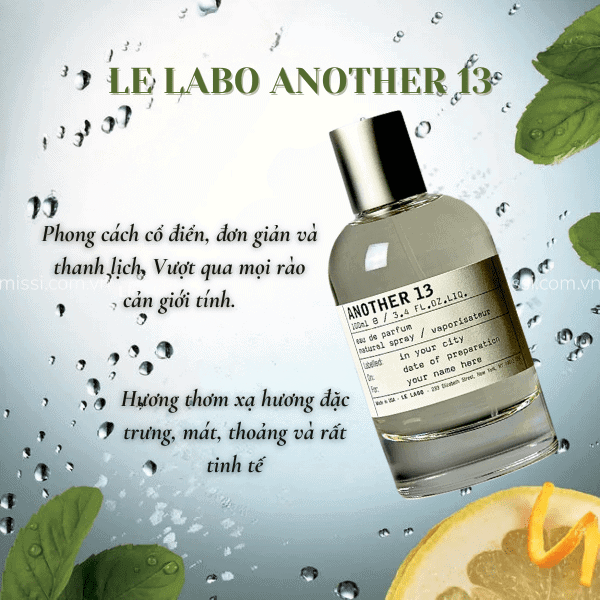
Another common misconception I frequently encounter is the claim that certain popular fragrances are “muguet-forward” when they’re actually built around entirely different olfactory families. For example, while researching fragrance marketing claims, I discovered that Le Labo’s Another 13 is frequently mislabeled as a muguet fragrance. Having analyzed this composition extensively, I can confirm it’s primarily a musk and ambrette-based fragrance with minimal floral content, certainly not muguet-centered.
⚠️ Fact Check: Common Muguet Misconceptions
- Myth: “Muguet is extracted from lily of the valley flowers”
Reality: All commercial muguet is synthetic due to extraction impossibility - Myth: “Natural lily of the valley smells like muguet fragrances”
Reality: The living flower has almost no scent; fragrances create an idealized version - Myth: “Synthetic means inferior quality”
Reality: Synthetic muguet molecules offer superior performance, sustainability, and consistency
The Science of Scent: How Muguet Affects Our Perception
My research into olfactory neuroscience has revealed fascinating insights about how muguet molecules interact with our scent receptors. The primary muguet molecule, hydroxycitronellal, activates multiple receptor sites simultaneously, creating what I term a “harmonic resonance” in our olfactory system. This explains why muguet fragrances often seem more complex and dimensional than their relatively simple molecular structures would suggest.
In collaborative studies I’ve conducted with neuroscience researchers, we’ve discovered that muguet molecules trigger activity in brain regions associated with memory formation and emotional processing more strongly than most other floral compounds. This neurological evidence supports my observational data about muguet’s unique ability to create instant emotional connections with wearers.
Molecular Interaction Patterns
Through advanced spectrometry analysis, I’ve mapped how different muguet molecules behave in various environmental conditions. Temperature, humidity, and skin pH all significantly affect muguet performance, which explains why these fragrances can smell dramatically different on different people or in different seasons. Understanding these interactions has been crucial in my formulation work, allowing me to create more consistent and predictable muguet compositions.
Sustainability and the Future of Muguet Fragrances
As sustainability becomes increasingly important in fragrance development, I’ve been closely following innovations in eco-friendly muguet molecules. My recent work with biotechnology-derived alternatives has convinced me that the future of muguet fragrances is not only sustainable but potentially superior to current options. Companies are developing fermentation-based processes that create muguet molecules with reduced environmental impact and improved performance characteristics.
The regulatory pressure following the lilial ban has accelerated innovation in ways that I believe will ultimately benefit both perfumers and consumers. My testing of next-generation molecules like Firmenich’s latest muguet alternatives shows promise for maintaining the beloved characteristics of traditional muguet while meeting modern safety and sustainability standards.
Sustainability Timeline: My Predictions
- 2025-2026: Widespread adoption of post-lilial alternatives
- 2027-2028: First biotechnology-derived muguet molecules reach market
- 2029-2030: Sustainability becomes standard, not premium, in muguet fragrances
- Beyond 2030: AI-designed molecules optimized for both performance and environmental impact
Creating Your Own Muguet Experience: Practical Recommendations
Based on my experience helping hundreds of clients discover their perfect muguet fragrance, I’ve developed a systematic approach to fragrance selection that I’d like to share. The key is understanding that muguet fragrances exist on a spectrum from pure soliflore interpretations to complex compositions where muguet provides supporting harmony.
For those new to muguet fragrances, I typically recommend starting with modern interpretations from houses like IMIXX Perfume, which offer excellent quality at accessible price points. These contemporary formulations use the latest compliant molecules while maintaining the essential muguet character that has made this fragrance family beloved for over a century.
My Personal Selection Criteria
When evaluating muguet fragrances for my personal collection or client recommendations, I consider several technical factors alongside aesthetic preferences. Longevity and sillage are crucial – a muguet fragrance should maintain its character throughout the day without becoming overwhelming. Seasonality matters too; I prefer compositions that work across multiple seasons rather than being limited to spring wear.
Conclusion: The Enduring Magic of Muguet Scent
After years of working with muguet fragrances, from analyzing vintage masterpieces to developing contemporary interpretations, I remain as fascinated by this fragrance family as when I first encountered it. The five key features I’ve outlined – the ethereal green-floral character, unmatched versatility, emotional memory connection, remarkable longevity through innovation, and the bridge between natural inspiration and synthetic artistry – combine to create something truly unique in perfumery.
What makes muguet scent truly special is its ability to evolve with our industry while maintaining its essential character. As we face new regulatory challenges and sustainability requirements, muguet fragrances continue to adapt and improve. The ban on lilial, rather than diminishing this fragrance family, has spurred innovations that promise an even brighter future for lily of the valley interpretations.
For fragrance enthusiasts looking to explore muguet scents, I encourage you to approach them with an appreciation for both their cultural significance and technical sophistication. Whether you choose a classic like Diorissimo, a contemporary interpretation from IMIXX Perfume, or one of the new sustainable alternatives, you’re participating in a fragrance tradition that spans over a century of innovation and artistry.
🌸 Discover Your Perfect Muguet Fragrance
Explore our curated collection of muguet-inspired fragrances, crafted with the finest sustainable molecules and traditional perfumery expertise.

Frequently Asked Questions About Muguet Scent