

About the Author: Linus Dacke Thall
Chief Fragrance R&D and Supply Chain Director at IMIXX Perfumes
With over 15 years of hands-on experience in industrial fragrance formulation and global supply chain logistics, Linus has overseen the production of millions of bottles of fragrance for markets across the USA, Europe, and Asia. Specializing in Gas Chromatography-Mass Spectrometry (GC-MS) analysis and raw material sourcing, he focuses on demystifying the opaque luxury perfume industry. His mission is to educate consumers on how high-quality perfumery is achieved at the factory level, emphasizing chemical transparency, maceration protocols, and International Fragrance Association (IFRA) safety standards.
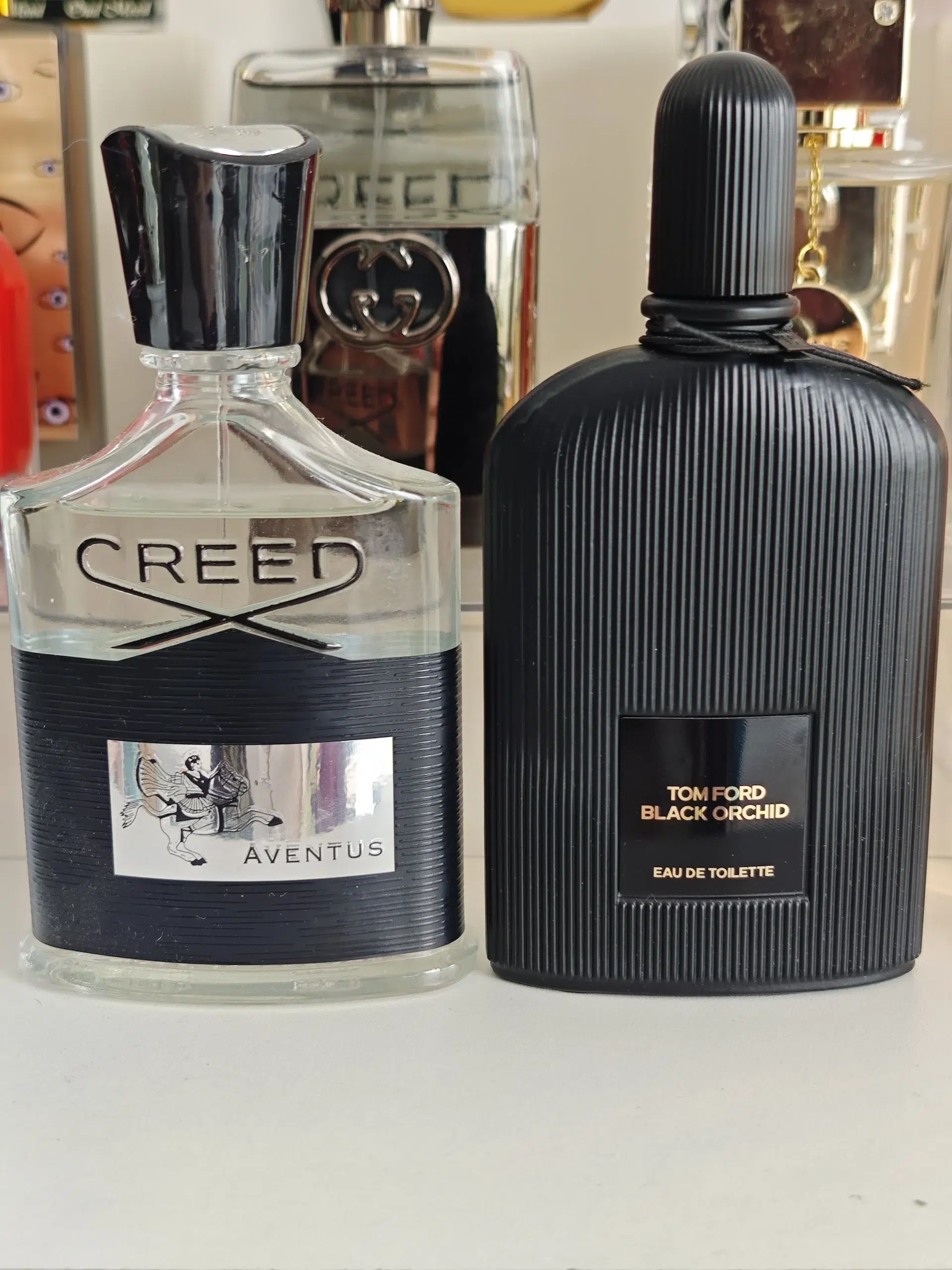
Article Summary & Executive Overview
In this comprehensive guide, we move beyond basic marketing claims to explore the exact science and supply chain economics required to create a flawless “Tom Ford Black Orchid dupe.” Written from the perspective of a factory floor and R&D laboratory, this article unpacks why traditional luxury fragrances carry exorbitant price tags. We delve into the olfactory chemistry of the iconic truffle and patchouli DNA, explain the critical processes of Gas Chromatography (GC-MS) and maceration, and analyze how skin chemistry affects longevity and sillage.
Furthermore, we provide an empirical look at fragrance concentrations (EDP vs. Parfum) and offer data-driven insights through two detailed analytical tables. Finally, we introduce the USA market to IMIXX No. 32—a meticulously engineered Parfum-concentration fragrance that bypasses traditional retail markups to deliver a premium, factory-direct olfactory experience. We conclude with a robust FAQ section answering the most common queries regarding dark floral scents, unisex appeal, and fragrance longevity.
The Allure and the Agony: Why is Tom Ford Black Orchid So Iconic (and Expensive)?
If you are navigating the intricate world of perfumery in the USA, you have undoubtedly encountered the imposing, dark, and sensual aura of the fragrance we are discussing today. It is a scent that polarized the market upon its release, defining a new category of “dark floral” or “gourmand chypre” fragrances. But for many consumers, the immediate barrier to entry is the price point. A standard bottle easily exceeds $200, prompting a massive surge in searches for the best “Tom Ford Black Orchid dupe.”
But why is it so expensive? As someone who manages fragrance supply chains, I can tell you that the cost structure of luxury perfumery is heavily skewed. When you purchase from a high-end boutique in New York or Los Angeles, you are not merely paying for the liquid inside the bottle (often referred to in the industry as the “juice”). You are funding massive global marketing campaigns, celebrity endorsements, premium retail shelf space, meticulously crafted heavy-glass bottles, and an astronomical brand markup.
The raw materials, while high quality, represent a fraction of the retail price. Yes, natural extracts of patchouli and ylang-ylang hold value, but modern perfumery relies heavily on brilliant synthetic molecules to create abstract accords—like the famous “black orchid” itself, a flower that does not exist in nature and yields no extractable oil. To understand how a cheaper alternative to Tom Ford Black Orchid can not only match but sometimes exceed the original’s performance, we must look at the science of the scent.
Deconstructing the Olfactory Pyramid: The Magic Notes of a Dark Masterpiece
To evaluate any fragrance claiming to be an accurate alternative, one must first understand the precise chemical and botanical makeup of the target profile. The main notes in Tom Ford Black Orchid are complex, requiring a delicate balance of earthy, fruity, floral, and resinous components. In our factory R&D lab, we break this down into three distinct phases of evaporation.
The Top Notes (The Hook)
The initial spray must deliver a shock to the senses. The defining characteristic here is the Earthy Black Truffle accord. This is not a standard floral opening. The truffle provides a damp, loamy, slightly mushroom-like depth that is immediately arresting. This is juxtaposed against the tartness of Blackcurrant (Cassis) and the bright, citrusy lift of Bergamot. A high-quality dupe must not skimp on the truffle accord; without it, the fragrance loses its mysterious edge and becomes just another generic fruity-floral.
The Heart Notes (The Core)
As the top notes evaporate, the heart reveals the imaginary Black Orchid. Because you cannot extract oil from a black orchid, perfumers create a “fantasy accord” using a blend of heavy, narcotic florals. The primary driver here is Ylang-Ylang, a tropical flower that imparts a rich, banana-like, slightly indolic sweetness. This is blended with dark spices, lotus wood, and subtle hints of dark fruit. The transition from the earthy opening to this opulent floral heart must be seamless.
The Base Notes (The Foundation)
The base is what lingers on your skin for hours. The anchor of this DNA is Patchouli, which reinforces the earthiness of the opening truffle. Alongside patchouli, we find rich, sweet Vanilla, dark Chocolate (often achieved through specific aromachemicals like phenylacetic acid derivatives), Incense, Vetiver, and Sandalwood. The base is what gives the fragrance its legendary longevity and its dark, sensual character.
Reverse Engineering: How GC-MS Technology Creates the Perfect Clone
How exactly does a manufacturer create a scent that smells 95% to 99% identical to a $250 luxury product? The answer lies in advanced analytical chemistry, specifically Gas Chromatography-Mass Spectrometry (GC-MS). As a supply chain and formulation expert, I rely on this technology daily.
To learn more about the underlying principles of mass spectrometry in chemical analysis, you can reference the resources provided by the American Chemical Society (ACS), which offers extensive educational materials on analytical techniques. In the fragrance industry, a GC-MS machine acts as an incredibly sophisticated nose. We inject a sample of the target luxury perfume into the machine. The gas chromatograph separates the complex mixture into its individual chemical components based on their volatility. Then, the mass spectrometer identifies each component by bombarding it with electrons and measuring the resulting mass-to-charge ratio.
The output is a chromatogram—a visual map of the perfume’s exact chemical formula. We can see precisely how much Linalool, how much Vanillin, and which specific musks were used. However, reading a GC-MS report is not enough. The machine might identify a natural oil, but it cannot always tell us the origin (e.g., Indonesian Patchouli vs. Indian Patchouli). This is where the human element—the expert perfumer—steps in. They use the GC-MS data as a roadmap but rely on their trained olfactory senses to source the exact raw materials required to replicate the soul of the fragrance.
This scientific approach ensures that our formulations are not mere approximations, but highly accurate molecular reconstructions. Furthermore, responsible factories ensure that these reconstructions strictly adhere to the safety standards set by the International Fragrance Association (IFRA), guaranteeing that the product is safe for dermal application.
Table 1: Cost Breakdown Analysis (Traditional Luxury vs. Direct-to-Consumer Factory Model)
To provide complete transparency into the economics of perfumery, let us examine a hypothetical cost breakdown. This illustrates why you can achieve a luxury olfactory experience without the premium price tag.
| Cost Component | Traditional Luxury Brand (Estimated % of $250 Retail) | IMIXX Factory-Direct Model (Estimated % of $40 Retail) | Supply Chain Impact & Explanation |
|---|---|---|---|
| Raw Materials (The Juice) | 2% – 5% | 30% – 40% | Luxury brands buy in massive bulk but the actual juice is a tiny fraction of retail. IMIXX reallocates budget directly into high-concentration oils (Parfum level). |
| Packaging (Bottle & Box) | 10% – 15% | 15% – 20% | Custom, heavy glass and elaborate boxes drive up luxury costs. Minimalist, standardized, yet elegant packaging keeps D2C costs low. |
| Marketing & Endorsements | 20% – 30% | 5% – 10% | You pay for the celebrity on the billboard. Direct models rely on word-of-mouth, SEO, and quality-driven repeat purchases. |
| Retail Markup & Distribution | 40% – 50% | 0% (Direct to Consumer) | Department stores in the USA take massive margins. By shipping directly from our warehouse to your door, this cost is entirely eliminated. |
| Brand Premium (Profit Margin) | 10% – 20%+ | 15% – 25% | The “status” fee. D2C brands operate on tighter overall margins per bottle but aim for higher volume and customer loyalty. |
The Secret of “Maceration”: Why Some Dupes Smell Like Alcohol Initially
A frequent complaint I see on fragrance forums across the USA is: “I bought a cheap dupe, and it just smells like harsh rubbing alcohol!” As a manufacturer, I can explain exactly why this happens, and it comes down to a crucial step in the supply chain: Maceration and Maturation.
When perfume oils (the concentrate) are mixed with perfumer’s alcohol, the chemical bonds do not form instantly. If a factory mixes a batch and immediately bottles and ships it to meet high demand, the product you receive is “green.” The alcohol has not had time to fully integrate with the oils, resulting in a sharp, astringent opening.
Proper maceration requires the mixture to sit in large vats in a cool, dark environment for a period ranging from a few weeks to several months. During this time, oxidation and complex chemical reactions occur. The harsher top notes smooth out, the base notes deepen, and the entire composition becomes round, rich, and cohesive.
In our factory, we refuse to skip this step. We build maceration time into our production schedule. However, if you ever receive a fragrance (from any brand) that smells slightly “off” or alcoholic upon arrival—especially after undergoing temperature fluctuations during shipping—the best practice is to spray it a few times to introduce oxygen into the bottle, and then let it sit in a dark drawer for 2 to 4 weeks. You will be astounded by how the scent profile transforms and improves.
Concentration Classes and Skin Chemistry: Solving the Longevity Equation
When researching how long Tom Ford Black Orchid lasts on the skin, users are often met with varying answers. Some claim it lasts 12 hours; others say it fades quickly. This discrepancy is caused by two main factors: Fragrance Concentration and Skin Chemistry.
The original fragrance was released as an Eau de Parfum (EDP), and later a Parfum version was introduced. The concentration determines the ratio of pure perfume oil to alcohol. Many budget alternatives on the market are formulated as Eau de Toilette (EDT) or weak EDPs to save money, resulting in poor performance.
Table 2: Concentration and Performance Comparison
| Concentration Type | Perfume Oil Percentage | Average Longevity (Skin) | Sillage (Projection) | Best Use Case |
|---|---|---|---|---|
| Eau de Toilette (EDT) | 5% – 15% | 3 – 5 Hours | Moderate initially, fades to a skin scent quickly. | Casual daytime wear, office environments, warm weather. |
| Eau de Parfum (EDP) | 15% – 20% | 5 – 8 Hours | Strong for the first 2 hours, leaves a noticeable scent trail. | Standard industry benchmark; good for evening wear and dates. |
| Parfum / Extrait de Parfum | 20% – 40%+ | 8 – 12+ Hours | Intense, dense, and long-lasting. Projects steadily rather than sharply. | Signature scent, cold weather, formal events, maximum value. |
Beyond concentration, Skin Chemistry plays a massive role. Fragrances are highly reactive. If you have dry skin, the alcohol evaporates faster, taking the perfume oils with it. This is why fragrance experts recommend moisturizing your skin with an unscented lotion before application. Furthermore, individual body temperature and natural pheromones will alter how the base notes (like patchouli and vanilla) project. A scent that is aggressively dark on one person may smell soft and powdery on another. This is the beauty of complex, multifaceted formulations.
Is Black Orchid a Unisex Fragrance? Breaking Gender Boundaries
One of the most frequently asked questions is: “Does Black Orchid smell good on a woman or a man?” or “Is Tom Ford Black Orchid considered masculine or feminine?”
From an industry perspective, gender in perfumery is largely a marketing construct developed in the 20th century. Historically, men wore heavy florals (like rose and jasmine), and women wore rich woods. The DNA of this specific fragrance is the epitome of modern Unisex Appeal.
When it was initially launched, it was marketed towards women. However, men quickly discovered that the earthy truffle, dark woods, and bitter chocolate notes worked phenomenally well with male skin chemistry, projecting a dark, mysterious, and highly confident aura. Today, it is widely accepted in the fragrance community as a completely gender-neutral masterpiece. It is a fragrance for individuals who command attention, regardless of gender.
Unveiling IMIXX No. 32: The Ultimate Factory-Direct Solution
Having analyzed the chemistry, the costs, and the required concentrations, the path to finding the perfect alternative becomes clear. You need a product that utilizes GC-MS accuracy, undergoes proper maceration, and utilizes a Parfum-level concentration to guarantee longevity—all without the retail markup.
This is precisely why we developed IMIXX No. 32 (Inspired by Tom Ford Black Orchid Parfum). Operating out of our IMIXX Perfumes facilities, we approached this formulation not as a cheap imitation, but as an engineering challenge. We aimed to capture the richer, denser profile of the Parfum edition rather than just the standard EDP.
Our formulation, No. 32, boasts a heavily concentrated oil ratio. This means that when you spray it, you aren’t hit with a cloud of volatile alcohol. Instead, the rich, oily texture sits on the skin, slowly releasing the complex layers of black truffle, ylang-ylang, and intoxicating patchouli over a period of 8 to 12 hours. We source premium-grade aromachemicals and adhere strictly to global safety standards, ensuring that our USA customers receive a product that feels, performs, and projects like a multi-hundred-dollar luxury item, but at a fraction of the cost. By cutting out the middleman, we pass the supply chain savings directly to your vanity.
Frequently Asked Questions (FAQ)
As a supply chain and R&D director, I receive countless questions regarding fragrance alternatives. Here are detailed answers to the most common queries surrounding this specific scent profile.
What is the best dupe for Tom Ford Black Orchid?
The “best” alternative depends on your criteria for performance and price. However, if you are looking for a factory-direct option that prioritizes a high Parfum oil concentration and rigorous GC-MS formulation to capture the exact truffle and patchouli notes, IMIXX No. 32 stands out as the premier choice in the USA market. It offers unmatched longevity due to its Extrait-level formulation.
What is a cheaper alternative to Tom Ford Black Orchid?
Instead of paying upwards of $200 for the designer brand, you can explore direct-to-consumer fragrance houses. IMIXX Perfumes offers No. 32, which provides the same dark floral and earthy scent profile for a fraction of the price by eliminating retail markups, celebrity marketing, and expensive custom glass molding.
Does Black Orchid smell good on a woman or a man?
It smells exceptional on both. While originally marketed as a women’s fragrance, its rich base of vetiver, incense, dark chocolate, and truffle makes it highly appealing to men. It is universally regarded by fragrance experts as a true unisex scent that adapts beautifully to different skin chemistries.
Why is Tom Ford Black Orchid so expensive?
The high price is primarily driven by brand positioning, extensive global marketing campaigns, premium retail placement, and luxurious packaging. The actual liquid fragrance (the juice) only accounts for a small percentage of the total retail cost. You are paying for the luxury experience and the designer label.
What are the main notes in Tom Ford Black Orchid?
The fragrance is famous for its complex olfactory pyramid. The top notes feature Black Truffle, Blackcurrant, and Bergamot. The heart notes consist of an imaginary Black Orchid accord, Ylang-Ylang, and Lotus Wood. The base notes provide the longevity with Patchouli, Incense, Vetiver, Vanilla, and dark chocolate accords.
How long does Tom Ford Black Orchid last on the skin?
The original EDP typically lasts 6 to 8 hours on moisturized skin, with heavy sillage for the first 2 hours. However, if you opt for a higher concentration like a Parfum (such as IMIXX No. 32), the longevity can easily extend to 10-12 hours or more, lingering on clothing for days.
What is the difference between EDP and Parfum?
The difference lies in the concentration of perfume oils. An Eau de Parfum (EDP) generally contains 15-20% aromatic compounds, providing a good balance of projection and longevity. A Parfum (or Extrait de Parfum) contains 20-40% aromatic compounds, resulting in a richer, denser scent that sits closer to the skin but lasts significantly longer.
Does the fragrance get better over time?
Yes. This process is called maceration. As oxygen enters the bottle after the first few sprays, the alcohol and perfume oils continue to blend and mature. If a new bottle smells slightly sharp, storing it in a cool, dark place for a few weeks will allow the scent profile to smooth out and the base notes to deepen.
How should I apply a high-concentration dark floral scent?
Because these DNA profiles are incredibly potent and project heavily (massive sillage), less is more. Apply 2-3 sprays maximum to pulse points (neck, wrists, or inner elbows). Avoid rubbing your wrists together, as this friction can break down the delicate top notes like bergamot and truffle prematurely. For the USA winter climate, spraying once on a scarf or coat can provide a beautiful scent trail for days.
Conclusion: Embracing Accessible Olfactory Art
Navigating the fragrance market in the USA does not require you to sacrifice quality for budget, nor does it require you to pay exorbitant designer markups. By understanding the underlying supply chain, the science of GC-MS formulation, the importance of maceration, and the impact of concentration levels, you become an empowered consumer.
The dark, exotic, and sensual DNA of the black truffle and patchouli masterpiece is a testament to the art of perfumery. It is a statement piece, a unisex powerhouse that commands a room. We invite you to experience this level of olfactory craftsmanship directly from the source. Discover the depth, the longevity, and the unparalleled value of IMIXX No. 32 today, and elevate your fragrance wardrobe with true factory-direct luxury.
